
Diplomatic ping pong
Israel recalled its Ambassador to South Africa, Eli Belotserkovsky, for “consultations”, due to “recent comments” from South Africa, the…

Israel recalled its Ambassador to South Africa, Eli Belotserkovsky, for “consultations”, due to “recent comments” from South Africa, the Ministry for Foreign Affairs said. Earlier this month, South Africa recalled its ambassador and diplomatic mission to Israel and described the war against Hamas in Gaza as “genocide.” South Africa’s ruling African National Congress (ANC) party said it would support a parliamentary motion calling for the Israeli embassy in South Africa to be closed. The opposition Economic Freedom Fighters (EFF) will propose the motion, which is also calling for the suspension of all diplomatic relations with Israel in solidarity with the Palestinian people amid the Israel-Hamas war in Gaza.
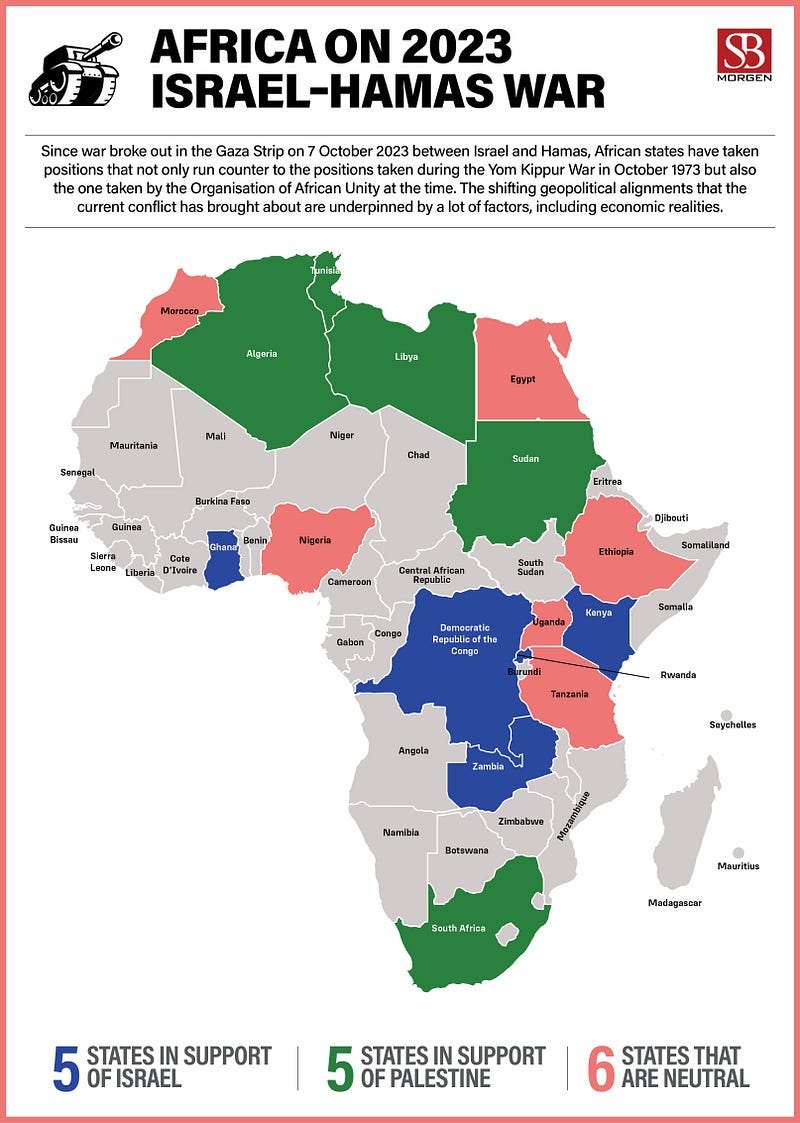
The mutual withdrawal of diplomats between Pretoria and Tel Aviv marks the culmination of weeks of escalating hostile rhetoric, particularly from South Africa. Since 7 October, none of the sub-Saharan African countries has been more vocal in their opposition to Israel than South Africa. This hostility towards Israel dates back to the country’s apartheid era, when the African National Congress (ANC), now leading the government, was a prominent anti-apartheid force. During that time, the ANC aligned itself with the Palestine Liberation Organisation (PLO), establishing a close relationship between Nelson Mandela and PLO leader Yasser Arafat. This alliance was firmly opposed by both the apartheid government in Pretoria and Tel Aviv, which maintained security ties aimed at suppressing the activities of both liberation movements. The ANC-led government, alongside certain political factions, vociferously criticises Israeli policies while staunchly advocating for Palestinian self-determination. Demonstrating a willingness to prioritise principles over diplomatic relations, South Africa voted in 2021 to downgrade its embassy in Tel Aviv to a liaison office. The African powerhouse has also prioritised the establishment of a Palestinian state as a crucial component of its foreign policy. This stance stems from its commitment to maintaining alliances with non-African states and sub-states that provided support during the anti-apartheid struggle. While South Africa’s long-term relationships with the Kremlin and Beijing contribute to its stance, it contrasts with the views of most sub-Saharan African countries, particularly those with significant Christian populations favouring Israel. This dynamic is especially pronounced among countries grappling with the spectre of Islamic terrorism. South Africa has even recommended Prime Minister Benjamin Netanyahu for prosecution at the International Criminal Court (ICC) over alleged war crimes committed by the Israeli Defense Forces (IDF) during the Gaza conflict. Ironically, South Africa seems oblivious to the dissembling behind its actions. In March 2022, the ICC put out an arrest warrant for Russian President Vladimir Putin following its collection of evidence of war crimes in Ukraine, some of which include the forceful and illegal deportation of children from Ukraine to the Russian Federation. South Africa, which was slated to host the 2023 Brazil, Russia, India, China, and South Africa (BRICS) Summit, in which Mr Putin was billed to participate in physically, refused to publicly or privately commit to handing Putin over to the ICC — a standoff that was resolved when the Russian leader opted to participate virtually. South Africa’s reluctance to hand over Putin to the ICC is rooted in protecting its interests and close relations with Russia. This has deeply affected Pretoria’s relations with Tel Aviv, exposing the deep, global divide between at least two opposing camps — a return to heightened Cold War rivalry. While not wielding commensurate influence, South Africa’s unique position as a continental economic giant raises complexities. The risk of extremes in this posture could lead to tensions with the West and other sub-Saharan African countries, and the unfolding consequences remain uncertain. For Israel, however, its actions since 7 October have left a bitter taste in the mouth of its Sub-Saharan Africa allies and, indeed, the overwhelming majority of the Global South; and with a regional power like South Africa leading the charge, Israel faces a significant challenge in rebuilding relationships on a continent that has historically been sceptical of its policies.