
Dollar on a leash
The Central Bank of Nigeria (CBN) has pegged cash dollar purchases to a customer at $500, saying amounts exceeding this will be transferred…

The Central Bank of Nigeria (CBN) has pegged cash dollar purchases to a customer at $500, saying amounts exceeding this will be transferred to the customer’s Naira bank account. If the customer purchasing the foreign currency is a non-resident, Nigerian or not, such will be issued a prepaid Nigerian Naira card. Telecommunications firms have been directed to block access to cryptocurrency websites to curb speculation, with Binance stating that its platform is not for currency pricing. Also, the CBN raised the benchmark interest rate to 22.75% from 18.75%, increased the Cash Reserve Ratio to 45%, and retained the Liquidity Ratio at 30%.
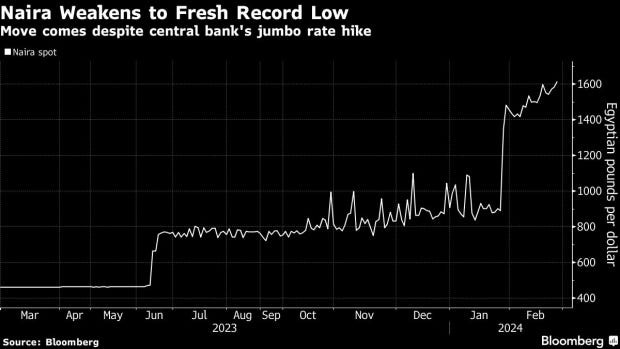
Under Cardoso’s leadership, the CBN has reverted to conventional methods employed by past governors, such as simplistic demand management strategies and singling out certain entities as the primary cause of foreign exchange rate fluctuations. His predecessor, Godwin Emefiele’s poor handling of the foreign exchange market caused several people to profit from roundtripping, amongst other things. The CBN under Emefiele restricted cash withdrawals from domiciliary accounts, limits for international transactions reached as low as $20 and AbokiFX, a website that publishes black market rates, was hounded and blamed for the FX crisis. The website was eventually restricted. The outcome of these actions may be akin to chasing the wind. We opine that Mr Cardoso has waited too long before holding an MPR, but it is better late than never. The announced measures align with expectations in the current high inflation environment. We anticipate that these actions will help to gradually lower inflation towards the governor’s modest 21% target. Nevertheless, for a meaningful effect, inflation must decrease substantially below this goal. While high-interest rates will lead to increased borrowing costs, there is a risk of decreased productivity and a subsequent reduction in the overall supply of goods in the economy, potentially resulting in a resurgence of inflation. The CBN’s recent announcement regarding USD purchases is part of a long-standing effort to address what it perceives as excessive demand for foreign exchange. The Naira’s value has plummeted by over 120% in the early weeks of 2024, leading to a significant undervaluation according to economists. This move reflects the necessity for drastic action in response to dwindling investor confidence in the Naira. Various sources recently revealed that many Nigerians, including institutions, are purchasing cryptocurrency to exchange their Naira for FX, and this is putting pressure on the exchange rate. Therefore, the increasing supply needs to be addressed by closing off leakages. Meanwhile, the CBN is implementing more interest rate and Cash Reserve Ratio (CRR) hikes to control bank deposits and make fixed-income securities more appealing to investors, thereby decreasing the demand for foreign exchange.