
DRC wants its gold back from the backyard
The DRC is reforming its central bank and state miner to exert greater control over its gold, copper, and cobalt resources.

The Democratic Republic of Congo is reshaping control of its vast mineral wealth through central bank reform and corporate restructuring. The Central Bank of Congo has launched a gold purchase programme to integrate artisanal output into official reserves, settling transactions in Congolese francs to strengthen monetary sovereignty. Governor André Wameso said the initiative addresses the paradox of a top gold producer lacking physical gold reserves. Scaling purchases to 15 tonnes annually would, however, require a sharp rise in declared production and about $2.4 billion at current prices. Simultaneously, President Félix Tshisekedi replaced the leadership of state miner Gecamines amid negotiations with Washington over a minerals partnership. The reshuffle comes as Congo seeks to rebalance foreign participation in its mining sector, long dominated by Chinese firms, and assert greater strategic control over copper, cobalt and gold assets.
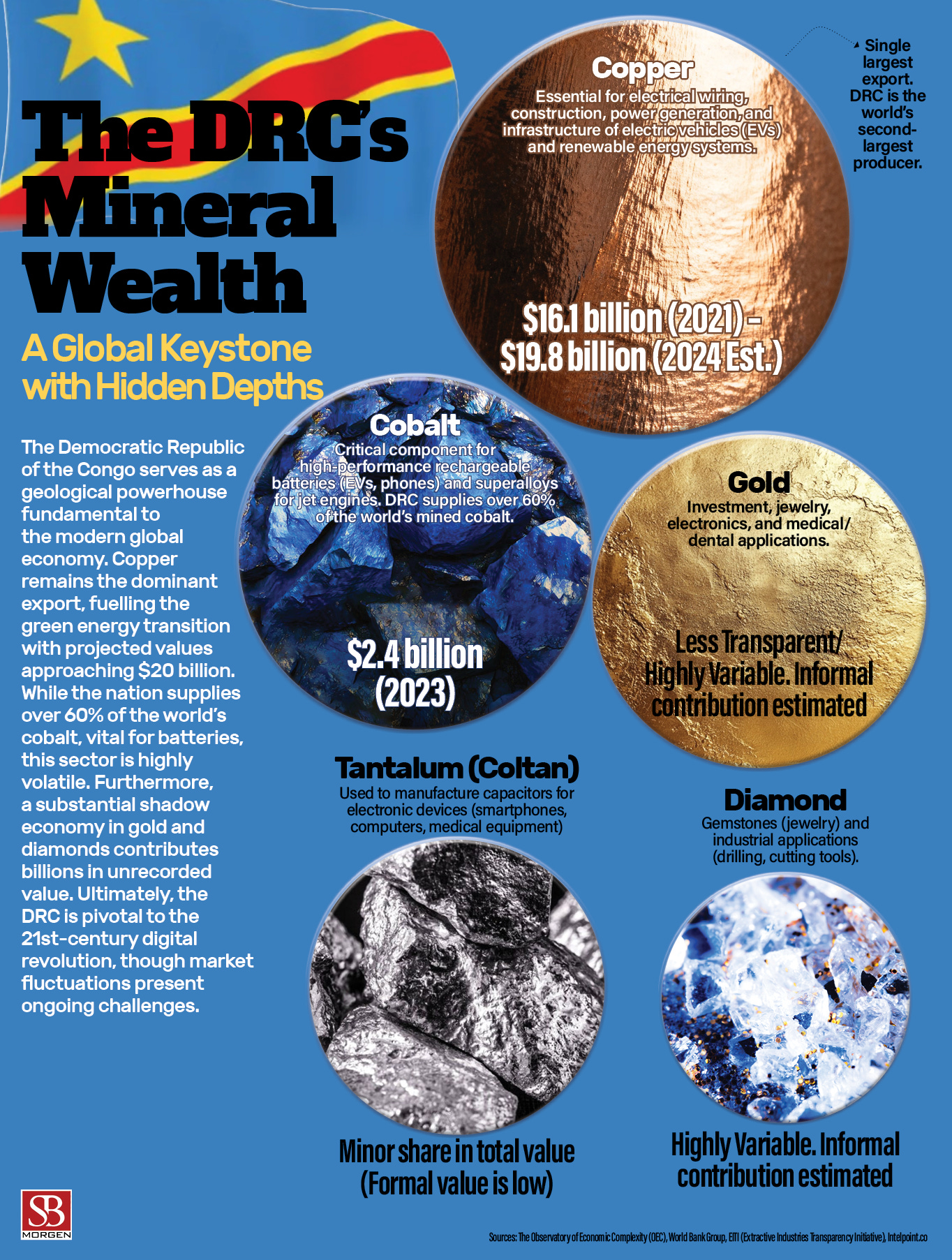
The Democratic Republic of Congo’s simultaneous moves to reform the Central Bank of Congo’s gold purchasing function and restructure Gecamines leadership reflect a coordinated, if high-risk, attempt by the Tshisekedi administration to assert sovereign control over a mineral estate that has historically generated enormous wealth for everyone except the Congolese state.
The Central Bank’s gold purchase programme, designed to integrate artisanal production into official reserves and settle transactions in Congolese francs, is conceptually sound as a monetary sovereignty measure. Governor André Wameso’s framing of the initiative as addressing the paradox of a leading gold producer with no physical gold reserves is analytically precise and politically resonant.
At its core, the reform seeks to close one of the most visible sovereignty gaps in the Congolese economy. Despite being one of Africa’s major gold producers, the DRC has historically captured minimal value from artisanal output. Large volumes of gold exit the country through informal networks routed via Uganda, Rwanda and the United Arab Emirates, often with negligible fiscal traceability. By purchasing gold directly in local currency and incorporating it into official reserves, the central bank aims to strengthen monetary credibility, deepen domestic financial intermediation and reduce dependence on foreign exchange inflows tied to copper and cobalt exports.
The operational challenge is formidable. Scaling purchases to 15 tonnes annually would require not only a sharp increase in declared production but also the systematic dismantling of entrenched informal trading networks. These networks are resilient, capitalised and politically connected. Without credible enforcement capacity, digital traceability mechanisms and cross-border regulatory coordination, the programme risks formalising only marginal volumes while dominant illicit flows continue unabated. The estimated $2.4 billion required annually at current prices raises immediate questions about fiscal space, liquidity management and financing sources. Absent a clear funding architecture, the programme could strain monetary stability rather than reinforce it.
Parallel to the monetary reform, President Félix Tshisekedi’s decision to replace the leadership of Gécamines introduces a more overtly geopolitical dimension. The reshuffle comes amid negotiations with Washington over a minerals partnership, as the United States intensifies efforts to diversify critical mineral supply chains away from Chinese dominance. The timing is strategic. The DRC occupies a structurally irreplaceable position in global cobalt supply and holds significant leverage in copper production. With American strategic urgency rising and Chinese processing dominance entrenched, Kinshasa sees a window to recalibrate foreign participation and renegotiate terms.
This calculation is rational. However, the risk lies in institutional continuity. Gécamines has experienced repeated restructuring cycles over the past two decades, often accompanied by leadership turnover that has not materially improved operational efficiency, revenue transparency or governance discipline. If the current reshuffle prioritises political loyalty over technical competence, the structural weaknesses of the state mining apparatus will persist regardless of whether Washington or Beijing anchors future partnerships.
The two reforms are linked. Strengthening central bank gold reserves enhances macroeconomic resilience and signals fiscal seriousness to international partners. Restructuring Gécamines aims to consolidate bargaining power in negotiations over copper, cobalt and gold concessions. Together, they represent an attempt to reposition the Congolese state from passive rent collector to strategic asset manager.
Yet mineral leverage alone does not guarantee developmental outcomes. Sovereign control must be matched by institutional capacity. Transparent reporting, independent audit frameworks, credible contract enforcement and revenue allocation mechanisms are decisive variables. Without them, increased state participation risks merely reallocating rents within elite networks rather than broadening national benefit.
From a geopolitical standpoint, the DRC is navigating a delicate balancing act. Deepening engagement with Washington could diversify investment and reduce overdependence on Chinese processing and financing ecosystems. However, abrupt recalibration may trigger commercial or diplomatic friction with existing partners. Managing this transition requires sequencing rather than confrontation, ensuring that diversification enhances bargaining power without destabilising production flows.
Ultimately, the minerals themselves are not the constraint. The DRC’s resource base remains globally strategic. The determining factor is institutional architecture. If the central bank’s gold programme is underpinned by enforceable supply chain controls and Gécamines’ restructuring strengthens technical governance, the Tshisekedi administration could meaningfully increase fiscal capture and monetary sovereignty. If execution falters, the reforms will join a long list of initiatives that reshaped leadership without reshaping outcomes.