
Dual dilemma
Ghana’s Jubilee oil field saw a slight production drop to 89,000 barrels per day by October 2024, down from over 90,000 barrels per day in…

Ghana’s Jubilee oil field saw a slight production drop to 89,000 barrels per day by October 2024, down from over 90,000 barrels per day in July. The decrease was attributed to the underperformance of the J69-P well and unplanned downtime at the Ghana Gas Company. Additionally, the Government of Ghana owes $40 million for overdue gas payments. Meanwhile, cocoa buyers have made over $500 million in upfront payments to Ghana’s Cocobod to secure supplies. However, Cocobod is facing a $1 billion loss due to unfulfilled contracts from the previous season, with traders uncertain about the feasibility of meeting future obligations.
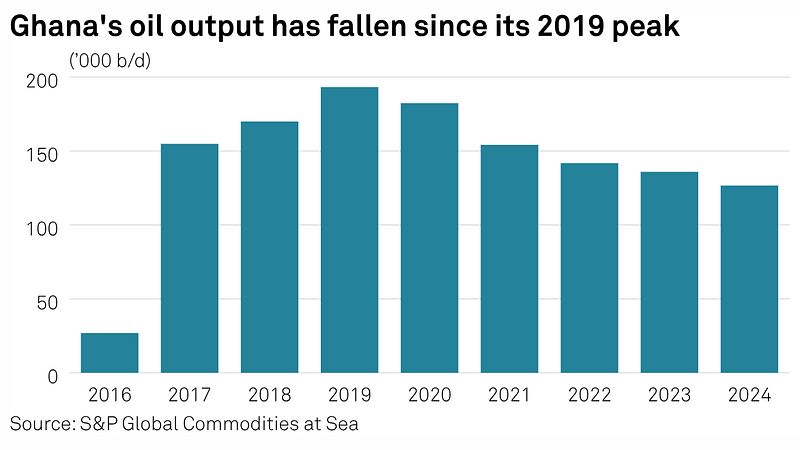
Cocoa and oil have historically been the backbone of Ghana’s economy, providing critical revenue streams and economic stability. Since the discovery of oil in 2011, the sector has enabled Ghana to access significant financing through loans on international capital markets and bilateral arrangements. However, crude oil production has declined in recent years as several exploration companies have exited the sector, citing unfavourable economic and tax regimes. The energy sector has become a financial burden, generating approximately $2 billion in annual debt, primarily from the power subsector. Ghana’s electricity generation relies heavily on thermal sources, which account for 64% of the energy mix. This dependency makes the country a significant consumer of natural gas, costing the state over $1 billion annually. Legacy debts in the gas sector are persistent, with major suppliers like Tullow Oil and the West African Gas Pipeline owed substantial arrears due to state ownership and inefficiencies. Similarly, the cocoa sector, once a stronghold of the economy, is struggling. Production levels have dropped below 500,000 tonnes, hindered by illegal mining activities, crop diseases, adverse weather conditions and rampant smuggling. Smuggling alone is estimated to divert over 150,000 tonnes of cocoa beans annually, undermining Ghana’s ability to meet supply targets. This shortfall has had ripple effects, including increased borrowing costs for cocoa-backed syndicated loans. For instance, Ghana faced higher coupon rates when attempting to secure $1.5 billion in financing this year. As a result, the government had to rely more on domestic financing and upfront payments, compounding fiscal challenges. The local currency, the cedi, heavily depends on cocoa inflows for stability. This year, the failure to meet production and export targets weakened the cedi further, causing it to depreciate against major currencies like the U.S. dollar. The combined challenges in the oil and cocoa sectors have exposed structural weaknesses in Ghana’s economy, underscoring the urgent need for policy reforms and strategic investments to revitalise these critical industries.