
E-cedi flies cedi cries
Ghana plans cross-border e-Cedi payments but its currency is sub-Saharan Africa’s worst performer in 2026.

Ghana plans to use its e-Cedi digital currency for cross-border payments after a pilot phase. Central Bank Governor Johnson Pandit Asiama said the currency will support regional trade and financial inclusion. A new Virtual Assets Act 2025 aims to tighten rules and encourage innovation. But the Ghanaian cedi is sub-Saharan Africa’s worst-performing currency in 2026. It has weakened sharply against the dollar because energy firms and import-dependent businesses need foreign exchange. This raises the risk of higher import costs and inflation.
Five years after Nigeria’s failed experiment with a Central Bank Digital Currency (CBDC), Ghana is preparing to launch the e-Cedi with ambitions of improving regional trade and cross-border payments. At the ACI Congress in Accra, Ghana’s central bank governor said the e-Cedi had successfully completed its pilot phase and would support easier transactions across West Africa. The language sounds familiar to Nigerians, echoing the promises that accompanied the launch of the eNaira under former Central Bank Governor Godwin Emefiele, financial inclusion, seamless payments, and regional integration. Yet the eNaira struggled to gain meaningful adoption despite heavy official backing.
What eventually gained traction in Nigeria instead was the privately driven cNGN stablecoin ecosystem. Pegged to the naira, cNGN now has more than two billion units in circulation, highlighting an important lesson for African central banks: innovation in digital finance often moves faster and more efficiently through the private sector than through state-led systems. With Ghana already advancing virtual asset regulation through its 2025 Virtual Asset Service Providers Act, the stronger path may be to encourage regulated private participation rather than commit large resources to building a state-controlled digital currency infrastructure.
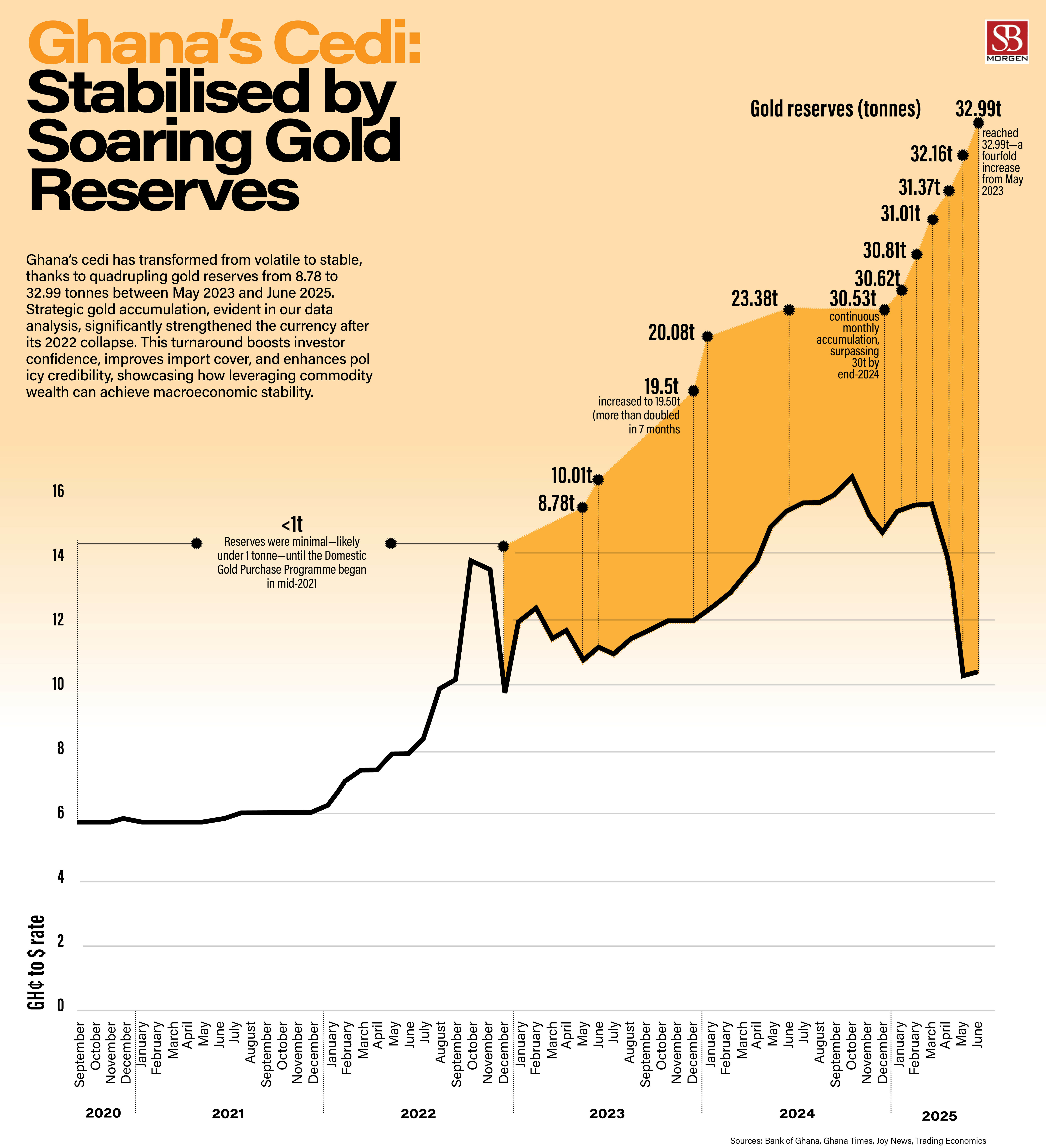
The timing of the e-Cedi rollout also raises concerns. Ghana is promoting a cross-border settlement currency at a moment when confidence in the cedi remains fragile. The currency has emerged as one of sub-Saharan Africa’s weakest performers in 2026, pressured by strong corporate dollar demand from the energy sector and importers. This weakness persists despite relatively healthy fundamentals, including lower inflation, a reduced policy rate, and stronger reserves. A digital currency cannot manufacture trust that the spot market itself is withholding.
There is also the risk that the e-Cedi could unintentionally accelerate capital flight or digital dollarisation. A highly transferable digital unit introduced into an already fragile currency environment may offer a faster route for users seeking to exit local-currency exposure, especially in a country where crypto adoption is already significant. Ghana deserves credit for advancing digital asset regulation and modernising payment infrastructure. However, the sequencing matters. Cross-border digital currencies work best when confidence in the underlying currency is already strong. Stabilising the cedi should come before exporting it digitally across the region. Otherwise, Ghana risks building a sophisticated payment rail for a currency the market still struggles to trust.