
EU to the rescue
The European Union (EU) is considering a major financial package for Tunisia amid a growing refugee and migrant crisis. The bloc is…

The European Union (EU) is considering a major financial package for Tunisia amid a growing refugee and migrant crisis. The bloc is considering offering the cash-strapped Maghreb nation some €900 million ($967 million) to support its economy, plus an immediate €150 million in budget support once a “necessary agreement is found”, according to European Commission head Ursula von der Leyen. Along with von der Leyen, Dutch Prime Minister Mark Rutte and Italian Prime Minister Giorgia Meloni were in Tunisia on Sunday for talks with President Kais Saied.
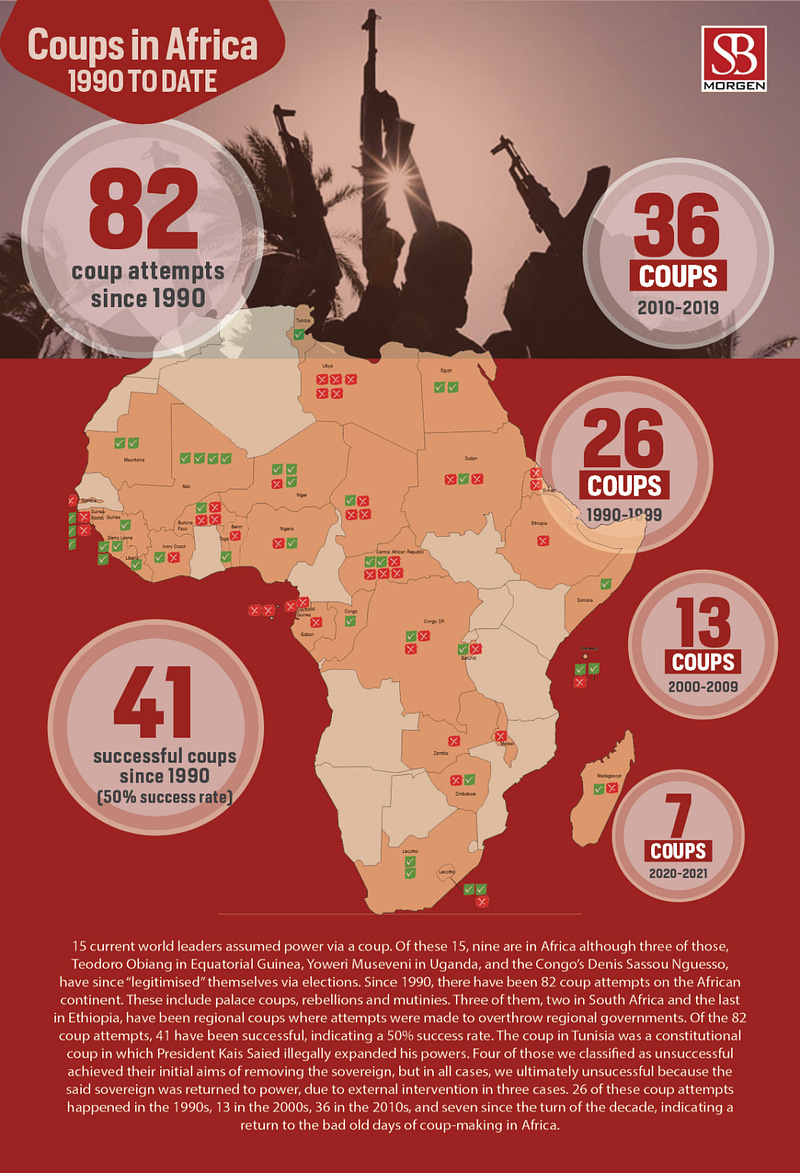
The EU’s preeminent motivation in this latest Tunisia loan deal is migration. Tunisia’s location on the Mediterranean coast makes it a prime spot for illegal immigration into the EU. Illegal migration has been a headache for Southern European countries, whose only buffer from North Africa is the Mediterranean. It is also a flashpoint between France and the UK, and France and Italy. In Italy, the far-right government of Giorgia Meloni has been front and centre of the battle, with a group of Italian members of parliament and diplomats guiding Signorina Meloni in identifying base targets for curtailing the migration. That guidance led her to Tunisia, where the government initially refused to take the EU’s loans. Mr Saied rejected the EU’s proposals, initially made by his own government, to cut subsidies and restructure loss-making state-owned companies, saying this risks a social explosion. A snippet of the geared social explosion came earlier in the year when long-existing anti-Black African sentiments spilt into the open, leading to xenophobic and race-themed attacks on sub-Saharan migrants in Tunisia hoping to cross over to the EU. Those attacks were started by Saied, who, in a speech, employed Western racist and nativist narratives of the Great Replacement Theory when he announced that Black people were pouring into Tunisia to replace Arabs — a statement he withdrew after sanctions from the International Monetary Fund. Even with the EU’s condemnations of Mr Saied’s antics, it did not attempt to censure him beyond verbal indignation. The reason is now crystal clear: he is viewed in European capitals as an important partner against illegal migration. For one, it is a boilerplate response from Tunisia’s European partners, who believe an improved Mediterranean economy from Western investments will keep the migrants away from Europe. More importantly, geopolitics and national interests trump human rights concerns yet again. The fact that the EU is willing to work with Saied after his coup against Tunisia’s Constitution and his unprovoked xenophobia — something not entirely new (as a much more sinister deal was struck with former Sudanese strongman Omar al-Bashir, where the Janjaweed were employed to haunt illegal migrants using Sudan to get to the EU) — shows a future where realpolitik will increasingly become the mainstay of international relations in a post-idealist world. This places the very idea of democracy at risk.