
Falling short
In May 2024, Nigeria’s oil production fell by 30,000 barrels per day (bpd) to 1.25 million bpd, according to OPEC, significantly below the…

In May 2024, Nigeria’s oil production fell by 30,000 barrels per day (bpd) to 1.25 million bpd, according to OPEC, significantly below the 2024 quota of 1.38 million bpd and the government’s benchmark of 1.78 million bpd. This decline and a global oil price drop to $80.96 per barrel exacerbate revenue and foreign reserve challenges. Issues include crude oil theft, illegal refining and production disruptions. Additionally, Nigeria’s gas exports plunged by 25% to a three-year low, driven by low production levels and the exit of multinationals, raising concerns about meeting export commitments and capturing global gas market revenue.
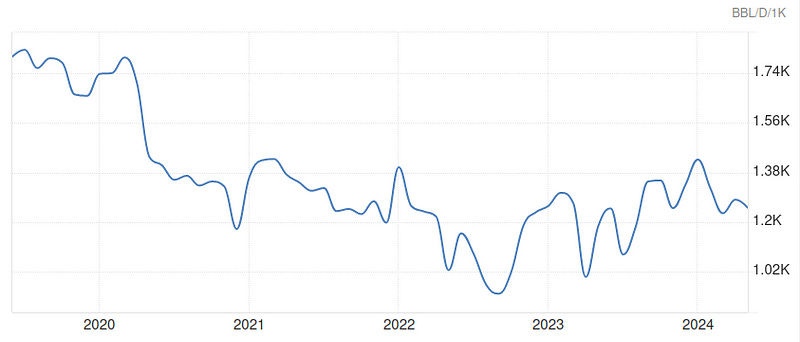
One year into the Tinubu administration’s tenure, little has changed regarding Nigeria’s dismal oil production numbers. In the early 2000s, shortly after transitioning from military to civilian rule, the country’s crude oil production averaged around 2.0 million bpd, with aspirations to increase production to 2.4 million bpd within a few years. Unfortunately, necessary investments and policies were not implemented to achieve this goal. Militancy in the Niger Delta escalated, and oil theft became rampant. Nigeria’s oil sector faces several challenges, a major one being oil theft, which means that crude oil, which should generate revenue for the country, is diverted into private pockets. Recent media reports on oil theft in Nigeria suggest that the NNPC is uncovering a rising number of incidents. Today, reaching 2.4 million bpd is a distant dream, with the NNPC reporting that over 200,000 bpd is lost to theft each day. Oil theft and conflicts with local communities are among the reasons international oil companies are divesting from Nigeria. A significant concern is whether domestic oil companies taking over these assets can sustain production levels, given that international players have deeper financial resources. The NNPC has declared a war on crude oil theft and is now publishing data on these incidents. According to data published by the corporation, 2,325 oil theft incidents were recorded between 27 April and 21 June. These incidents include illegal refineries and storage sites, illegal pipeline connections, vandalism, arrests of wooden or fibre boats, vehicle arrests, and vessel automatic identification system infractions. This data illustrates the vast scale of crude oil theft in the sector. While this newfound transparency may benefit the industry in the short term, it is crucial to sustain these efforts in the long term and establish a widely accepted regulatory framework for industry players. Such measures might attract significant investments to the oil and gas sector and help Nigeria maximise its remaining crude oil resources.