
Fiddling at the edges
Nigeria is set to introduce a labour statistics system where unemployed Nigerians at home and abroad can apply for jobs by viewing where…

Nigeria is set to introduce a labour statistics system where unemployed Nigerians at home and abroad can apply for jobs by viewing where vacancies exist. Minister of Labour and Employment, Chris Ngige, told a news conference in Abuja on 18 January that the move was part of the government’s efforts to tackle the country’s high unemployment rate. He said the ministry had concluded the validation of new labour laws and that the Industrial Arbitration Panel (IAP) could be upgraded to a full-fledged Commission anytime soon, adding that the system will come up in about two months.
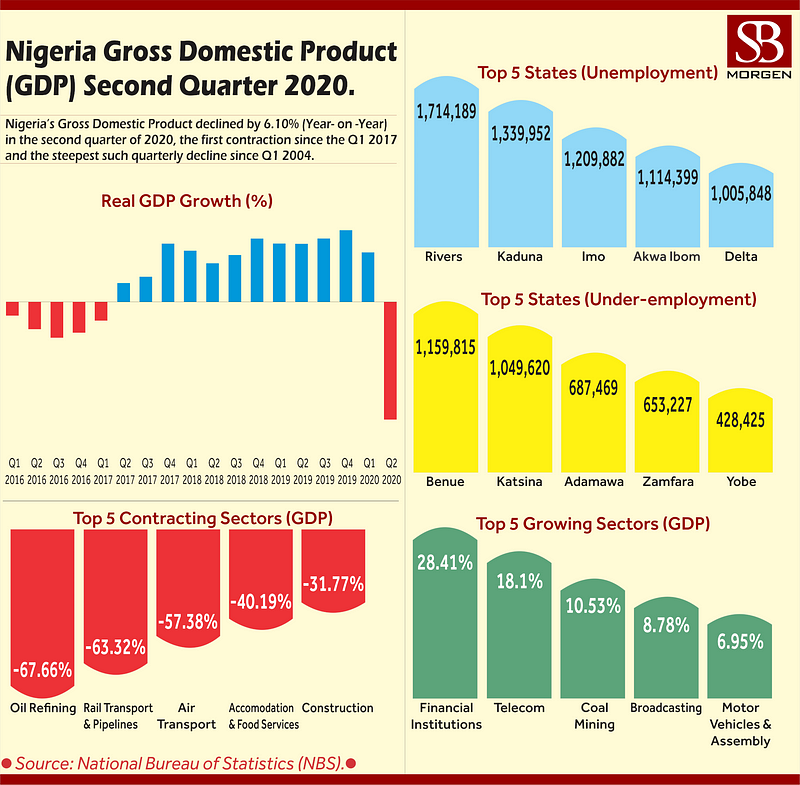
Nigeria’s high unemployment rate is caused by a complex set of factors, including a difficult business environment, poor infrastructure, overregulation, and business-adverse policies. Additionally, Nigeria has a history of treating employees poorly, a challenge that may deter skilled workers from returning to the country. Macroeconomic challenges have seen the national minimum wage plunge to less than $50 monthly. The introduction of a labour statistics system in Nigeria will certainly improve the quality of data available on employment and productive activities in the country, and help to identify deficiencies in the labour market. However, quality data alone is unlikely to create employment opportunities in the country. It is unlikely that such a labour matching system can be efficiently set up and operated by the government, as Nigerian governments do not have the best track record of such schemes. A scheme like this will be expected to capture all job seekers and available jobs and then efficiently match them. This effort represents a misdiagnosis of the problem — the problem is not only that those seeking to hire cannot find the right labour. There are not just enough jobs being created commensurate with those seeking them; unless that is done, this move cannot qualify as a band-aid. A better approach within the purview of the Ministry of Labour will be to set up an independent unit akin to the US Bureau of Labour Statistics to release periodic updates on jobs created and lost across states and sectors, which will better guide policymakers in how they design policies and actions that will create jobs in the country. More broadly, it would be more beneficial for the government to focus on improving the business environment, especially for small and medium-sized enterprises, and ensuring better working conditions for the 100-plus million Nigerians who will not migrate anywhere. The problem of unemployment in Nigeria is, of course, not a statistics problem. The statistics to show the depth and magnitude of the problem abound, as the good work of the NBS has shown. The real issue is that there are simply not enough jobs, and where there are jobs, many do not pay well enough to keep up with the rapidly rising cost of living. This is the fundamental issue the minister should be addressing, instead of creating another agency that will draw increased funding from the money that the country cannot afford.