
Fire on the mountain
Armed men abducted about 45 passengers from three 15-seater commercial buses in Orokam, along the Otukpo-Enugu Road in Ogbadigbo LGA of…

Armed men abducted about 45 passengers from three 15-seater commercial buses in Orokam, along the Otukpo-Enugu Road in Ogbadigbo LGA of Benue State, demanding ₦3 million per passenger in ransom negotiations. Vanguard reported that the gunmen initially demanded ₦15 million per passenger but later reduced it. The heavily armed men were reported to have ambushed the vehicles, forcing their drivers to pull over at gunpoint. Meanwhile, FCT Minister Nyesom Wike has called an emergency security meeting in response to increasing insecurity in Abuja, where kidnappings in residential areas have been rising since December 2023, including recent incidents in Bwari Area Council.
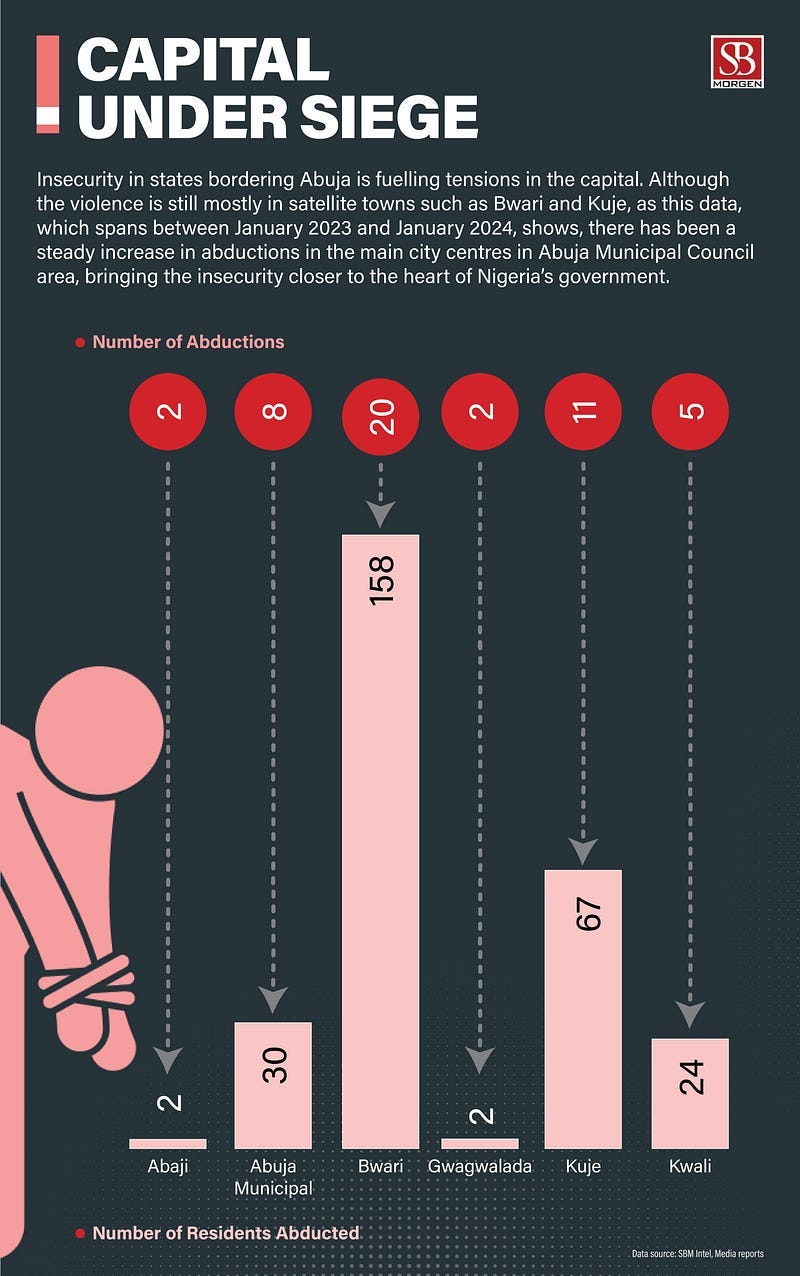
As Nigeria grapples with kidnappings, there is growing concern about the government’s response to insecurity, particularly in the FCT, where kidnappers have been able to strike in city centres. There is also debate about whether ransom payments deter or encourage these attacks. In the past week, the abduction of the Al Khadiriyah family members in Bwari has jolted Nigerians to a reality they have ignored for so long: the first is that insecurity is now too widespread to be ignored; and secondly, the lives of Nigerians have a price. For Najeebah and her sisters, it was ₦60 million ($45,000), which was later raised to ₦700 million ($522,000). As the social contract between victims and kidnappers gets shattered more, with ransom payments or negotiations no longer guaranteeing the safe return of victims, it may seem that ransom payments are no longer an appealing option. However, given the desperate situation, many still pay to free their loved ones. This has made Nigerians poorer, more desperate, and restive. A spiking inflation rate has also meant that ransom demands have gone up, which means the most obvious resort to raising ransoms is crowdfunding. For a country beset with many security challenges, its security services do not improvise fast enough, especially with technology. A former communications minister, Isa Ali Pantami, wrote on social media last weekend that the major reason why the previous government’s famed National Identification Number-Subscriber Identity Module (NIN-SIM) linkage policy, aimed at improving security, failed was because security agencies did not request the data needed for preventive or corrective security. As such, that lethargy has ensured that criminals get away with murder, literally. This is also facilitated by the fact that law enforcement does not face consequences for failure. Instead of being punished, they often get rewarded. This sends a message to many government officials that they can have their cake and eat it. The abduction itself exposed the vulnerabilities created by Nigeria’s low police-to-citizen ratio. With an estimated 448 officers per million people, the country falls short of the United Nations’ recommended standard, leaving vast areas understaffed and prone to criminal activity. The recent rise in kidnappings across the country, including Abuja, underscores the urgency of addressing this critical gap. It is crucial to increase police recruitment and training, invest in technology and infrastructure, establish state and local police departments, and promote accountability and transparency. Building a culture of accountability within the police force is crucial to combating corruption and fostering public trust. By tackling the police-to-citizen ratio, investing in qualitative and quantitative improvements, and fostering closer relationships between police and communities, Nigeria can build a safer future for all its citizens.