
Forced quarantine
Enugu residents shut their businesses and stayed indoors in compliance with the sit-at-home usually enforced by a faction of the outlawed…

Enugu residents shut their businesses and stayed indoors in compliance with the sit-at-home usually enforced by a faction of the outlawed Indigenous People of Biafra (IPOB). The sit-at-home continued despite a pronouncement by the Enugu State Governor, Peter Mbah, declaring an end to the civil action in the state. There was grave silence inside the market when Premium Times visited at about 0930 on Monday, 5 June. Commercial banks, filling stations, schools, and shops along major roads were also shut. There were minimal human and vehicular movements along the road.
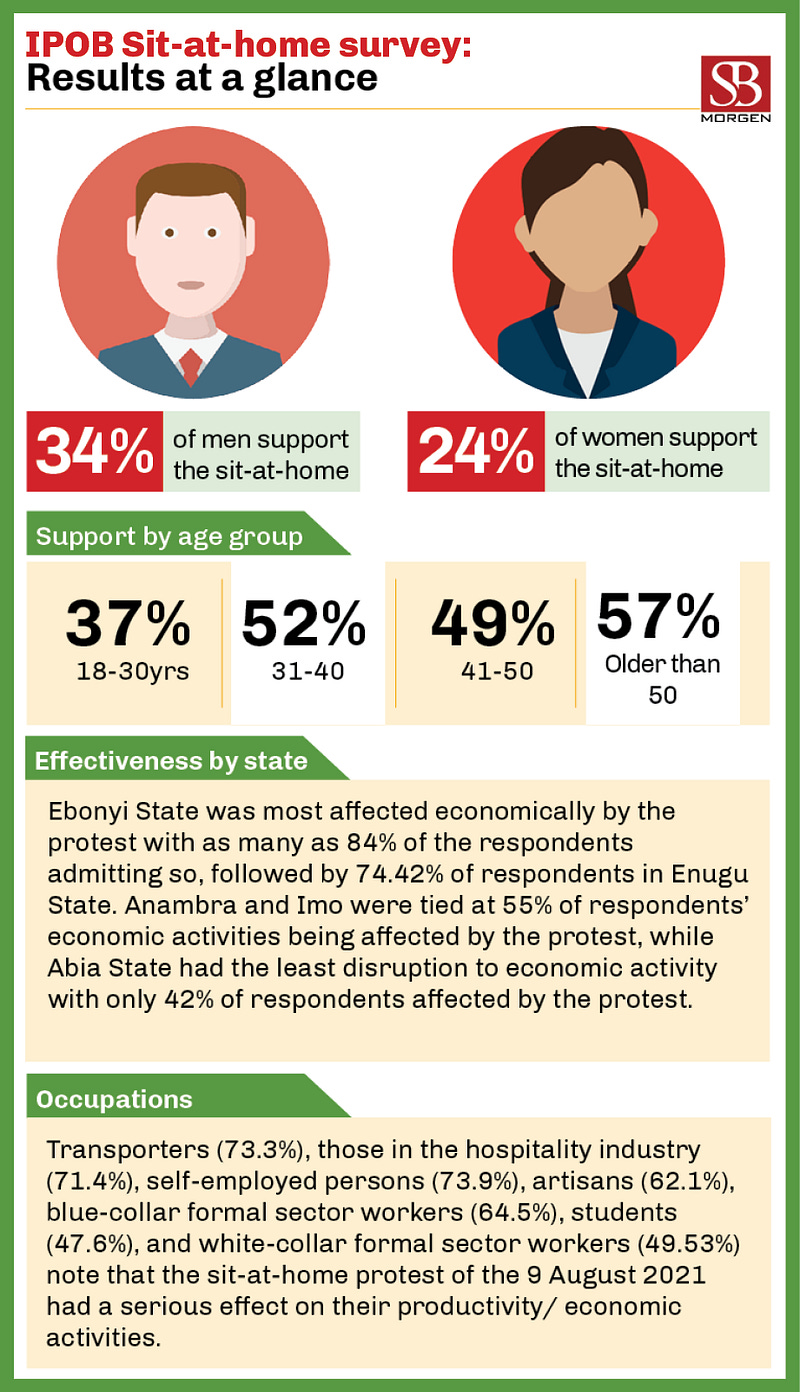
The IPOB movement gained ground and popularity as the Southeast elite left a huge leadership gap that was filled by criminal deviants, who took advantage of the people’s anger. It has since become a class war, serving as a cover for criminals who use the fear factor of IPOB to commit personally enriching crimes. In January, the International Centre for Investigative Reporting (ICIR) estimated that because of the sit-at-home order instituted by IPOB, the annual revenue that could have been made by micro businesses on 52 lost Mondays is estimated at ₦4.618 trillion ($10.495 billion), which also represents the amount lost by the region in one year for sitting at home every Monday. This is a tiny fraction of the larger picture in a region where four in ten persons are already unemployed. Since the order was given to force solidarity from the region’s residents to IPOB leader Nnamdi Kanu, who was arrested and detained by Nigeria’s secret police in 2021, several ideas have been marked up as solutions to the economic sabotage and violence associated with the sit-at-home. Peter Mbah’s attempt to disable compliance through an executive proclamation will not only not work, but it will also join the list of failed proclamations made by other governors in the region before him. What the governors are lacking is legitimacy arising from a disaffection between the political class and its people, which IPOB successfully exploited. Dr Mbah, by declaring an end to IPOB’s order, is simply wishing the problem away. The average Enugu resident who stayed away from the markets on Monday is a rational thinker who has weighed the cost of disobedience to IPOB’s order and rightly thought against it because the government does not offer much protection against IPOB enforcers. It is this lack of institutional capacity that has fuelled distrust in such institutions, further heightening the problem. The truth is that the Nigerian government simply does not care enough, and the citizens have failed to foster a culture of communication and socialisation that would make it easier to solve the problem. It is more likely that IPOB will burn out on its own rather than get solved by a sensible security policy from the federal or state governments. This burning out will take almost a decade and come at a huge cost to the region. Given how the secessionist agitation in the region has metastasised, the release of Nnamdi Kanu may not stop the sit-at-home violence. Only a resolve by the state to take on criminal groups with resounding success can.