
Fractured force
LP suspends Abia Governor Otti, Senator Kingibe, and four others indefinitely for alleged anti-party activities, barring them from representing the party.

Nigeria’s Labour Party (LP) has indefinitely suspended Abia State Governor Dr. Alex Otti, Senator Ireti Kingibe, and four others over alleged anti-party activities. According to a statement by National Secretary Alhaji Umar Farouk Ibrahim, the suspensions follow a Disciplinary Committee report implicating them in actions contrary to party interests. Others affected include Senator Darlington Nwokocha, Hon. Victor Afam Ogene, Hon. Amobi Ogah, and Hon. Seyi Sowunmi. Ibrahim stated that the individuals can no longer represent or act on behalf of the LP. Relevant institutions such as INEC, NGF, and security agencies have been notified of the decision.
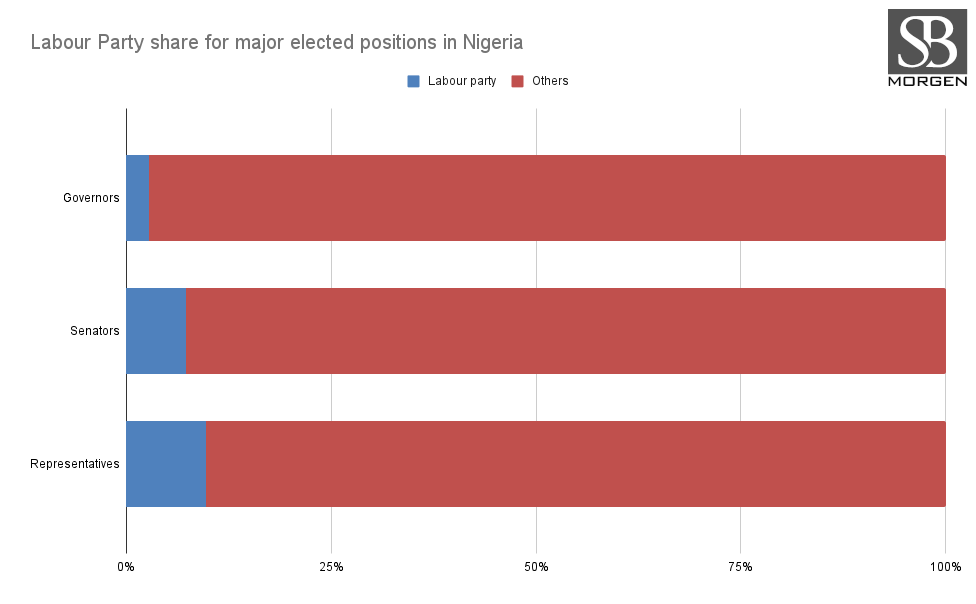
The indefinite suspension of Abia State Governor Dr Alex Otti, Senator Ireti Kingibe, and four other prominent figures highlights the deepening internal fractures within the Labour Party (LP), extending beyond mere disciplinary action for alleged anti-party activities. While the official reason points to disloyalty, the context suggests a politically charged power struggle where factional interests increasingly overshadow collective objectives.
The LP has struggled to manage its unexpected surge in the 2023 elections, attracting influential figures like Otti, who wield significant regional power and political independence. While boosting the party's reach, their presence also introduced alternative power centres, creating internal tension with the established leadership. The recent suspensions appear to be a tactical move to reassert control and sideline rival factions, a common tactic in Nigeria's volatile party system where "anti-party activity" accusations are often political weapons.
Targeting electorally successful figures underscores the LP's inability to manage internal diversity and differing visions, exposing the fragility of its cohesion. Alienating influential figures risks losing strategic assets and undermining national appeal, a perilous turn for a party that captured public imagination. The suspensions could trigger defections, potentially to the ruling All Progressives Congress (APC), further weakening the LP.
With the PDP also struggling with unity, neither party seems positioned to challenge the APC seriously. The potential coalescing of politically homeless actors into a new formation before the 2026 campaign season might occur, but is unlikely to threaten APC dominance in 2027.
The LP’s crisis reflects a deeper issue in Nigerian party politics: a lack of ideological clarity and the dominance of personality-driven agendas. Without robust internal democracy and mechanisms to manage dissent, parties often fracture. The LP now faces the challenge of transforming into a cohesive institution or succumbing to infighting, a fate that has befallen many "third force" movements in Nigeria. The suspensions reveal structural weaknesses within the LP, and unless it confronts internal divisions, fosters inclusive decision-making, and recommits to democratic values, it risks becoming another promising movement undone by internal strife.