
France bows out
French President Emmanuel Macron has announced the withdrawal of 1,500 French troops from Niger by year-end, marking a significant setback…

French President Emmanuel Macron has announced the withdrawal of 1,500 French troops from Niger by year-end, marking a significant setback to French influence and counter-insurgency efforts in the Sahel region. The decision comes as Macron refuses to recognise the junta as Niger’s legitimate authority. France’s ambassador in Niger, Sylvain Itte, was evacuated following the military government’s expulsion order. While stating that France won’t be “held hostage by the putschists,” Macron also noted that coordination with the coup leaders will be pursued to ensure an orderly troop withdrawal. The move raises concerns about the security situation and stability in the Sahel region.
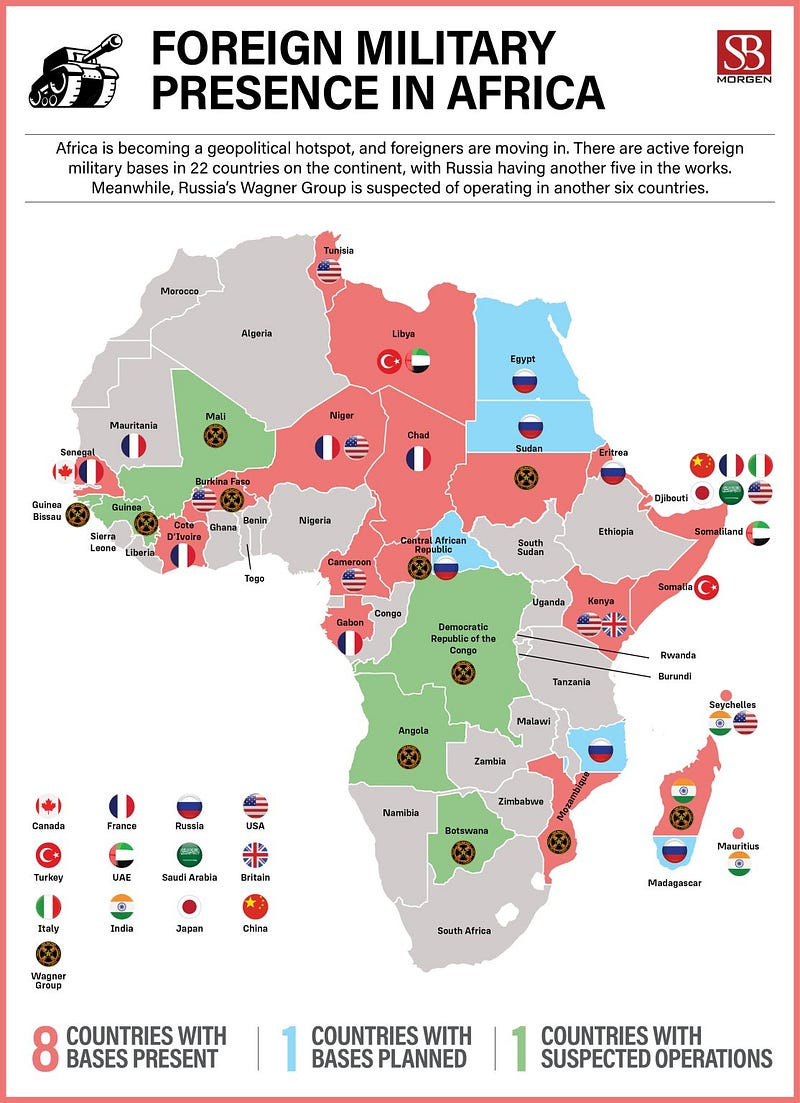
It was only a matter of time. The exit of the French Ambassador symbolically ruptures Franco-Nigerien relations in ways that the military withdrawal might not. The country is now without an international protector and will look to Russia for support. However, Moscow is unlikely to be able to offer Niger the same level of protection as Paris. As far as winners and losers go, Niger may have won the battle, but the war with domestic and cross-border armed groups looms large. Last week, Burkina Faso, Mali and Niger announced a mutual defence treaty seeking to replace French counterterrorism efforts in the Sahel and frustrate any attempt by ECOWAS to remove the junta in Niamey. While regional cohesion is often positive, what France offered with its G5 Sahel counterterrorism force coordination is far more superior to what the three countries can muster. This point is best illustrated by Islamist groups ramping up attacks in the three countries following French and UN Forces’ withdrawal. However, for anti-French activists in the Sahel, such a symbolic win — a Frexit if you will — is just as good as a victory against the armed groups. Western interventions in the region are bogged by fatigue and growing resentment. The past decade of French security support in Sahel countries is unravelling due to perceived failures in curbing Islamist militant groups and accusations of unequal treatment by French security forces. Beyond the Western powers, there is a declining appetite for direct security interventions. While the US aims to maintain a counter-terrorism presence and enhance military cooperation in the region, its willingness to deploy troops to countries with no strategic interest is diminishing, so some countries have turned to the Russian private military company Wagner Group to fill security gaps left by the UN and France. Wagner offers security services to governments and armed groups in exchange for lucrative commercial contracts, particularly in mining. However, the results of this cooperation have been mixed, with little evidence that Wagner has improved security in the regions where it operates. Alleged human rights abuses and the death of Wagner’s leader make the future of the mercenary group uncertain. African governments are increasingly taking on a greater role in responding to regional security crises, but they face persistent challenges related to organisation, financing and operations. Meanwhile, Paris’ decision to withdraw its troops from Niger, along with the lukewarm response from ECOWAS, raises concerns about the potential prolonged delay in Niger’s return to full democratic rule. This situation mirrors the challenges faced by neighbouring Burkina Faso (which has not broached the issue) and Mali (which announced a delay to elections in February for “technical reasons”). One key lesson from the past decade is that complex security threats can outlast the funding and political will of fragmented coalitions. Amid this ever-changing scenario, West Africa’s security and stability remain shrouded in uncertainty. The path ahead hinges on the capacity of local governments, regional entities and global stakeholders to collaborate effectively in confronting the intricate security issues while acknowledging the yearnings of the region’s populace for self-rule and autonomy. With citizens growing disenchanted with democracy, the quest for alternatives that can rekindle hope and improve their quality of life is well and truly underway. For a while at least, Paris (and by extension Brussels and Washington) will not take their traditional place on the frontline of shaping that debate.