
Ghana gains momentum
S&P has upgraded Ghana's credit rating, signalling stronger investor confidence in its economic recovery and fiscal discipline following a recent default.

Ghana’s post-default recovery gathered pace this week as S&P Global Ratings upgraded the country’s sovereign credit rating from CCC+/C to B-/B, reflecting renewed investor confidence and improved economic fundamentals. The agency cited Ghana’s rising foreign reserves—now nearing $11 billion—robust gold and cocoa exports, and fiscal discipline anchored by a 1.5% primary surplus target and a plan to cut public debt to 45% of GDP by 2034. The upgrade, with a stable outlook, is expected to lower borrowing costs and strengthen Ghana’s standing with international creditors, though S&P warned that high debt-servicing costs and pending restructuring of $5 billion in external debt remain risks. In a related development, Ghana signed a new bilateral debt restructuring deal with Germany, its sixth under the ongoing fiscal reform programme. Finance Minister Cassiel Ato Forson said the deal underscores Germany’s confidence in Ghana’s recovery and long-term growth prospects, marking another milestone in the country’s path to debt sustainability and economic stability.
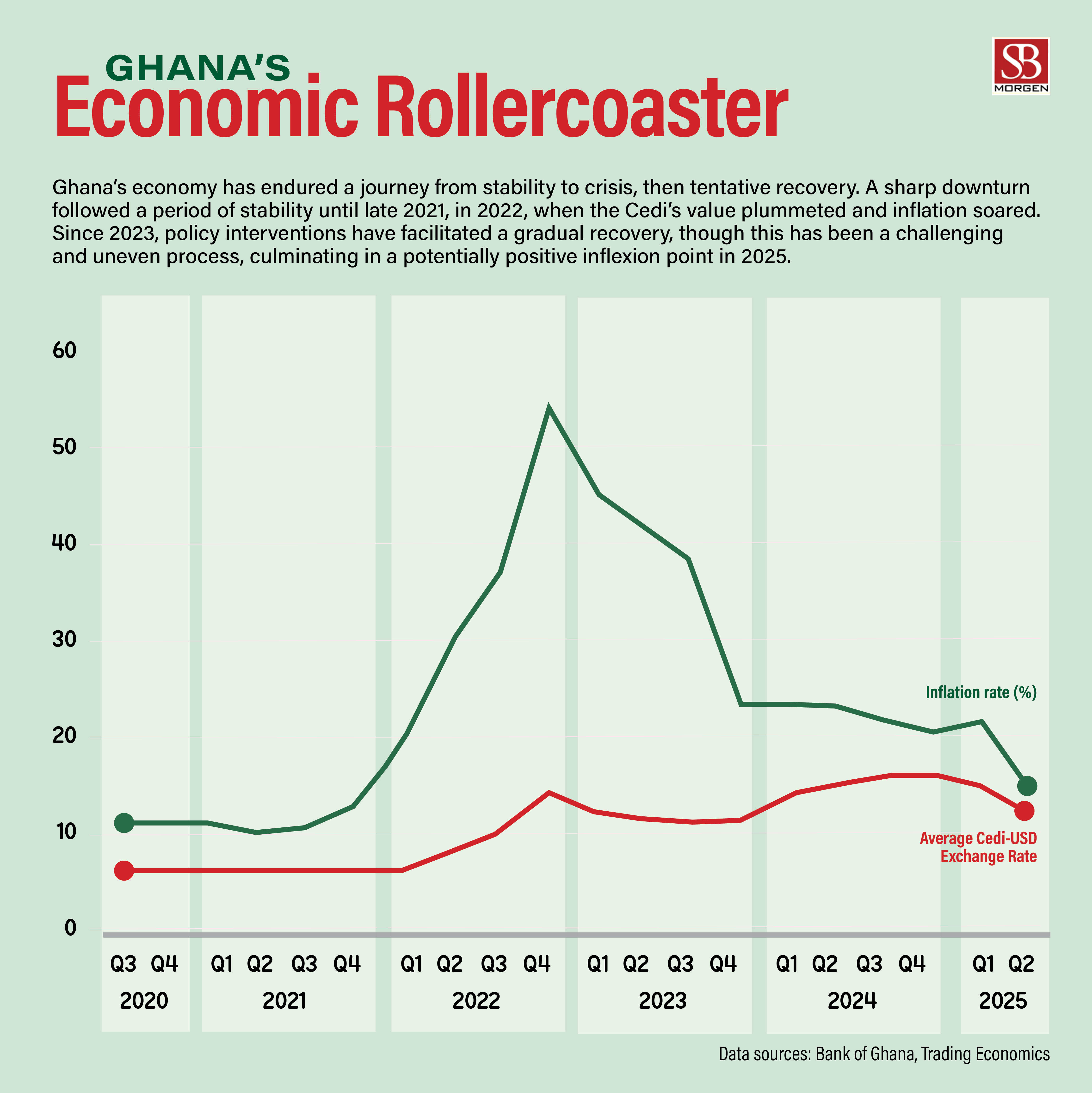
Ghana’s economy is entering a significant new phase, marked by upgrades to the country’s credit status by all three major rating agencies. These upgrades signal substantial progress in recovery following the 2022 economic crisis, which necessitated a three-year International Monetary Fund (IMF) programme.
The improved ratings largely reflect better performance across key economic indicators. Gold exports continue to drive growth and contribute to a stronger, more stable exchange rate. The country is currently ahead of its IMF reserve accumulation targets, with import cover now nearing five months, a notable turnaround from the crisis years. With a stronger external position and the prospect of single-digit inflation on the horizon, optimism about the economic future is growing.
Despite these short-term successes, the 2026 national budget remains heavily skewed toward debt servicing. Ghana is projected to benefit from approximately $1.5 billion in external debt service relief next year. This relief follows gains from debt restructuring measures enjoyed since December 2022. The ongoing bilateral debt negotiations with Germany are critical, as they are expected to set off a snowball effect, paving the way for other partners, including France, China, and the United States, to finalise similar deals.
However, a major test looms in 2026. This is when the moratorium on repayments from bilateral partners is expected to expire (by May 2026) and Ghana completes its IMF programme and resumes full-scale bilateral debt repayments. Government officials have maintained that the country will not rush back to the international capital markets, preferring instead to consolidate gains from ongoing reforms. Ghana’s ability to sustain stability in this next phase will ultimately determine the lasting impact of its post-crisis recovery.