
Ghana gold reforms: First step, close the door
Ghana’s Gold Board suspends new buying licences to overhaul the trading regime, aiming for greater transparency and national benefit from gold resources.

The Ghana Gold Board (GoldBod) has suspended new applications for selected gold buying licences with immediate effect as part of sweeping reforms aimed at overhauling the country’s gold trading regime. In a statement dated 16 February 2026, GoldBod said the suspension covers Tier 1 and Tier 2 buying licences, as well as the Self-Financing Aggregator Licence. However, applications for the Aggregator Licence will remain open during the review period. The Board clarified that all applications submitted prior to the announcement will continue to be processed. According to GoldBod, the suspension forms part of a broader strategy to modernise the licensing framework, enhance transparency, strengthen regulatory compliance, and improve traceability across Ghana’s gold value chain. The reforms are also designed to ensure greater national benefit from the country’s gold resources. GoldBod said further details on the revised licensing structure and implementation timeline will be communicated in due course.
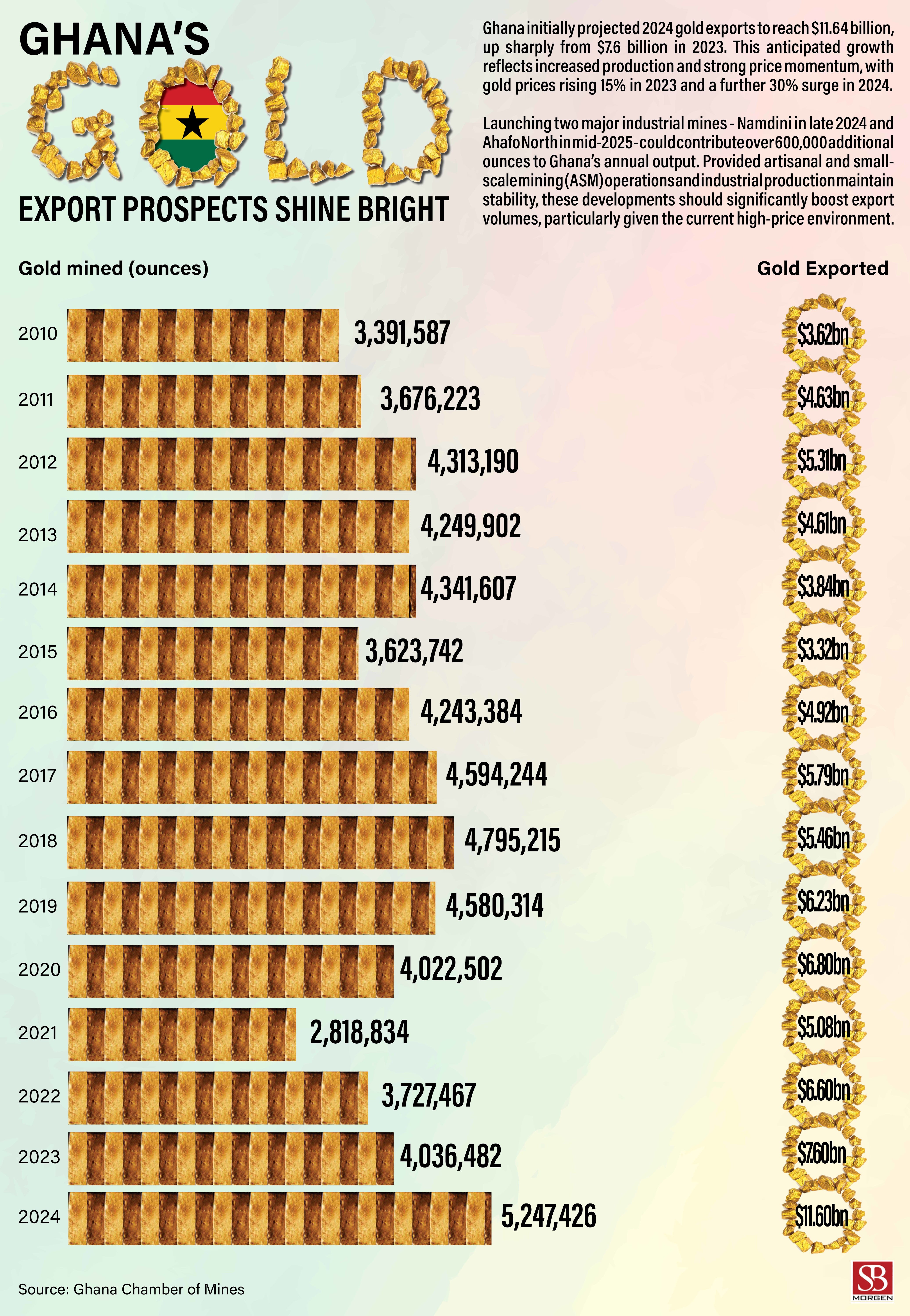
Ghana’s recent economic recovery has largely been driven by a commodity windfall, particularly from gold and cocoa. After a turbulent 2022 and 2023 marked by debt restructuring and high inflation, the turnaround in 2024 was supported by a sharp rise in cocoa prices. That price surge provided much-needed foreign exchange and fiscal breathing space at a critical moment in the country’s IMF-backed adjustment programme.
In 2025, cocoa exports approached $4 billion, reflecting the benefits of the earlier price rally. However, that momentum is unlikely to be sustained. Global cocoa prices have fallen by more than 60 percent from their peak levels due to improved supply and a market glut. For Ghana, the world’s second-largest cocoa producer, this means export earnings in 2026 could decline significantly, even if production volumes recover.
Gold has therefore emerged as Ghana’s main economic anchor. The surge in gold prices in late 2024 and throughout 2025 has boosted export receipts and strengthened the country’s external position. Total exports in 2025 reached an all-time high of about $21 billion, more than double the previous year’s inflows. This gold-driven windfall has helped shore up international reserves to roughly six months of import cover, providing stronger buffers against external shocks and currency pressures.
A major structural shift has been the establishment ofthe Ghana Gold Board, widely known as GoldBod. The institution was created to take control of the buying and selling of gold from the artisanal and small-scale mining sector. In 2025 alone, GoldBod mobilised over $10 billion in gold exports from this segment, revenues that previously leaked through smuggling and informal channels. By formalising aggregation and export processes, the state has been able to capture more value and improve transparency in the gold trade.
Still, policymakers are aware that gold prices will not remain elevated indefinitely. The current windfall presents an opportunity, but not a permanent solution. That is why Ghana has begun taking steps to refine more of its gold locally in order to capture additional value within the country rather than exporting raw dor bars. Expanding refining capacity is expected to improve margins, create skilled jobs, and deepen participation in the global gold value chain.
However, challenges remain, particularly around traceability and compliance with international sourcing standards. Premium buyers in Europe, the United States, and Asia demand verifiable supply chains, especially for gold sourced from artisanal and small-scale miners. To address this, authorities are streamlining licensing processes for aggregators who purchase gold from small-scale miners on behalf of GoldBod. The goal is to improve documentation, enforce responsible sourcing standards, and reduce the risk of illicit flows.
With stronger traceability systems and a more transparent licensing regime, Ghana hopes to position itself as a reliable and ethical gold supplier in the global market. If successful, this could allow the country to attract premium buyers and secure better pricing, thereby maximising gains from the gold value chain.
In essence, Ghana’s current economic stability is commodity-driven, first by cocoa and now by gold. The real test, however, will be whether these windfalls are converted into long-term structural transformation, diversification, and resilience against future commodity cycles.