
Ghana’s POV
A survey by Global InfoAnalytics reveals that over half of Ghana’s population opposes the country’s participation in any military…

A survey by Global InfoAnalytics reveals that over half of Ghana’s population opposes the country’s participation in any military intervention in Niger by the Economic Community of West African States (ECOWAS). According to the survey, which sampled the views of 1618 Ghanaians from across the 16 regions, 52% opposed Ghana’s involvement in the intended invasion of Niger, 38% supported it, and 10% were undecided. Meanwhile, the United Nations Children’s Fund (UNICEF) reports that Niger requires humanitarian aid for over two million children, with 1.5 million children under five facing malnutrition and 430,000 suffering from severe malnutrition.
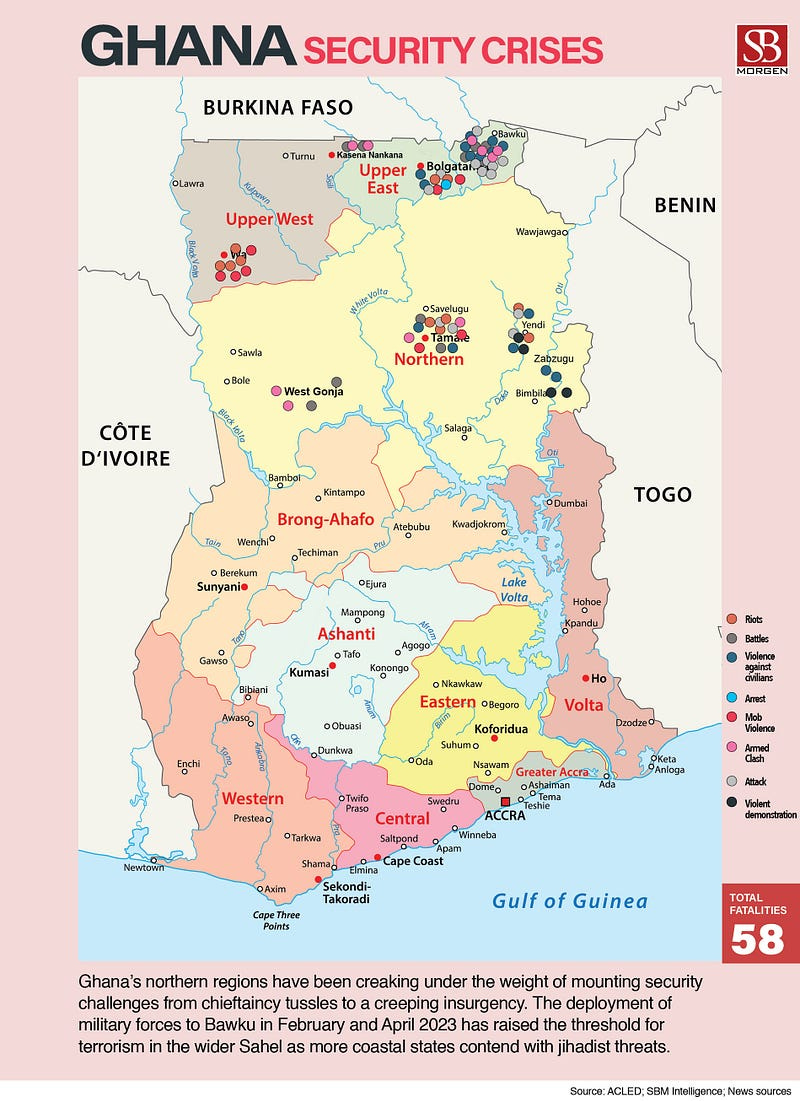
The recent military takeover that ousted President Mohammed Bazoum in Niger has led to political instability and severely impacted the movement of people and goods. On the part of Ghanaians, they have expressed dissatisfaction with their country’s decision to send troops for a military intervention in Niger. The minority caucus in Ghana’s parliament has repeatedly voiced their disagreement with this intervention. Many are concerned that Ghana, already facing economic difficulties, will further strain its defence budget of around $350 million for 2023. Predictions suggest defence expenses could increase by about 13 percent next year. Ghana’s central bank, typically the lender of last resort, suffered an unprecedented loss of $5.4 billion in the 2022 fiscal year. Food inflation remains high at over 50 percent, and the average interest on commercial bank loans is around 35 percent. Ghana is simply not ready for war, and the ongoing terrorist attacks are expected to worsen Ghana’s economic challenges and pose security threats. In a bold attempt to transport food supplies from Niger, a Ghanaian driver was tragically shot by suspected terrorists, who set multiple trucks on fire. The wounded driver was part of a group of drivers who chose the Burkina Faso route to deliver essential food items to Ghana. This decision was prompted by the closure of Niger’s borders due to the military coup, leading to tensions with the ECOWAS regional bloc. Massahoudu Dambala, owner of Damabala Enterprise, which employs around 35 trucks for food transportation from Niger to Ghana, shared that the drivers ignored the terrorists’ orders to stop while attempting border crossing without security escorts, leading to a violent confrontation. The terrorists burnt the leading vehicle, 450 bags of beans and four other trucks. In response to this, Ghana’s Defence Ministry has cautioned Ghanaian traders to avoid going to Niger for business purposes at this time until the situation there improves. If ECOWAS employs military force in Niger, it could disrupt supply chains in the sub-region and push millions into poverty. The sub-region already faces significant food insecurity, with 40 million out of its 308 million inhabitants experiencing undernourishment and chronic malnutrition. Yet another war would be a tragic mistake.