
Ghana’s upstream oil
Ghana’s oil and gas sector is growing, with Eni, Tullow, and Kosmos boosting production and gas supply, enhancing energy security and output.

Ghana’s upstream oil and gas sector is gaining momentum, driven by renewed investment from key international operators. Eni is advancing development at its deepwater Sankofa field, targeting a production increase to around 40,000 boepd from 2026, alongside efforts to expand domestic gas supply for power generation. Tullow Oil has launched a major drilling campaign at the Jubilee and TEN fields to enhance output and asset longevity. Meanwhile, Kosmos Energy is progressing with the Jubilee South East project, adding new production capacity. These developments signal robust growth prospects and improved energy security for Ghana’s hydrocarbon industry in the coming years.
President John Mahama’s recent appeal to international oil companies (IOCs) to expedite crude oil exploration and production in Ghana is generating positive signals worldwide, repositioning the West African nation as a promising destination for oil investment. Ghana had gone more than seven years without signing new petroleum agreements, with major players such as ExxonMobil withdrawing from the sector. In 2021, ExxonMobil relinquished its 80% stake in the Deepwater Cape Three Points (DWCTP) offshore block, citing a re-evaluation of its portfolio, which triggered a domino effect that saw firms like Aker Energy also exit.
As of December 2025, Ghana held 14 active petroleum agreements. Tullow Ghana and Eni are currently in production, the Pecan field is under development by Aker Energy (though they previously considered exiting, recent reports indicate continued development), and the remainder remain in exploration.
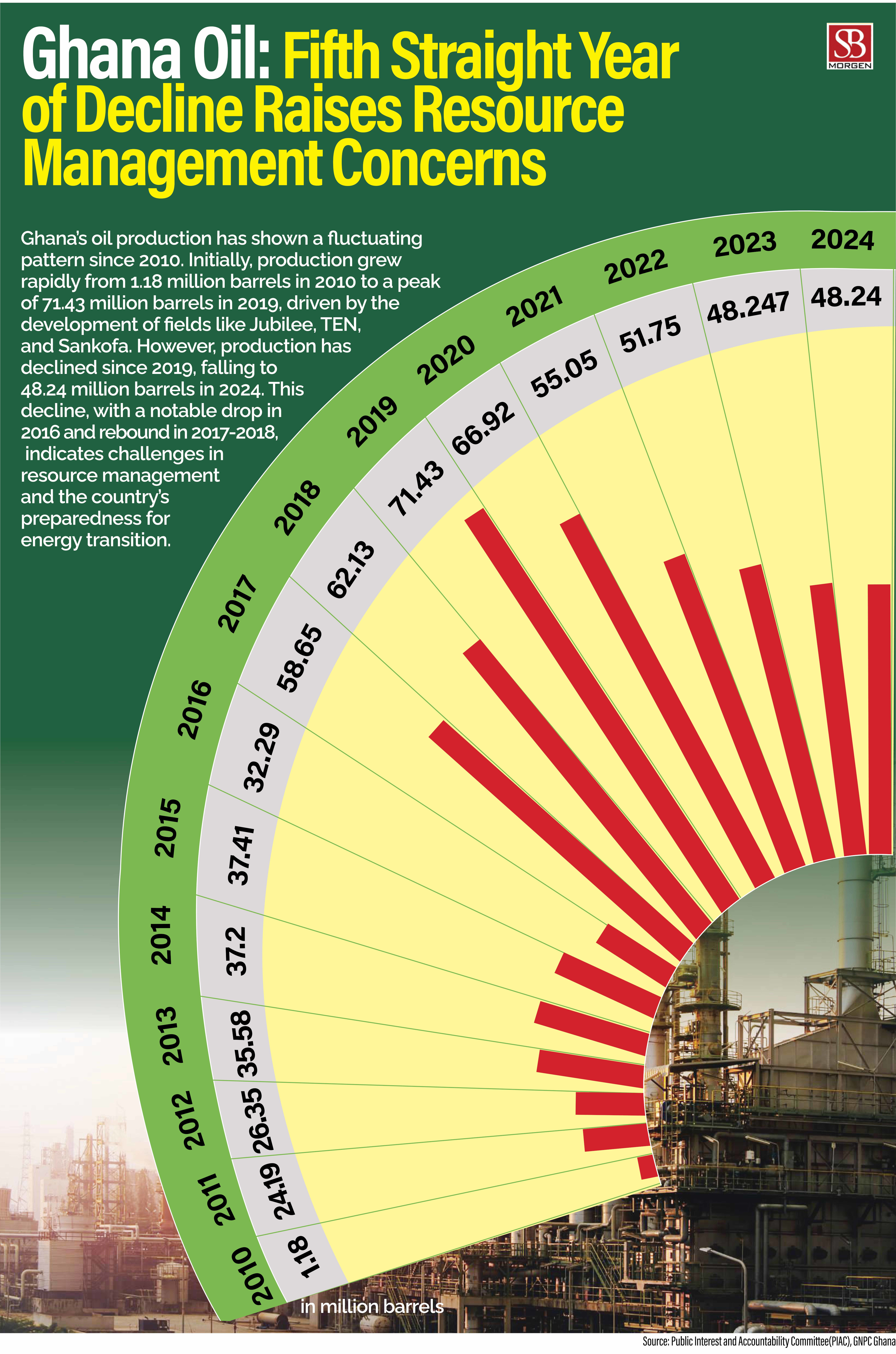
Now in its fifteenth year of oil production, Ghana’s petroleum sector—once regarded as a rising star—has faced setbacks including tax disputes and legal challenges that have deterred investment. For instance, the government has been actively pursuing disputed tax revenues from some IOCs, creating an uncertain environment for investors.
Nevertheless, the President’s renewed push, supported by a more favourable macroeconomic environment and improved government relations, is fostering cautious optimism. Eni is advancing development at its deepwater Sankofa field, targeting a production increase to around 40,000 boepd from 2026, alongside efforts to expand domestic gas supply for power generation. Tullow Oil has also launched a major drilling campaign at the Jubilee and TEN fields to enhance output and asset longevity. Meanwhile, Kosmos Energy is progressing with the Jubilee South East project, adding new production capacity. These developments signal robust growth prospects and improved energy security for Ghana’s hydrocarbon industry in the coming years.
With these renewed efforts underway to reverse declining output, several oil and gas companies are reassessing Ghana’s prospects, raising hopes for a much-needed revival in the country’s energy sector.