
Grasping at straws
Ghana’s cocoa export revenue dropped by nearly $700 million in the first half of 2024 due to illegal mining (galamsey), smuggling and crop…

Ghana’s cocoa export revenue dropped by nearly $700 million in the first half of 2024 due to illegal mining (galamsey), smuggling and crop diseases. Smuggling, driven by low local prices and payment delays, has cost the country over a third of its 2023/2024 cocoa output. Agriculture Minister Bryan Acheampong announced a nearly 45% increase in the fixed farmgate price for cocoa, effective from Wednesday, to curb smuggling and boost farmer incomes. The price hike is the largest ever and comes as Ghana, the world’s second-largest cocoa producer, seeks to stabilise the sector. Ivory Coast may follow with a similar increase.
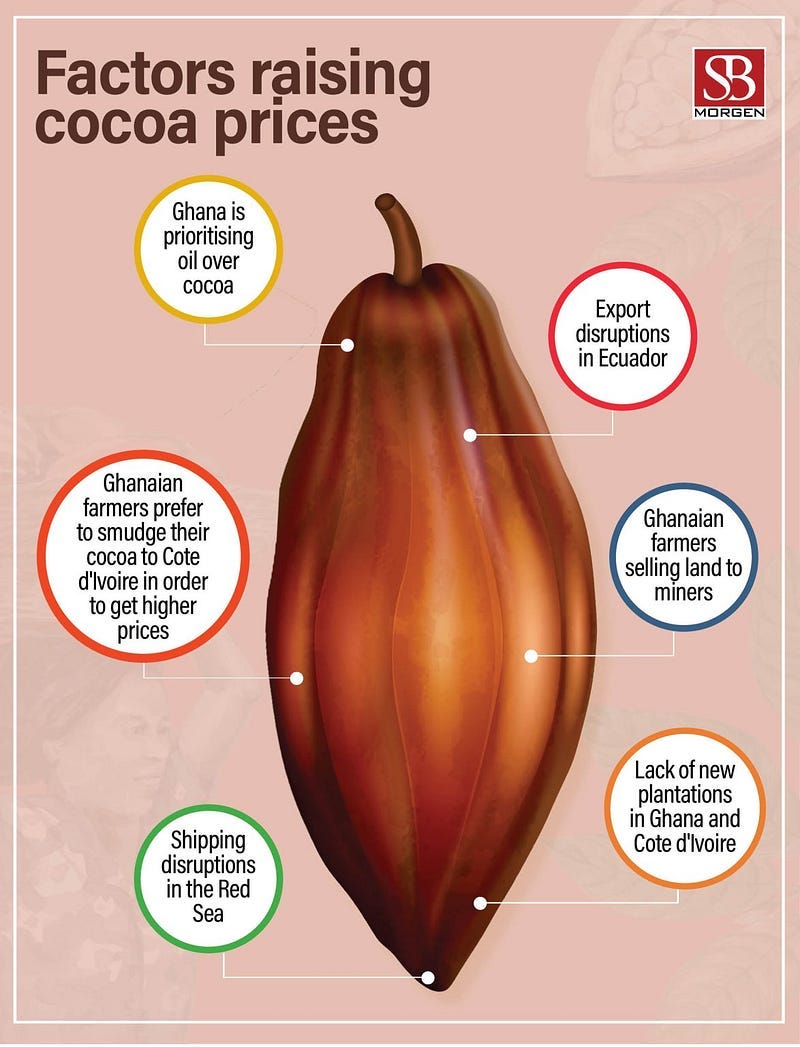
Ghana and Côte d’Ivoire’s economies, like many other Sub-Saharan African economies, largely rely on a single commodity, These economies fluctuate in tandem with the prices of the commodities they rely on for government revenue and foreign exchange. Due to local and international factors, these countries have been unable to capture a greater portion of the cocoa value chain through value addition. Smuggling remains one of the biggest threats to Ghana’s cocoa industry, with approximately 160,000 tons of cocoa beans lost to smuggling during the just-ended season. This marks an increase of 10,000 tons compared to the 2022/2023 season. Looking ahead to the 2024/2025 season, industry experts project that smuggled cocoa beans could reach 200,000 tons. The reason for this surge is straightforward: there remains a significant gap between what the black market offers farmers and the official price set by COCOBOD, making smuggling an attractive option. Each cocoa season, Ghana loses an estimated 30% of its cocoa beans to smugglers. To combat this, COCOBOD must recognise that smuggling operates as a well-organised cartel. Addressing the issue requires closing the price gap and strengthening border controls. Despite COCOBOD increasing the price per bag by over 120% in the 2023/2024 season, farmers still opted for the black market, undermining COCOBOD’s ability to supply cocoa beans to trading houses. Ghana’s broader economic challenges further complicate the situation. While second-quarter growth reached a promising 6.9%, inflation and the depreciation of the local currency remained above 20%, severely eroding farmers’ purchasing power despite repeated cocoa price hikes. These economic pressures continue to incentivise smuggling, posing a serious risk to the country’s cocoa industry and future. Together, Ghana and Côte d’Ivoire control over 60 percent of global cocoa production, and by working together, they can manage exports and prices, which should help them generate more revenue and reduce price volatility, similar to what the Organisation of the Petroleum Exporting Countries (OPEC) has achieved in the crude oil sector. Other West African producers, like Nigeria, should consider joining this consortium, as their economic destinies appear to be intertwined.