
Grey list
Global money laundering and terrorist financing watchdog, the Financial Action Task Force (FATF), has placed Nigeria and South Africa on…

Global money laundering and terrorist financing watchdog, the Financial Action Task Force (FATF), has placed Nigeria and South Africa on its grey list. Countries placed on the grey list are subjected to increased monitoring and have to actively work with the FATF to counter the shortcomings of their laws. It is not a permanent list, and nations can be taken off after cooperating with the FATF to address their failings. The implications of the list could, however, have severe consequences. South Africa’s rand fell against the dollar after the country was placed on the list last Friday.
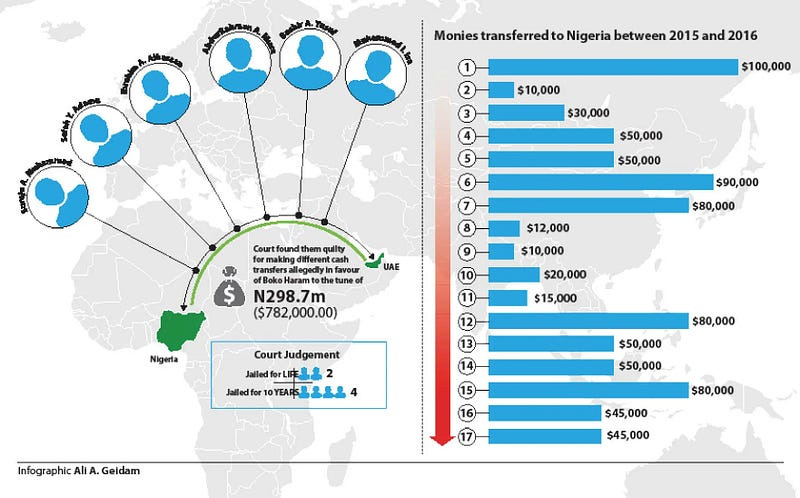
FATF is an intergovernmental policy-making body that seeks to combat money laundering and terrorist financing. The body maintains two lists — the “black and grey” lists. The former contains high-risk jurisdictions like Iran, Myanmar and North Korea subject to a ‘Call for Action.’ On the latter list are ‘jurisdictions under increased monitoring’, including leading lights like the DRC, Haiti and Yemen. It is this list that Nigeria and South Africa got added to. The organisation explained that the inclusion of a jurisdiction to its grey list means that the country has committed to swiftly resolving the identified strategic deficiencies within agreed timeframes and is subject to increased monitoring. This development is not surprising for many who have decried Nigeria’s slow or nonexistent ability to prosecute terror financing. Nigeria’s notoriety for running afoul of global terror financing laws came to a head in 2021 when six Nigerians — some former government officials — were prosecuted in the United Arab Emirates (UAE) for various charges bordering on terror financing. That period followed an announcement by the Nigerian Attorney General, who the AG’s office said will be prosecuted for supporting terrorism. It was hoped that successful prosecution of those cases would reveal even bigger names, but the remarkable thing is that not a big fish was found in that pond. However, in the past few months, cold water has been poured on those cases; with this listing by the FATF, it appears that everything has been business as usual for quite some time. The fact that more African countries have been placed on that list, no matter how temporary, is bad-looking, and this could be said to be merited given not only how lax African anti-terror and terror financing laws are but also how slow any of the African Union (AU)’s laws on such issues have been implemented especially as this is coming a little less than a year after the AU had its counter-terrorism summit in Equatorial Guinea, where many changes were pledged. How the Nigerian government will respond to this listing is anyone’s guess, but its antecedents have shown that it may not be bothered, particularly when it is neck deep in sorting such domestic issues as navigating a democratic transition.