
Hanging in there
The Nigeria Air Force averted a potential terrorist attack after dozens of armed bandits were killed by airstrikes around the Sangeko…

The Nigeria Air Force averted a potential terrorist attack after dozens of armed bandits were killed by airstrikes around the Sangeko community of Kwiambama Ward in the Maru Local Government Area of Zamfara State while on an attack mission to Kebbi State. Still, in Zamfara, gunmen abducted at least 50 people, including women and children, injured seven people and killed three others in an attack in Bagega, a mining village, the village chief said. The gunmen had stormed the village on motorcycles, shooting indiscriminately and setting houses ablaze. Two policemen were shot and wounded while trying to fend off the attackers.
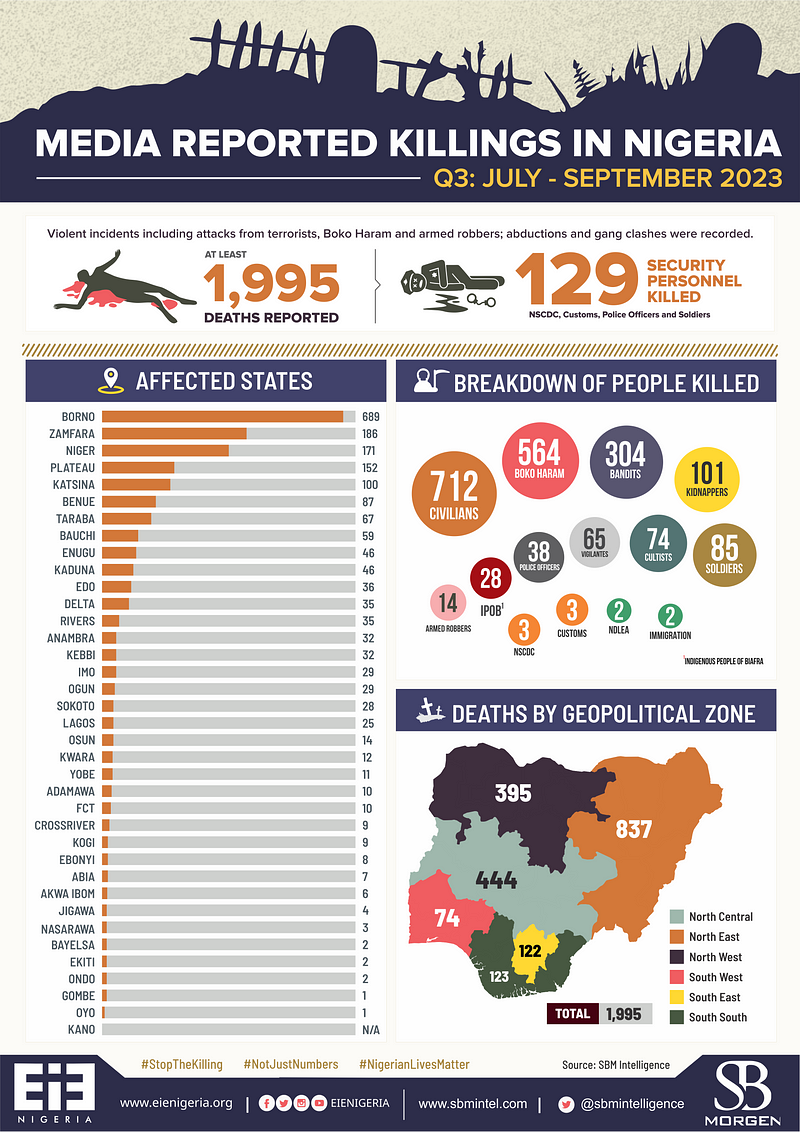
Nigeria has treated its border communities nonchalantly over the years. One of the most obvious and enduring aspects of Nigeria’s security crisis is how armed groups easily move between states to carry out attacks. This week’s airstrike on bandits shuffling between Kebbi and Zamfara is a prime example of armed groups’ seamless operations in communities that border Kogi and Enugu, Oyo and Kwara, Niger and Kaduna, Borno and Adamawa, etc. Many local law enforcement agents see security in those communities as the responsibility of other states, and this mentality fuels the neglect and abandonment that is being exploited by armed groups. This week’s airstrike also explains the difficulty of ground operations by a thinly stretched army relying increasingly on the airforce and gradually restricting itself to mop-up operations. The army’s fatigue is unmissable. The recent attack on the Federal University in Gusau caught the army off guard, and even though they were present, they could not repel the bandits. Insecurity in the North has reached a critical point, and traditional methods are no longer effective. For the Tinubu administration, negotiating ransoms with bandits for large-scale abductions is its way of managing a seemingly hopeless situation, and it is only a matter of time before the worst-affected states in the Northwest and Northcentral follow suit despite public statements of defiance. Meanwhile, the recent attack on the mining settlement in Bagega necessitates establishing a robust security infrastructure, which will enhance security, attract Foreign Direct Investment (FDI) and catalyse the development of other Nigerian states. Bandits and terrorists often target isolated, underdeveloped areas with limited governance. In contrast, mining cities designed at scale can incorporate fortified defences, advanced security personnel and modern surveillance technology, making it significantly challenging for these criminals to launch successful attacks. These well-protected mining cities become attractive investment hubs for international stakeholders seeking stable, secure environments. Furthermore, these mining cities can boast well-developed transportation and communication networks, enabling swift responses from security forces in case of any threats. This improved connectivity would also facilitate the efficient movement of goods, services and raw materials, making the mining sector more competitive and open to global markets. Another crucial point in the story is the vital role of technology in quickening the defeat of terrorists and bandits in Nigeria. There has been a reliance on brute force that has to be replaced with a strategy that uses more stealth and subtlety. Drones can be used to conduct surveillance and reconnaissance missions, providing security forces with real-time intelligence on the location and activities of terrorists and bandits. Drones can also be used to carry out airstrikes, targeting terrorist and bandit hideouts and training camps. Satellite imagery can be used to identify and track terrorist and bandit movements and map out their operation bases. Big data analysis can be used to identify patterns and trends in terrorist and bandit activity, which can help security forces to anticipate and prevent future attacks. In addition to these specific examples, technology can also be used to improve the overall effectiveness of security forces in Nigeria. Noteworthily, the government needs to take more active steps in warring against banditry in weak and vulnerable areas.