
Highs and lows
Nigeria’s Gross Domestic Product grew by 3.19% year-on-year in Q2 2024, up from 2.51% in Q2 2023 and 2.98% in Q1 2024. The services sector…

Nigeria’s Gross Domestic Product grew by 3.19% year-on-year in Q2 2024, up from 2.51% in Q2 2023 and 2.98% in Q1 2024. The services sector led with 3.79% growth, while the industry sector rebounded with 3.53%, recovering from a -1.94% decline in Q2 2023. Agriculture grew by 1.41%, slightly below the previous year’s 1.50%. The oil sector saw a significant recovery with 10.15% growth despite a quarter-on-quarter decline of -10.51%. Daily oil production averaged 1.41 million barrels daily, higher than Q2 2023 but lower than Q1 2024. The non-oil sector grew by 2.80%.
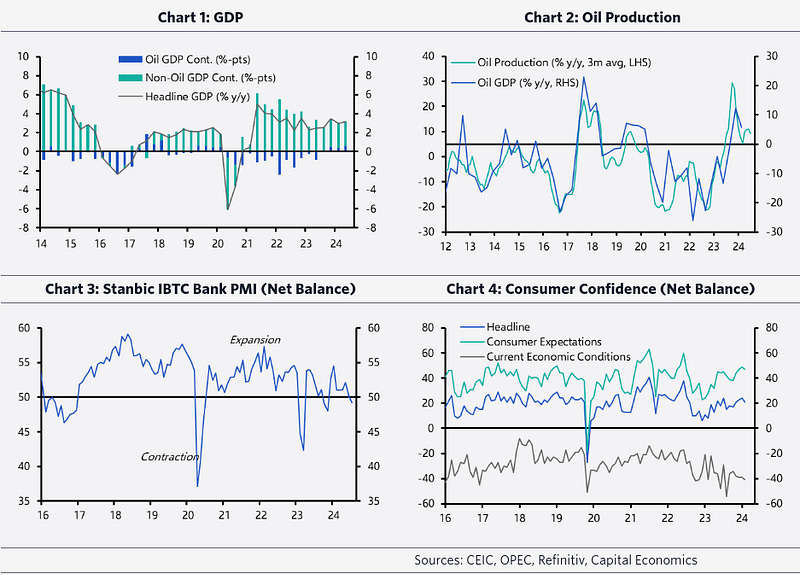
Nigeria’s annual population growth rate of 2.4% is an important benchmark to consider when discussing GDP growth. Any GDP growth below this rate effectively indicates economic shrinkage, but at 3.19%, the current figures surpass this threshold. However, the quarter-on-quarter numbers reveal that this growth is not consistently strong; instead, it shows surges followed by drops. Nigeria needs sustained, high GDP growth over an extended period, which requires deliberate policymaking, effective implementation of those policies, and unwavering political will. While some necessary policy announcements have been made, their implementation could have been better. In dollar terms, Nigeria’s GDP has effectively shrunk at an alarming rate, causing it to fall from being Africa’s top economy to third. It is common knowledge that Nigeria’s economic performance mirrors the price of crude oil. The country’s recent recessions in 2016 and 2020 can be directly attributed to steep declines in crude prices. To positively impact Nigerian lives, Nigeria needs to maintain and improve its sustained oil production at 1.41 mbpd and significantly boost the growth rate of the non-oil sector. However, what is most concerning is the state of Nigeria’s agriculture sector. Insecurity has caused the country’s farmlands to be deserted, and food shortages have become the norm. Nigeria will remain on the brink of disaster unless this issue is addressed. The country must return to the high GDP growth rates of the mid-2000s to see tangible benefits for its people.