
Human crisis
Yam sellers at Yan Doya market in Kaduna are experiencing low sales due to high prices, with a tuber costing up to ₦10,000. The high cost…

Yam sellers at Yan Doya market in Kaduna are experiencing low sales due to high prices, with a tuber costing up to ₦10,000. The high cost has led many buyers to remove yam from their menu. Similarly, bread has become unaffordable in many states. In response to economic hardship, protesters blocked the Kaduna-Abuja highway in Niger State, demanding economic improvement and carrying placards with messages like “Enough is Enough,” “We Are Not Slaves,” “Fuel Subsidy Must Be Back,” and “Hardship Is Unbearable.” The protest precedes a planned 10-day nationwide demonstration to demand economic improvement.
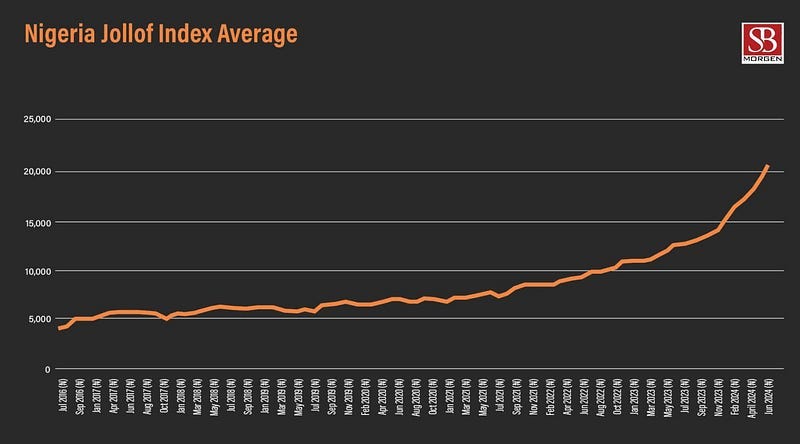
Nigerians are hungry because the cost of living, particularly food prices, has outpaced income. Nigeria has always been a poor country, but in the past, many Nigerians lived in rural areas and engaged in subsistence farming, allowing them to grow food to eat and, in some cases, sell excess produce for money to meet other needs. Additionally, in the villages, people live on their ancestral land and do not pay rent; where rent is necessary, it is typically minimal. Today, over 50 percent of Nigerians live in urban areas, and with high rates of unemployment and underemployment, they cannot earn enough to feed themselves. Unfortunately, there is no immediate solution to this plight. The government does not earn enough to fund a massive social programme, and the economy does not generate sufficient jobs to accommodate the tens of millions of unemployed youth. One too many times, staple food becomes too expensive as a combination of inflation and diminished purchasing power takes it beyond the reach of most Nigerians. Then, they switch to a cheaper alternative until that alternative becomes too expensive. However, some foods simply do not have readily available alternatives — yam is one such for many who consume it. As its price rises, it can serve as a barometer to measure the building pressure, much like bread does for some societies. We do not believe that a protest like the one that started yesterday poses a real danger to the Nigerian state. Instead, there will be spontaneous, unplanned protests triggered by the rising prices of staples like yam that the Nigerian state will not see coming, which could snowball into what it fears.