
In a pickle
Ghana’s High Commissioner to the United Kingdom and Ireland, Papa Owusu-Ankomah, has announced that the country’s finance ministry has made…

Ghana’s High Commissioner to the United Kingdom and Ireland, Papa Owusu-Ankomah, has announced that the country’s finance ministry has made significant progress towards settling the $140 million judgment debt due to Singaporean commodity trading firm Trafigura. He said that one of Ghana’s properties, the Regina House, used for commercial purposes, will not be sold to defray part of the debt. Earlier, a London court awarded Trafigura the right to seize and sell Ghana’s property in the UK following the cancellation of a power purchase agreement in 2017.
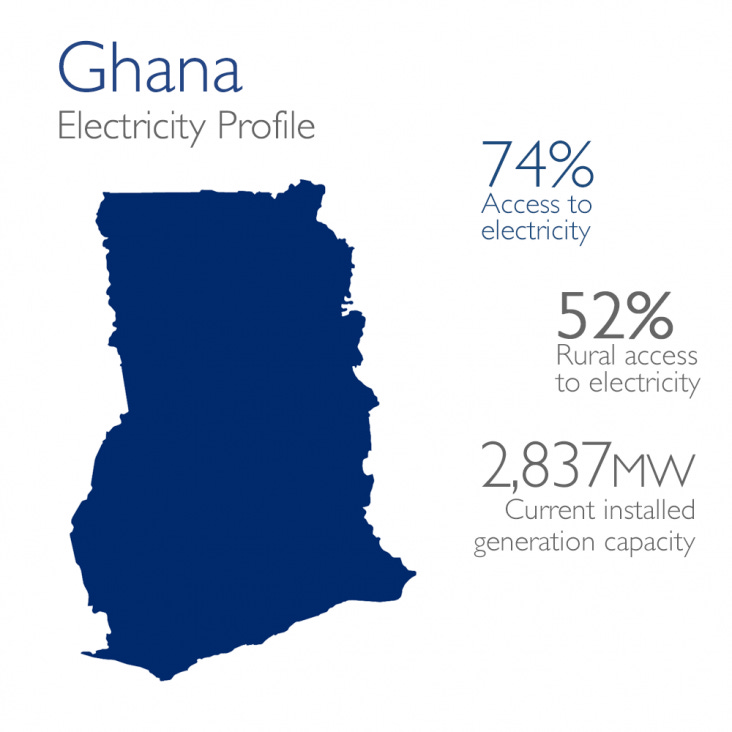
In 2015, Ghana suffered a power crisis that protracted for over a year. The West African nation entered into several power purchasing agreements with some Independent Power Producers to mitigate this. The Trafigura judgment debt arose from a written agreement for the installation and operation of two power plants, which Ghana (as the tribunal found) unlawfully terminated before the contractual term expired. The deal, signed in 2015 by the erstwhile Mahama administration, was to assist with providing a fast-track power generation solution. In 2017, when the Akufo-Addo-led government came into office, it decided to do some cleaning and restructuring in the energy sector, especially the renegotiation of Power Purchasing Agreements. The energy sector was crippled with a mammoth debt. As a result, in August 2017, Attorney General Gloria Akuffo advised the government to terminate 11 Power Purchase Agreements (PPAs) with a combined capacity of 2,808MW, including the GPGC EPA (Trafigura), and to defer four PPAs with a combined capacity of 1,810MW until 2018–2025, and three PPAs with a combined capacity of 1,150MW beyond 2025. In the government’s quest to save up to $115.48 million by terminating the deal, it incurs a judgment debt of $140 million. Although the government is trying to agree with Trafigura on the payment plan, it is clear the country’s energy sector anticipates dire problems ahead. First, the government owes West African Gas Pipeline Company Limited (WAPCo) more than $20 million. Independent Power producers (IPPs) have been asking for full payment of debt owed to them, which is more than $1.5 billion; they have refused debt restructuring on several occasions. Beyond this, Trafigura has asked Ghana, wading through one of its worst economic downturns, to cough up a whopping $140 million. The Ghanaian authorities, who are convincing their creditors to agree to a payment plan, will certainly have a difficult time.