
In deep waters

Shell Nigeria Exploration and Production Company Limited (SNEPCo) has made a final investment decision on the Bonga North deep-water project, a subsea tie-back to the Bonga FPSO facility. The project involves 16 wells, subsea hardware, and FPSO modifications, with the first oil expected by the decade's end and peak production of 110,000 barrels daily. Seplat Energy Plc has acquired Mobil Producing Nigeria Unlimited (MPNU) from ExxonMobil, doubling its production and reserves to 409 million barrels of proven reserves. Nigeria's oil production rebounded to 1.69 million barrels per day in November, with crude production averaging 1.48 million barrels per day.
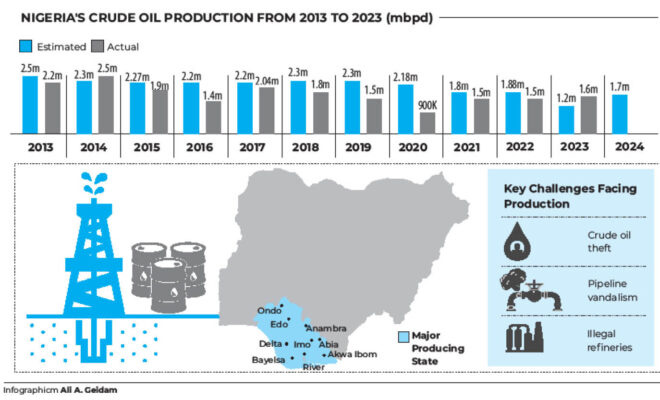
These transactions mark a turning point for Nigeria's oil and gas sector, showcasing a well-orchestrated approach to stakeholder engagement for which the government deserves commendation. The Bonga final investment decision (FID) stands out as particularly significant, as it represents the first major deepwater investment in over a decade. This decision signals a cautious resurgence of confidence among international oil companies (IOCs) in Nigeria's potential, especially in its deepwater segment—a critical area for its future production capacity. However, the interconnected nature of Nigeria’s oil deals cannot be overlooked. The approval of Shell's divestment of its onshore assets to Renaissance Africa Energy appears closely linked to the broader strategic goals of reinvigorating the sector. Similarly, the Ubeta oil field deal, poised to produce 350 million standard cubic feet (scf) of gas per day, adds another layer to this intricate web of transactions.
These deals are not occurring in isolation but as part of a broader strategy to reinvigorate Nigeria’s energy landscape. Despite holding the 10th largest crude oil reserves globally at the close of 2023, Nigeria's oil sector remains underwhelming compared to its peers nearly 70 years after the discovery of commercial crude oil. Chronic underinvestment and regulatory uncertainty have hampered growth. However, implementing the Petroleum Industry Act (PIA) alongside President Tinubu’s executive orders appears to have initiated a gradual turnaround. These measures have bolstered investor confidence, creating opportunities for domestic oil companies like Seplat to step into roles traditionally dominated by IOCs. Seplat’s recent acquisition of Mobil Producing Nigeria Unlimited is a prime example of this shift. With equity in 11 blocks (onshore and shallow water), 48 producing fields, five gas processing facilities, and three export terminals, Seplat has emerged as a key player in the sector’s new era.
Such developments highlight the broader trend of local firms acquiring legacy assets from the "big boys," a trend that reflects both the challenges and opportunities within Nigeria’s oil and gas industry. The relative stability in the Niger Delta and the Tinubu administration’s “ready-for-business” posture has created a more conducive environment for investment. This environment bodes well for attracting further deals and solidifies the position of key figures like Mele Kyari at the helm of the NNPC. As Nigeria grapples with the challenge of boosting oil production after decades of neglect and underinvestment, these developments serve as early dividends of the long-delayed PIA. A crucial lesson emerges from this phase of Nigeria’s energy transition: investors are drawn to environments where regulatory certainty and transparency allow for proper risk assessment.
While these deals signify progress, the inherent lead times associated with bringing new sites online mean that tangible production increases are unlikely to materialise during Mr Tinubu’s first term. Instead, immediate gains will depend on addressing persistent issues such as oil theft, which recent reports suggest has been somewhat mitigated. The next 24 months will likely witness more announcements as IOCs consolidate their positions in the deepwater segment—a space increasingly seen as the future of Nigeria’s oil production. These transactions will not only shape the trajectory of Nigeria’s energy sector but also serve as a litmus test for the effectiveness of the Tinubu administration’s policies in transforming the oil and gas industry into a globally competitive player.