
Inevitable
Nigeria’s Supreme Court on Thursday upheld President Bola Tinubu’s election win, ending a legal challenge brought by his two main rivals…

Nigeria’s Supreme Court on Thursday upheld President Bola Tinubu’s election win, ending a legal challenge brought by his two main rivals, who argued that irregularities marred his victory. Atiku Abubakar of the People’s Democratic Party and Peter Obi of the Labour Party had appealed a 6 September tribunal judgement that endorsed Mr Tinubu’s victory. “There is no merit in this appeal, and it is hereby dismissed,” said Supreme Court judge Inyang Okoro. The court also rejected Mr Atiku’s bid to introduce new evidence that alleged Tinubu had submitted a forged university certificate to the electoral agency. Tinubu had denied this.
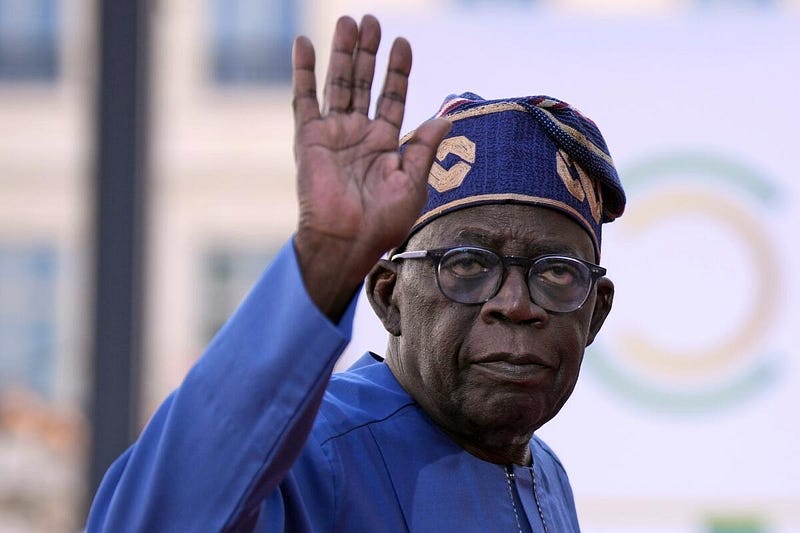
The Supreme Court’s verdict was utterly predictable and surprised exactly no one. “Scoring 25% of votes in the FCT is not a mandatory requirement for declaration of a candidate as the winner of the election” was one of the central points of contention in the presidential election appeal presented before the Supreme Court of Nigeria. The court agreed, reasonably, with the Court of Appeal’s perspective that the Federal Capital Territory holds no distinct status from other states, emphasising that the failure to secure 25% of the votes in the FCT does not impact the overall election results. More disappointing, though, was the highest court in the land failing to discipline the Independent National Electoral Commission (INEC) for wasting taxpayers’ time, resources and expectations with its underperformance in electronically transmitting vote returns. All said this judgement marks the final destination for the parties that contested the election results and the aspirations of those who believed the verdict might favour the two opposition candidates. In the days leading up to the court’s judgement, a notable development was the resurgence of Bola Ahmed Tinubu’s Chicago State University certificate controversy. This development rekindled the hopes of the election challengers, particularly Atiku Abubakar, who aimed to present fresh evidence to the court to bolster his appeal. In a motion filed on 6 October, Atiku had earnestly sought permission to introduce supplementary evidence — sworn depositions from Chicago State University — to use for his appeal as new evidence to support allegations of forgery against President Tinubu. The Supreme Court said this issue may only be revisited during the 2027 electoral cycle. Interestingly, this interpretation opens the door for Mr Tinubu to substitute his document, setting a dangerous precedent that people can attain power by questionable means and then try to legitimise their actions after the fact. That is a slippery slope that will engender the abuse of power and corruption. The court’s holding that the outcome of the 2023 presidential election was unaffected by INEC’s failure to post the election results on the INEC Result Viewing Portal (IReV) in real-time, while plausible, raises questions about both the election’s credibility and the electoral umpire’s legitimacy. We should observe the strategic choices both Atiku and Obi will make in the lead-up to the 2027 elections in Nigeria. Mr Atiku could decide to actively champion grassroots movements and become an active member of the opposition in Nigeria or regroup and devise new strategies for the 2027 elections, seeking international support and building alliances outside the country. Consider that a big if. On the other hand, Peter Obi may opt to intensify his efforts in strengthening the Labour Party’s position across federal, state, and local levels, focusing on grassroots mobilisation, forging alliances with like-minded parties, and turning his party into both a serial election winner and one of governance. Such a course will enhance his political standing and appeal to voters. The choices they make will undoubtedly be influenced by the evolving political landscape and needs of the Nigerian electorate in the lead-up to 2027. Going forward, opposition parties should snap out of a passive posture merely waiting for the 2027 elections. Instead, they must learn how to hold the incumbent government accountable effectively. The vitality of Nigeria’s democracy, the many challenges the country faces and a governmentally scarred region make this an imperative.