
Ivorian consumers (only just) catch a break
Côte d'Ivoire keeps June fuel prices unchanged following hikes in May, offering consumers some relief.

Côte d’Ivoire has maintained fuel prices for June following increases in May, offering relief to consumers amid rising living costs. The Ministry of Mines, Petroleum and Energy confirmed that diesel remains at 700 CFA francs per litre, petrol at 875 CFA francs, and kerosene at 745 CFA francs. Butane gas prices were also unchanged across common cylinder sizes. Authorities attributed May’s hikes to global energy disruptions linked to tensions in the Middle East. The government said its interventions helped limit sharper increases and continues to cushion consumers under the country’s monthly automatic fuel pricing system.
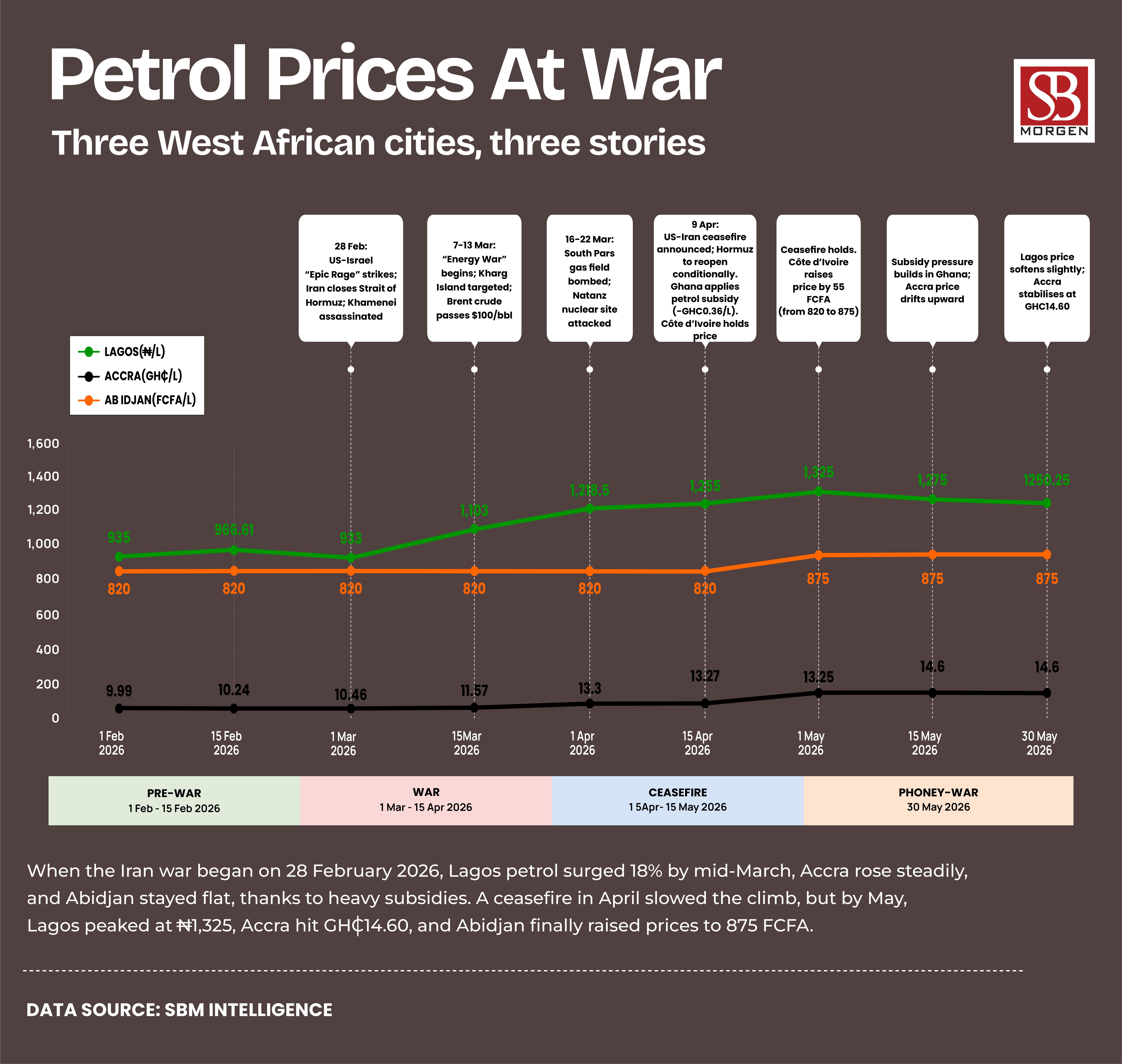
Côte d’Ivoire has moved to hold its domestic fuel prices steady for June 2026, locking in petrol at 875 CFA francs per litre, diesel at 700 CFA francs, and kerosene at 745 CFA francs. This decision offers a vital breather to consumers who were hit by sharp price hikes in May, which the Ministry of Mines, Petroleum and Energy attributed to global supply disruptions. These disruptions are tied directly to the same geopolitical crisis currently hammering the West African region: the military conflict between the United States and Iran, which severely choked the Strait of Hormuz and sent Brent crude soaring past $114 per barrel. While neighboring Ghana has allowed these global shocks to filter through to its pump via measured benchmark adjustments, the Ivorian authorities have aggressively used their monthly automatic pricing system to intervene, freezing prices to artificially cushion citizens from the broader global energy storm.
This aggressive market insulation is heavily dictated by domestic political necessity, arriving at a time when the ruling administration is navigating a weak mandate following a highly fragile and polarised performance in the country’s recent election. Faced with limited political capital, the government is acutely aware that letting skyrocketing international energy costs filter into household budgets could quickly trigger widespread social dissatisfaction, protests, and civil unrest. By freezing fuel and butane gas prices, the state is prioritising short-term social stability over fiscal realism. This model stands in stark contrast to Nigeria’s newly deregulated system, where consumers feel global price hikes immediately; instead, Abidjan is utilising the structural stability of the Euro-pegged CFA franc to shield the public, choosing to absorb the financial shock at the state level rather than passing the pain onto a restive population.
However, this interventionist stance comes at an extraordinary cost to the state budget, which is already under immense pressure due to a severe downturn in the country’s economic lifeblood: cocoa. Global cocoa prices have collapsed from their historic highs, forcing Côte d’Ivoire—the world’s top producer—to slash farmgate prices for its growers by nearly 60 percent to 1,200 CFA francs per kilogram in an effort to clear massive, unsold surpluses. This has triggered a gruelling fiscal squeeze; at the exact moment the government’s primary source of export revenue and rural income is severely diminished, the national treasury is simultaneously forced to bankroll expensive energy subsidies to keep domestic fuel prices flat. With the World Bank projecting global energy prices to rise 24 percent across 2026, Côte d’Ivoire’s strategy of holding prices steady is a high-stakes gamble that accumulates a massive fiscal deficit, illustrating the steep price a government must pay to buy domestic peace during a global crisis.