
Jobless
In Ghana, the average unemployment rate for the first three quarters of 2023 was 14.7%, with females consistently experiencing higher…

In Ghana, the average unemployment rate for the first three quarters of 2023 was 14.7%, with females consistently experiencing higher rates, according to the 2023 Q3 Labour Statistics Report. Only four regions had lower unemployment rates than the national average. Greater Accra and Ashanti regions recorded rates above the national average. Producer Price Inflation (PPI) in January 2024 rose to 17.4%, up from 16.6% in December 2023, with a month-on-month change of 1.7%. About 1.96 million Ghanaians, representing 6.1% of the population, face acute food and nutrition insecurity. The Cadre Harmonisé reports 34.7 million people in West and Central Africa are facing similar insecurity, which is expected to worsen in June–August 2024.
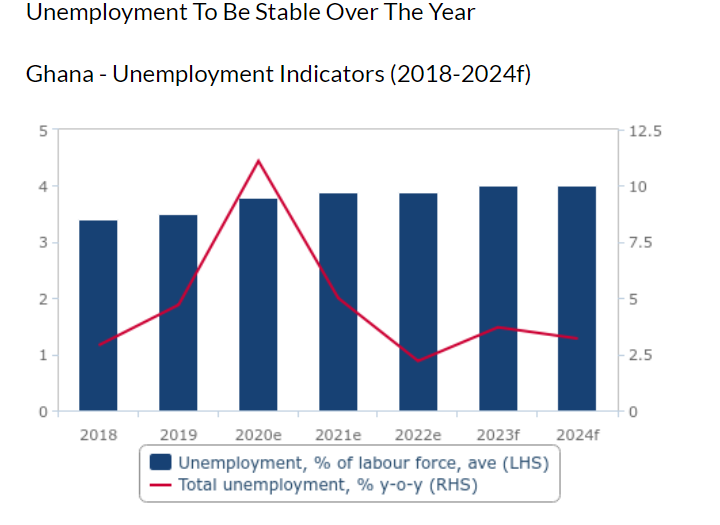
Ghana is currently battling with a significant economic challenge, facing high unemployment rates, double-digit inflation, and a depreciating currency against major trading currencies like the US dollar. In December 2023, the inflation rate surpassed 23%, while the unemployment figures released by the Ghana Statistical Service for the third quarter of 2023 revealed a worrisome rate of more than 14%. This represents a threefold increase in Accra’s unemployment rate compared to a decade ago, positioning it as one of the worst in the ECOWAS region, surpassing counterparts like Nigeria, Ivory Coast and Senegal, which all maintain single-digit unemployment rates. According to the Ghana Statistical Service, the average unemployment rate for the first three quarters of 2023 stood at 14.7%, with females experiencing consistently higher rates than males. The gender gap in unemployment widened in 2023 compared to 2022, driven by a sharp increase in female unemployment between the fourth quarter of 2022 and the first quarter of 2023. As more individuals migrate to urban centres like Accra and Kumasi in search of employment opportunities, the regions of Greater Accra and Ashanti consistently record unemployment rates higher than the national average. The youth unemployment rate in Ghana is nearing 20%, with a concerning statistic indicating that 22.3% of individuals experiencing unemployment between the first quarter of 2022 and the third quarter of 2023 had completed tertiary education. In fact, of the 540,000 individuals who transitioned from being outside the labour force to unemployment status between the fourth quarter of 2022 and the first quarter of 2023, over 75% remained unemployed. The latest Food Security Update by the World Bank revealed that approximately 1.96 million Ghanaians are facing acute food and nutrition insecurity, primarily due to high prices and post-harvest losses. While food may be available, the pressing question arises regarding whether the ordinary Ghanaian, grappling with unemployment and double-digit inflation, can afford it. As the 2024 presidential and parliamentary elections approach, the escalating number of unemployed individuals in Ghana raises the critical question of whether they will be promised unemployment benefits similar to those in Nigeria or opportunities for job creation.