
Justice on hold
Ghana's President Mahama suspended Chief Justice Torkornoo, triggering a legal challenge over constitutionality and judicial independence, amidst prior dismissed allegations.

President John Mahama has suspended Chief Justice Gertrude Torkornoo, citing substantial grounds in petitions alleging misconduct and incompetence, including irregularities in panel reconstitution. Acting under Ghana’s 1992 Constitution and following consultations with the Council of State, Mahama established a five-member committee—featuring Supreme Court Justices and former Auditor-General Daniel Yaw Domelevo—to investigate. However, MP Vincent Ekow Assafuah has filed a Supreme Court suit, arguing Mahama’s move was unconstitutional as he failed to notify Torkornoo before initiating the removal process. The allegations had previously been dismissed by ex-President Nana Akufo-Addo, sparking fresh constitutional and political debate over judicial independence.
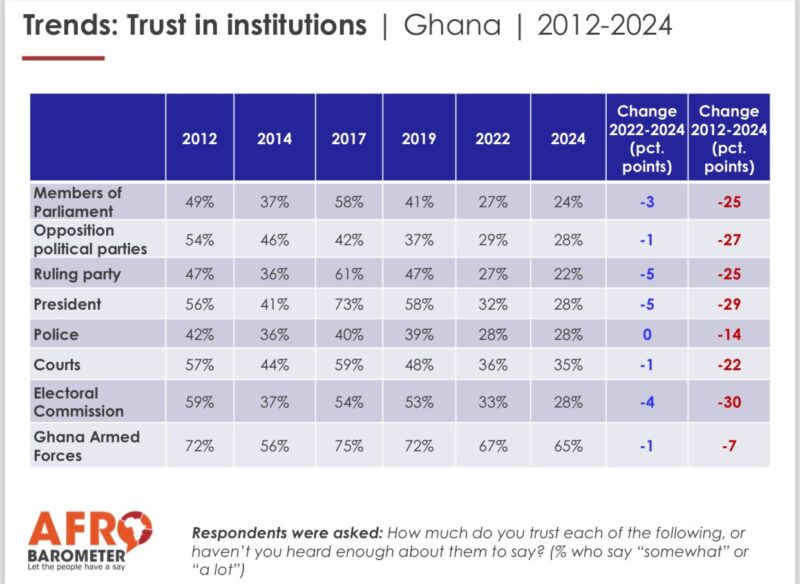
Ghana’s reputation as West Africa’s democratic beacon faces unprecedented challenges as its judiciary becomes embroiled in a deepening crisis of independence and public trust. The suspension of Chief Justice Gertrude Torkornoo by President John Mahama has brought long-simmering tensions to a head, exposing fundamental questions about constitutional governance and the separation of powers.
At the heart of the controversy lies Article 146 of Ghana’s Constitution, which outlines distinct removal procedures for judges and the Chief Justice. While legal experts confirm the President need not consult the Chief Justice before initiating removal proceedings—contrary to opposition claims—the current debate reflects broader anxieties about judicial politicisation. This constitutional dispute unfolds against a backdrop of eroding public confidence: Afrobarometer’s 2024 survey reveals 65% of Ghanaians now distrust the courts, with 97% believing judicial corruption is widespread—a stark decline from 30% distrust in 2005/2006.
The judiciary’s credibility crisis has been years in the making. Under the Akufo-Addo administration, perceptions of impartiality dropped by 30% (Mo Ibrahim Foundation 2017-2023), with the Supreme Court earning derisive nicknames like “Unanimous FC” for rulings seen to favour the then-ruling NPP. A law professor’s study substantiated these concerns, demonstrating that judges frequently rule in favour of their appointing parties. With most current justices appointed by NPP-aligned President Akufo-Addo, the incoming NDC government’s move against Chief Justice Torkornoo—previously accused of hand-picking judges for favourable rulings—has intensified partisan tensions.
The Chief Justice’s suspension presents a constitutional quandary with far-reaching implications. The Supreme Court must now adjudicate whether Mahama overstepped executive authority—a decision that could either reinforce judicial independence or empower presidential intervention in judicial matters. The formation of an investigative committee, including respected figures like Daniel Yaw Domelevo, aims to legitimise the process, yet scepticism persists given prior dismissal of similar allegations under Akufo-Addo.
This crisis transcends partisan politics. If the removal proceeds—whether justified or perceived as retaliatory—it risks establishing a dangerous precedent where successive governments purge “unfriendly” judges, potentially collapsing judicial independence altogether. Conversely, failure to address legitimate concerns about a compromised judiciary could permanently erode public faith in Ghana’s democratic institutions.
The stakes extend beyond Ghana’s borders. As regional observers watch this constitutional stress test unfold, the outcome may determine whether one of Africa’s most stable democracies can uphold its founding principles or succumb to the cycle of executive overreach and institutional decay that has plagued neighbouring states. With Ghana’s judiciary now a battleground for competing political visions, its handling of this crisis will either reaffirm democratic resilience or accelerate democratic backsliding in a region already grappling with authoritarian resurgence.