
Justice served
A Kwara State High Court in Ilorin, the state capital, sentenced Sarkin Fulani of Kwara, Usman Adamu, his brother, and one Gidaddo Idris to…

A Kwara State High Court in Ilorin, the state capital, sentenced Sarkin Fulani of Kwara, Usman Adamu, his brother, and one Gidaddo Idris to life imprisonment for conspiracy to kidnap and kidnapping. The convicts were accused of kidnapping one Abubakar Ahmad and allegedly collecting a ransom of ₦1 million before his eventual release after spending 20 days in captivity. The kidnap incident happened in the middle of last year.
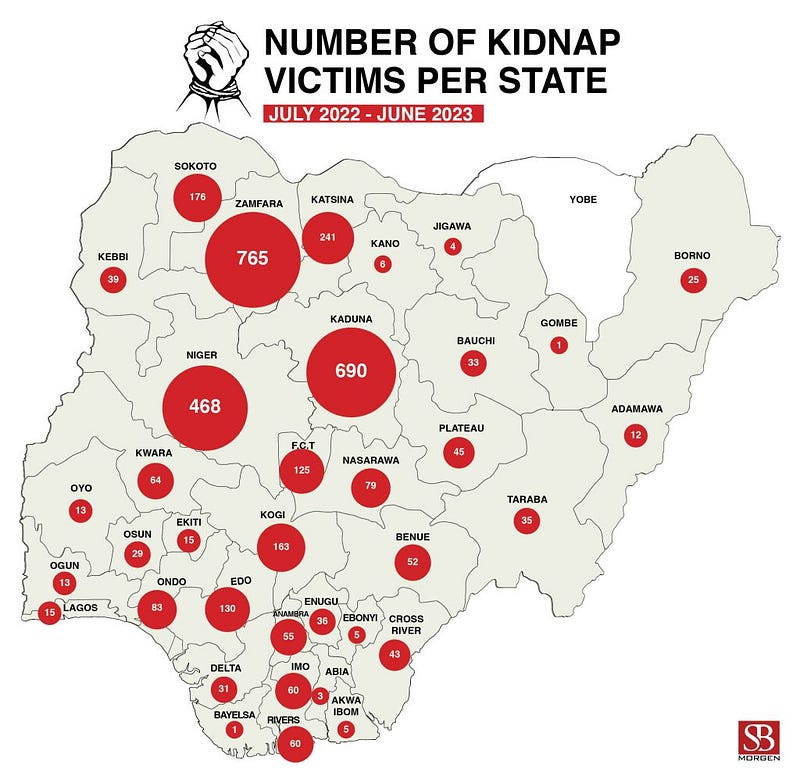
One notable aspect of Nigerian law is its emphasis on punitive measures, utilising harsh punishments such as life imprisonment and, in some cases, capital punishment. However, these measures have demonstrably failed to achieve their intended deterrent effect. The reason is not farfetched: in an environment where crime pays more often than not, bad actors will act badly having designed ways to either game the system or evade justice. The atmosphere by which these bad actors exist also feed them with enough reasons to thrive. Nigeria’s kidnapping crisis continues to spiral upwards despite the enactment of numerous domestic laws criminalising the act and plans to outlaw and penalise ransom payments. This persistent rise can be attributed, in part, to the country’s economic struggles, which have made kidnapping for ransom appear increasingly attractive. This dangerous phenomenon thrives on a bed of poverty, weak law enforcement, and a worrying erosion of societal values. In a country where millions of people struggle to survive, the prospect of obtaining immense wealth through kidnapping becomes an irresistible lure for some. With SBM Intelligence reporting 3,620 kidnappings between June 2021 and July 2023, and ransoms ranging from ₦1 million to a staggering ₦100 million, the financial incentive is undeniable. Kidnapping has evolved into a viable business model for the criminal entrepreneur, offering quick and significant profits with seemingly little risk. This alarming trend is further amplified by the inefficacy of law enforcement. Understaffed, under-resourced and hampered by corruption, the police struggle to effectively deter, investigate and prosecute these crimes. This lack of a robust legal deterrent emboldens criminals, creating an environment where kidnapping becomes a low-risk, high-reward venture. Furthermore, selective law enforcement enforces the crime because most of the arrests and prosecutions against kidnappers have been carried out against those who carry out the kidnapping, leaving out the persons whose accounts receive the ransom payments. Matter-of-factly, the prosecution of Usman Adamu is the most high-profile indictment of a kidnap suspect in a long time. For the Nigerian security services, justice cannot exist in isolation as it is detrimental to security efforts. The ease with which individuals engage in the highly profitable Nigerian kidnapping industry, valued at millions of dollars, poses a major obstacle to the success of security agencies’ efforts. Adding fuel to the fire is the erosion of traditional values in some segments of society. The diminishing respect for human life, replaced by a culture of self-preservation and a disregard for the law, fosters a breeding ground for criminal activity. In this environment, kidnapping becomes just another business proposition, undertaken without moral qualms. The consequences of this perilous reality extend far beyond the immediate trauma inflicted on victims and their families. Kidnapping disrupts communities, erodes trust and stifles economic growth. It creates a climate of fear and uncertainty, threatening the very fabric of society. The normalisation of kidnapping signifies the emergence of a criminal ecosystem where quick profits trump human dignity and the rule of law. While the prosecution of both men in this case represents a positive development, the fear that such inconsistencies in enforcement may weaken the overall deterrent effect is not unfounded, but rather a genuine and ongoing threat to the effectiveness of security initiatives. Addressing this issue requires a multi-pronged approach that tackles poverty, strengthens law enforcement and promotes ethical values. Only then can Nigeria hope to dismantle this dangerous enterprise and reclaim its future.