
Keeping house
The United Kingdom (UK) has announced new reforms to restrict the number of dependent visas for international students from Nigeria and…

The United Kingdom (UK) has announced new reforms to restrict the number of dependent visas for international students from Nigeria and other countries due to increased net migration, starting in January 2024. “The government will, however, work with the higher education sector to explore alternative options to ensure the brightest and best students can continue to bring dependents when they study at the UK’s world-leading universities,” it said. To prevent misuse of the visa system, overseas students will be stopped from switching from the student visa route to work routes until their studies have been completed.
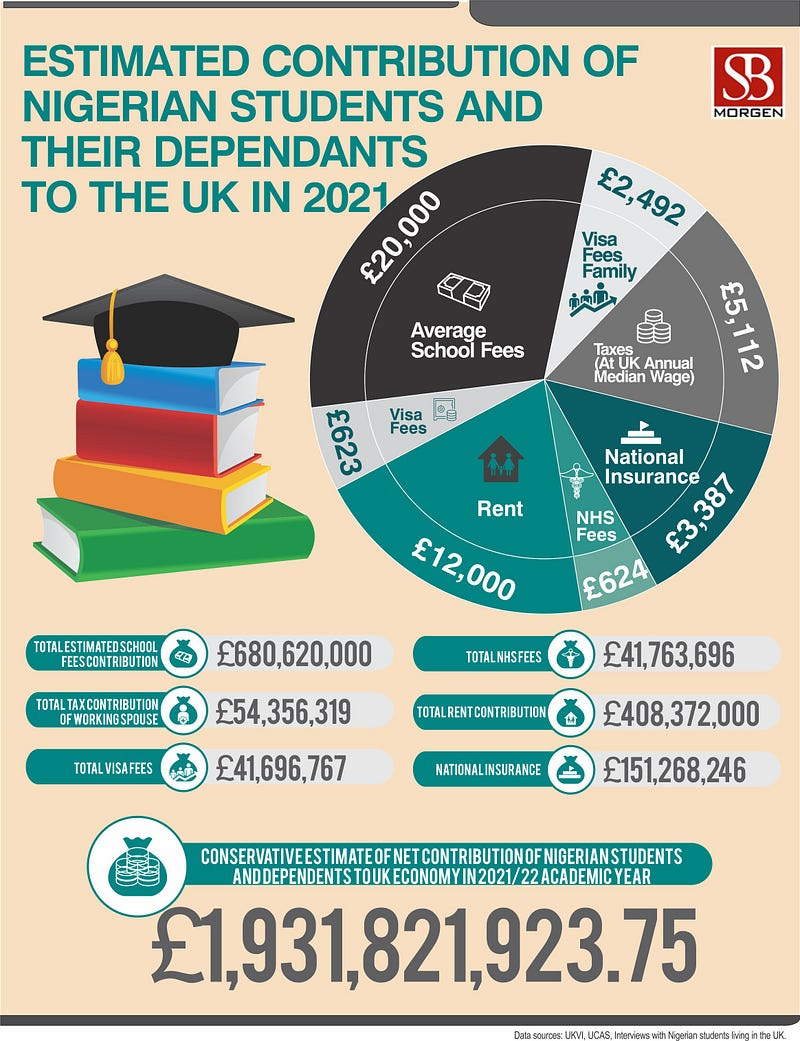
There are two perspectives to the UK’s decision. On the one hand, the UK government is doing what any sane government would do, protecting its social balance. Like many European countries, Britain uses a sizeable chunk of its tax earnings to pay out social benefits, and the government feels that an astronomical rise in dependents could be a burden on housing as well as benefit schemes if left to mushroom. With the pandemic and the energy crisis triggered by sanctions on Russia shooting up the cost of living, tufts of issues are already sprouting up for the UK government to nip. The net dependency ratio: the number of households receiving more benefits than tax, is at a historic high of 54%. Just 40% of adults in the UK raise 83% of the UK’s tax income. Once you enter the UK and start working, you and your family are game to enter the welfare system. Free health care from the National Health Service is part of the largesse derivable from this setup. Nurses and junior doctors in the UK are already lobbying for increased pay. Ambulance waiting times are high, and the UK government appears determined to get to grips with ensuring its carefully manicured social lawn does not get trampled on. At the same time, the lawn’s attractiveness appeals to Nigerian families, who believe they can pay taxes and live a safe life within a functioning system. In 2019, the UK granted 1,586 student-dependency visas to Nigerians. In 2022, the number skyrocketed to 69,293. Even though the students hope to be working once they are done with their Masters’s degrees, the number of dependents they bring in could create a drag on the system. In all, the UK gave out 135,788 student-dependency visas in 2022. The amount given to Nigerians was 44.866% of that total. For the system to work properly, it needs to be managed, and growth in the population of beneficiaries has to be regulated. This is what Nigerians do not see about the UK government’s policy. On the other hand, the UK refuses to admit that their universities, health sector and the economies of many university towns depend on these foreign students. In the build-up to delegitimise a perfectly legal immigration route, SBM published a chart to show the direct contributions of Nigerian foreign students to the UK economy in 2021, at £2 billion. These students pay up to 10 times the home students’ school fees, significant NHS fees and rent in those university towns. Often, this is without access to government public spending, while their dependents pay taxes as they work. Painting these net positive contributors to the UK economy in the same light as some illegal immigrant incursion is the UK trying to eat its cake and have it: which is reminiscent of the mass hysteria of Brexit and the post-Brexit disorder where the UK tried to keep the benefits of the EU without the membership. Among other things, the most urgent lesson from the UK’s policy is how domestic politics drive foreign policy and aid politics abroad, which many Nigerians do not understand. Anti-immigrant feelings by far-right sections of the Conservative Party triggered Brexit. Home Secretary Suella Braverman’s policy has antecedents in her predecessors’ politics in the same period when Brexit happened; then home secretary Theresa May designed the anti-immigration policy of cutting back the waiting period for immigrant students in the UK to six months upon graduation, after which they would be deported for failure to find a job, a policy which Boris Johnson reversed to two years when he became Prime Minister. What Brexit did was expose Britain’s dilemma: to stem the rising pathological fear of immigrants, which politicians like Michael Gove and Nigel Farage latched onto, or to continue to play nice and welcome legal immigrants, who not only spend billions of pounds in school and visa fees but also stem the worst of the UK’s labour crisis which would have led to a depression if these student migrants and their dependents were not on hand to work. With the latest policy announcement, it appears that the UK has chosen to give in to its destructive intrusive thoughts despite objections from the Department of Education, who warned that the nearly £2 billion Nigerians spent in higher education in the UK in 2021, among others, was at risk of being taken elsewhere, giving an advantage to other Anglophone competition such as Australia and Canada. Beyond the banal furore on social media over the comments one Nigerian immigrant, Emdee Tiamiyu, gave to the British press, indicting Nigerians for abusing the visa system, there are several reasons why this policy might be short-lived. Key among those is the existence of geopolitical realities and competition from its Anglo-Saxon counterparts. The UK will face a labour shortage. This is the future for much of the Global North following a decline in birth rates. It will dent the post-Brexit “Global Britain” policy, which attempts to attract “the best and brightest” on paper. Expectedly, the news of the new restrictions came as a blow to many Nigerians who see Britain as an important route to a productive future. Nigeria churns out hundreds of thousands of graduates annually, but only a fraction of those get full-time employment, and of those that are employed, even fewer get jobs that are fulfilling financially and professionally. For decades, obtaining that overseas degree has positioned many Nigerian professionals for local and international success, and the UK has always been the preferred choice for Nigerian students due to cultural and linguistic ties. Considering that the average Nigerian has strong family ties, many Nigerians will no longer consider the UK as a viable option if they can no longer travel with family. This policy can deter such brains, who need the support service of their wives or husbands and the welfare of their children to be assured for them to function optimally. Nigeria is fighting a losing battle to keep its best brains and produce more because it has neither the money nor the will to create and maintain functioning systems, just like the UK is battling to do. If the UK cannot give Nigerians the necessary closure, they will seek it elsewhere. The UK will struggle to attract students until the reality dawns and the inevitable happens: They will reverse this policy after losing out to other economies more accommodating of the legitimate inflow of the brightest and the best.