
Leaks and leaps
Renaissance Energy halted oil flow after a Rivers State spill, suspected as third-party interference. ExxonMobil announced a $1.5 billion deepwater investment to boost Nigerian oil production.

Renaissance Energy has suspended crude shipments via its Okordia-Rumuekpe pipeline in Rivers State after a spill was reported in the Ikata community, Ahoada East. Environmental group YEAC-Nigeria, which first detected the spill, suspects third-party interference. Renaissance has shut down the pipeline, notified regulators, and is coordinating a joint investigation. Meanwhile, ExxonMobil has announced a $1.5 billion investment in Nigeria’s deepwater oil sector between Q2 2025 and 2027. The funds will go toward reviving production at the Usan field, with additional plans for the Owowo and Erha fields. A Final Investment Decision is expected by late Q3 2025.
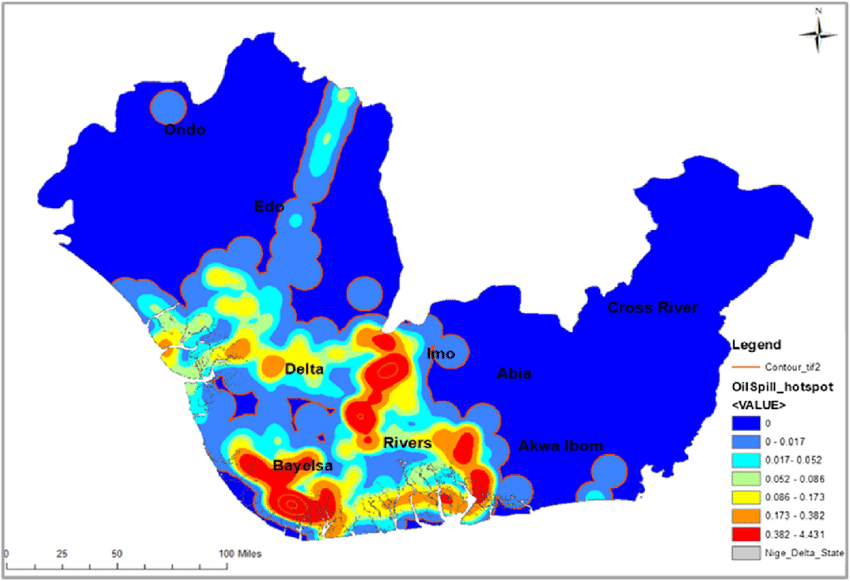
The recent transfer of oil assets from international oil companies (IOCs) to domestic firms like Renaissance has reignited debates about community relations and environmental security in the Niger Delta. While analysts suggested local companies might navigate host community dynamics more effectively, an oil spill at a Renaissance facility within months of its March 2025 acquisition, linked to suspected third-party interference, proves that ownership changes alone cannot resolve the systemic issues driving pipeline vandalism.
Pipeline sabotage remains a lose-lose scenario. Vandals profit marginally from stolen crude, while communities endure ecological devastation, and Nigeria’s economy suffers from production shutdowns, rising insurance premiums, and reputational damage to the energy sector. The Niger Delta’s history is scarred by more than 16,000 spill incidents since the 1970s, with Shell alone reporting 1,010 spills between 2011 and 2021. These disasters have poisoned farmlands, decimated fisheries, and fueled generational grievances that morph into militancy, kidnapping, and illegal refining.
Repeated spills and attacks have deterred investment, with firms factoring in 20–30% risk premiums for Niger Delta operations. Meanwhile, communities are pursuing legal redress beyond Nigeria’s borders. Landmark cases like Okpabi v. Shell (UK Supreme Court, 2021) and Ogale v. Shell (Netherlands, 2023) set precedents for holding IOCs accountable abroad. This trend will likely intensify, as local firms inheriting assets may now face transnational litigation for legacy and new spills alike.
The recent oil spill on Renaissance Energy's pipeline starkly illustrates that the vandalism issue persists, irrespective of who owns the infrastructure. Truly effective solutions demand a focus on the fundamental drivers of this illicit activity. Poverty, widespread unemployment, and the long-standing neglect of the environment in the Niger Delta create and sustain an underground economy built on sabotage. A crucial shift could involve decentralising security, perhaps through community-led surveillance initiatives, similar in concept to the now-defunct Niger Delta Coastal Guard. This approach could lessen the reliance on purely military responses, which have often proven ineffective in the long run.
Furthermore, domestic oil companies must learn from the mistakes of their international predecessors; transparent responses to spills and thorough clean-up operations must be non-negotiable aspects of their operations. Without comprehensive and systemic reforms that address these core issues, the transfer of assets risks becoming nothing more than a superficial change of hands. The future of the Niger Delta hinges on whether Nigeria chooses to prioritise long-term justice and sustainability over short-term financial gains. Failure to do so risks a future characterised by escalating legal battles in international courts, continued social unrest within the region, and a significant flight of investment.