
Let the politicking begin!
INEC received 110 applications for new political parties for 2027 elections, promising fair assessment. Voter registration and by-elections are next.

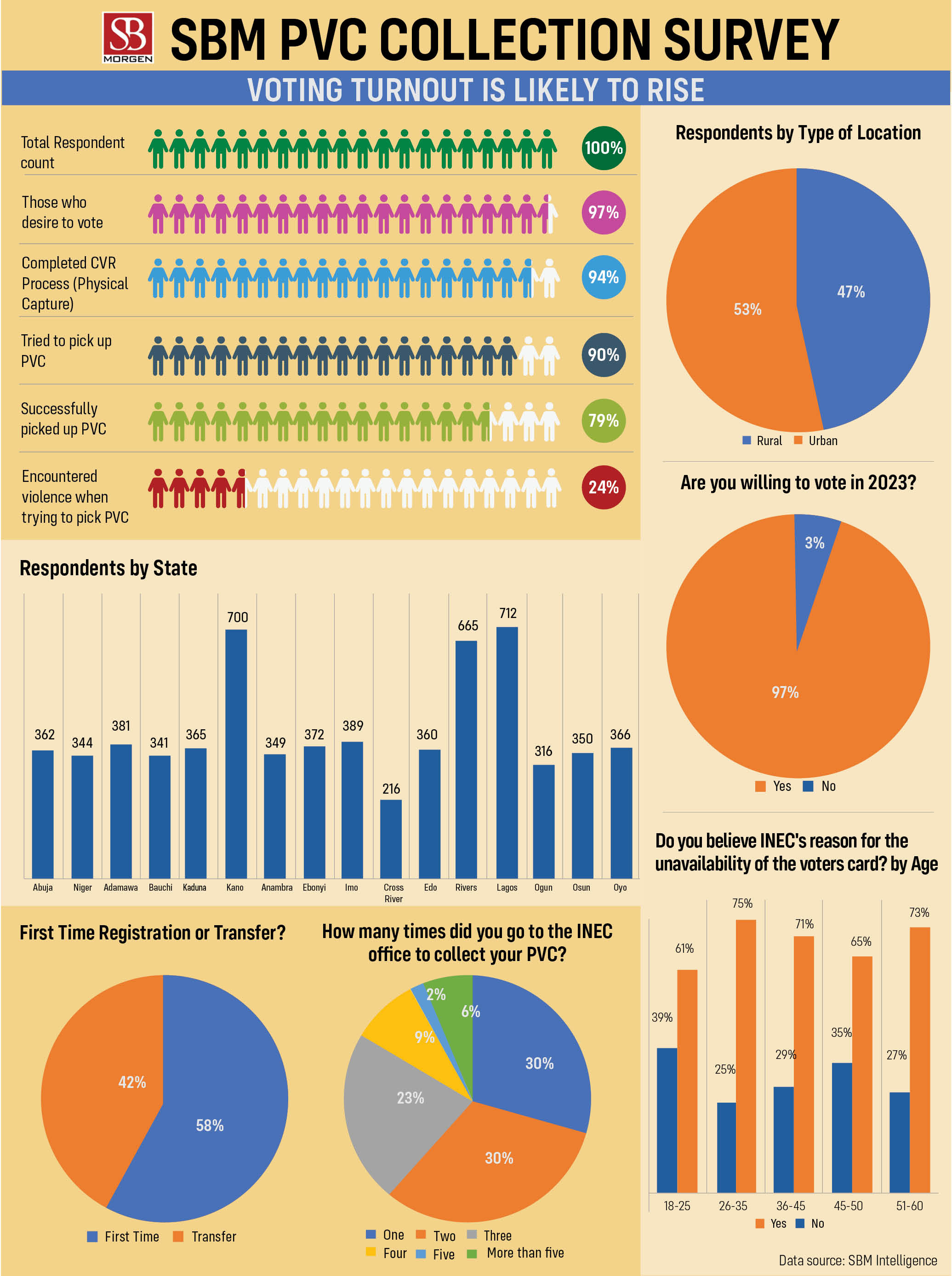
Nigeria’s Independent National Electoral Commission (INEC) has received letters of intent from 110 associations seeking registration as political parties ahead of the 2027 general elections. INEC Chairman Mahmood Yakubu announced this during the commission’s quarterly media executive meeting in Abuja. He assured that all applications would be assessed fairly, regardless of the status of their promoters. INEC plans to publish a full list of the associations, including their proposed names, acronyms, addresses, and interim leadership. Yakubu also confirmed that the commission is ready to conduct pending by-elections and resume the nationwide Continuous Voter Registration (CVR) process.
The current surge in applications for political party registration signals the unofficial commencement of active politicking in anticipation of the 2027 general elections. As observed in previous electoral cycles, it is widely expected that governance will recede as a priority for the political elite. For the Independent National Electoral Commission (INEC), managing this influx presents a familiar yet complex challenge.
While the Constitution unequivocally guarantees every citizen the right to association and to form political parties, the sheer volume of registration attempts—many of which lack any genuine organisational structure—poses significant logistical difficulties for INEC and, crucially, for voters. An overloaded ballot paper not only complicates the voting process but also inherently creates an unfair advantage for parties listed nearer the top.
Therefore, INEC must establish and transparently communicate stringent criteria for party registration. Any group that unequivocally meets these standards should be approved; however, continued registration ought to be contingent upon meeting clearly defined electoral benchmarks. Furthermore, there should be no public funding for political parties, as this practice often incentivises frivolous applications driven by financial motives rather than a genuine commitment to public service.
Additionally, INEC must adopt a firmer stance on the approval of party acronyms. The deliberate mimicry of established parties—through similar names, acronyms, logos, or colour schemes—is a cynical strategy designed to confuse voters, particularly in a context where literacy and voter education levels remain low. This tactic not only undermines the integrity of the electoral process but also exploits inherent weaknesses in Nigeria’s democratic infrastructure.
This development starkly highlights both the vibrancy and the inherent fragility of Nigeria’s political environment. On the surface, the proliferation of new political associations might be interpreted as a sign of democratic vitality. However, beneath this lies a troubling reality: party formation has increasingly become an opportunistic enterprise, largely divorced from ideology or concrete policy platforms. Many of these new entities lack coherent manifestos and are primarily formed to pursue short-term electoral or financial gains. Politics, for far too many, has devolved into a performative endeavour—a part-time engagement pursued for personal enrichment rather than a sustained commitment to the public interest. The deliberate design of party identities to mirror those of more established rivals perfectly exemplifies how the outward form of democracy is often preserved even as its substantive core is eroded.
INEC and the broader political system must address more than mere procedural inefficiencies. There is an urgent need to confront the deeper cultural malaise within Nigerian democracy—a system that increasingly rewards cynicism, discourages ideological depth, and trivialises meaningful political engagement. Genuine democratic progress necessitates more than merely expanding the ballot; it demands enriching the political space with robust ideas, enduring values, and authentic representation. If political parties remain mere vehicles for individual ambition rather than instruments for national development, democracy in Nigeria will continue to falter, vulnerable to manipulation and hollowed out of true meaning.