
Locking horns
Rivers State Governor Siminalayi Fubara condemned an attack by “compromised police officers” who shot at him during his visit to the burnt…

Rivers State Governor Siminalayi Fubara condemned an attack by “compromised police officers” who shot at him during his visit to the burnt State House of Assembly complex. He condemned attempts to seize control of the assembly and the destruction of sections of the building. Earlier, 24 members of the state house of assembly attempted to impeach Mr Fubara, leading to unrest as his loyalists protested at the assembly complex. This conflict was viewed as a supremacy battle between Fubara and Nyesom Wike, his estranged benefactor. President Tinubu sought to mediate their feud during a Police Council meeting in Abuja, where both men were present.
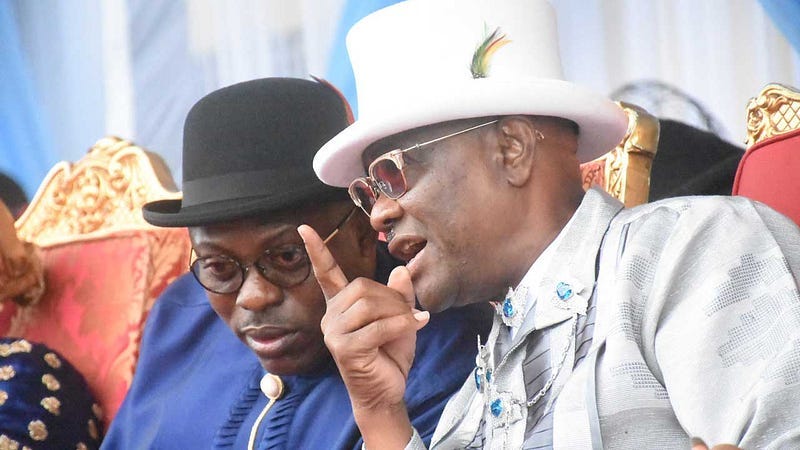
A basic rule of Nigeria’s internal politics is that the chances that a governor will rebel against his benefactor are as high as the certainty of death and taxes. Rivers State routinely sees these volatile battles between former and current governors. Given Mr Wike’s combustible nature, the only surprise was that it took this long to start. Wike sought to extend his influence beyond his tenure by reducing Mr Fubara’s autonomy through a series of actions, including appointments not only within the new governor’s own personal office but also within the local government administration, where he made decisions on Fubara’s behalf. Fubara’s attempt to break free from the noose by having his proxies set up political structures loyal to him is said to have been the immediate trigger that led to the confrontation between him and his former principal. In several ways, this development portends risks that even Mr Tinubu cannot handle; one is an all-out street battle by gangs affiliated with various factions of the ruling PDP in the state. Secondly, it could impact federal appointments of persons from the state; an act usually carried out by the President with the input of the state governor. Although Fubara, the current governor, initially secured his position through voter disenfranchisement during the election, he has managed to get the people on his side, but this may not mean much when legislative politics take centre stage. This feud may devolve into an ethnic battle between Fubara, an ethnic Ijaw, and Wike, a Rivers Igbo (or Ikwerre). Wike has tried to douse the ethnic slant, but influential Ijaws have already sided with Fubara. The ethnic dimension will always remain close to the surface. In the end, however, the incumbent governor will win the battle. This has been the historical pattern in Rivers and indeed in all other states except for Lagos. There is no reason to anticipate a different outcome this time. A word must be said about the conduct of the police. It is sad that desperate politicians can readily deploy the Nigerian police to fight political battles in such an unabashed manner. A police force that is known to be available to the highest bidder is not one to be proud of.