
Logjam
Sudan’s army ruler Abdel Fattah al Burhan rejected talks with the Rapid Support Forces (RSF) after accusing them of a drone strike that…

Sudan’s army ruler Abdel Fattah al Burhan rejected talks with the Rapid Support Forces (RSF) after accusing them of a drone strike that targeted him during a military ceremony, killing five. Despite U.S. invitations for peace talks in Geneva, Burhan insisted that any negotiations must recognise his government, the Transitional Sovereign Council, as Sudan’s legitimate ruler. While refusing to engage with the RSF, Burhan expressed willingness to negotiate with political movements and other armed groups. The RSF denied responsibility for the attack. Sudan’s ongoing war, now in its second year, has killed tens of thousands and displaced over 10 million.
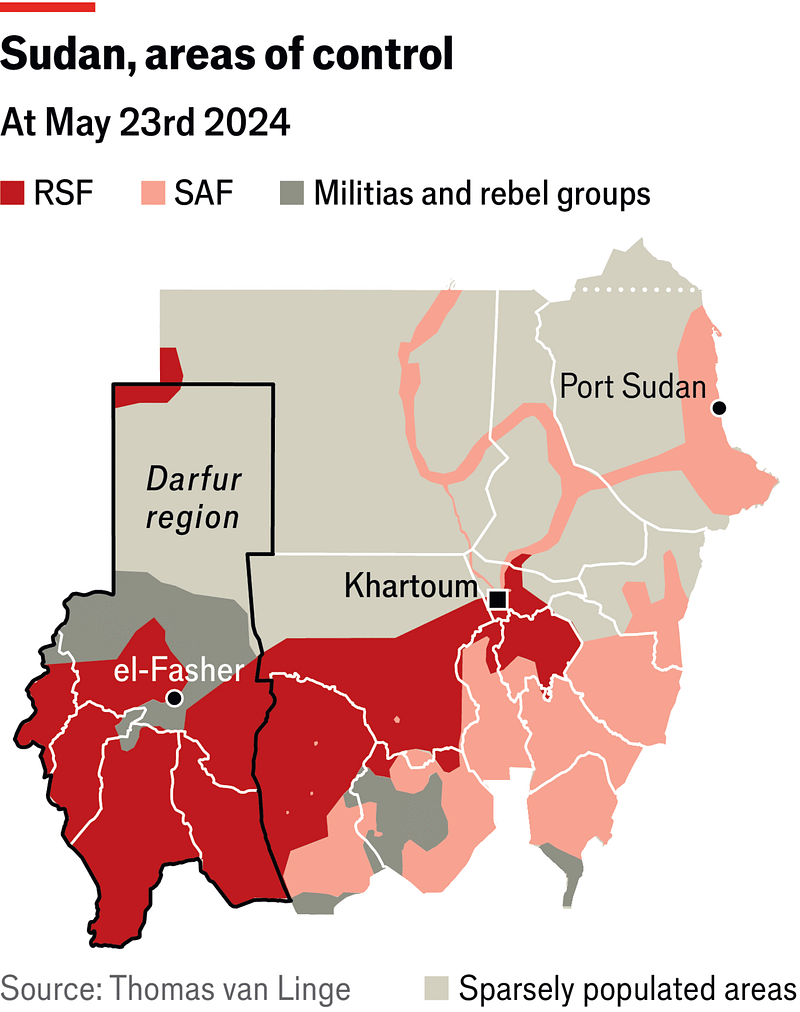
Sudan’s journey to a ceasefire is fraught with challenges, as warring parties remain unwilling to reach a consensus. This is not the first time Sudan’s warring parties have been invited to Geneva for potential ceasefire talks. Last month, the UN facilitated discussions, yet no ceasefire was achieved. Al Burhan’s legitimacy is based on overseeing Sudan’s democratic transition. However, his collaboration with the RSF to undermine Abdallah Hamdok’s interim government in October 2021 weakens this claim. Al Burhan may rely on international recognition to pressure the RSF, but this outcome is uncertain. The United Arab Emirates’ (UAE) support for the RSF is driven by its self-interest in the gold trade, a key factor fuelling the conflict in Sudan. Both the RSF and their adversaries are heavily involved in the illicit gold trade, using it to finance their military operations. The RSF, in particular, has extensive involvement in this trade, with the UAE emerging as a primary beneficiary. Despite the ongoing conflict, direct shipments of Sudanese gold to the UAE have continued uninterrupted. Additionally, illicit smuggling networks funnel Sudanese gold into neighbouring countries such as Chad, Egypt, Ethiopia, South Sudan, and Uganda, which then sell much of it to the UAE. This underscores the UAE’s significant economic interests in the conflict and raises concerns about the role of external actors in perpetuating violence. The prolonged conflict continues to create a thriving market for international arms dealers who supply weapons to both sides, exacerbating the situation. Sudan has substantial reserves in Darfur and along the Nile, coupled with deposits of chromium, copper, iron ore, mica, silver and zinc. But these resources have led to more troubles than benefits, fuelling ongoing civil wars. The death toll has now exceeded 16,000, and the number of displaced people is about 10 times the capacity of Wembley Stadium. Various local militias and warlords benefit from the instability by controlling territories and resources. In Chad, rebel groups use Darfur as a base to oppose the Chadian government, while Libyan factions back different sides in the Sudanese conflict to gain influence. Middle Eastern countries also support various factions to achieve their geopolitical goals. This complexity makes Sudan’s conflict hard to resolve, with ceasefire agreements often lasting only hours. The RSF’s willingness to negotiate suggests international pressure is having an impact. The Sudanese foreign ministry, aligned with the military, is pushing for more talks with the US and has demanded the RSF withdraw from occupied areas. Meanwhile, a UN assessment warns of famine in the Zamzam camp near El-Fasher and a looming humanitarian crisis in Sudan, potentially worse than the 1980s Ethiopian famine. This underscores the urgent need for a peaceful resolution to the conflict.