
Marks in the sand
At least four staff members of the US Mission in Nigeria have been killed in Anambra State. The assailants invaded the venue where…

At least four staff members of the US Mission in Nigeria have been killed in Anambra State. The assailants invaded the venue where residents were waiting for medical treatment from the United Nations Children’s Fund (UNICEF) officials. The Deputy Superintendent of Police (DSP), Tochukwu Ikenga, said the joint security forces embarked on a rescue operation in Ogbaru following an attack on a convoy of staff of the US Consulate. The assailants murdered two police mobile force operatives and two staffers of the Consulate and set their bodies and vehicles ablaze. Mr Ikenga, however, insisted that “no US citizen was in the convoy.”
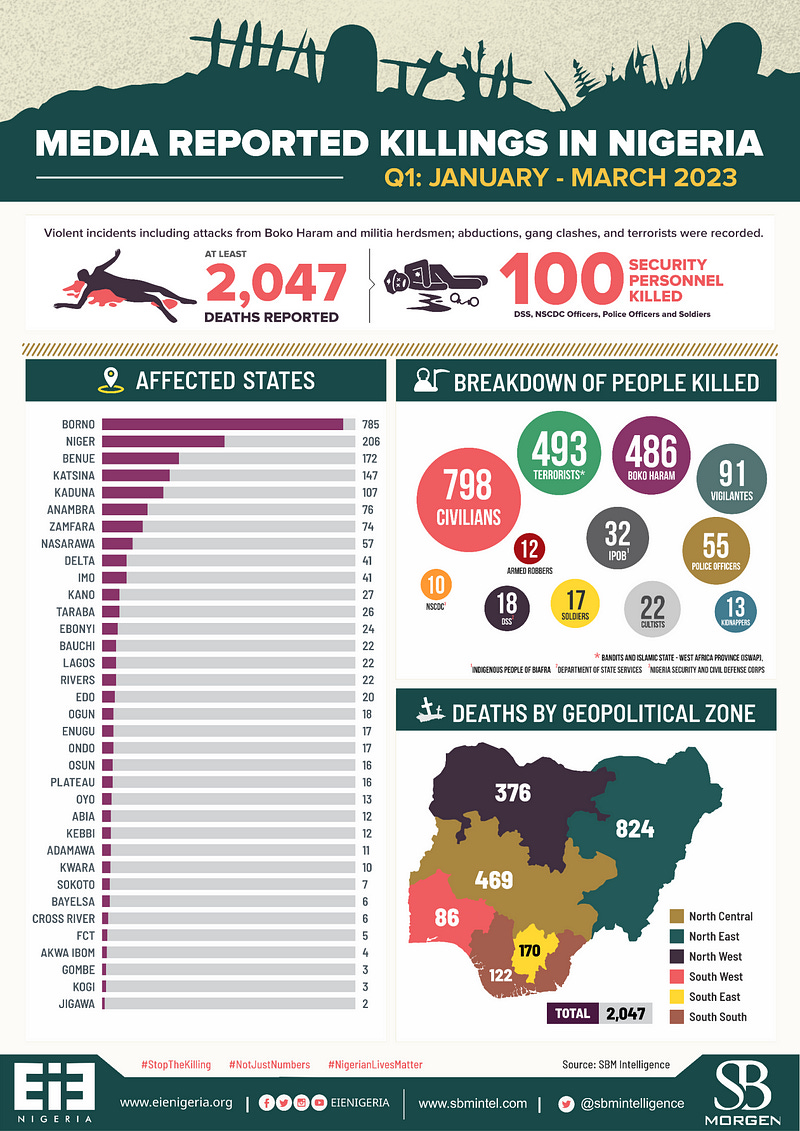
In one of the more significant (and unfortunate) security ironies, the United States has become a victim of the nefarious activities it constantly warns about in its countless Nigeria risk-and-travel advisories. 2023 makes it the third year since the South East, which used to report the least casualties year-on-year, joined other geopolitical zones in the slugfest of volatility and mounting insecurity. Between the belated efforts of the region’s governors in setting up forces to stop attacks, which created the space for the Independent Peoples of Biafra (IPOB) to set up its paramilitary Eastern Security Network (ESN), and the arrest and detention of its leader Nnamdi Kanu at the hands of the state, a lot of things have gone wrong, chiefly the lack of political will by the federal government (on whose shoulders most of the blame lies) to adequately tackle the menace of gangs with access to locally-made small arms. IPOB is a separatist group that was always going to end up focusing its attacks on southeastern locals because it does not have the capacity to tackle the Nigerian state head-on. It has been proscribed as a terrorist group and is the target of military operations by the Nigerian government. Dialogue with the IPOB leadership has never been feasible given their demands and unpragmatic leadership style. The attack on the US Mission contingent — which, for now, appears to be an opportunistic attack — is a continuation of IPOB’s campaign to delegitimise any expression of Nigerian state power, which the police not only represents on the ground, but close cooperation with Washington also underscores. The incoming administration might let the separatist group burn itself out even if the region is hollowed out in the process if antecedents are any guide. It is not clear at this time that the Tinubu Administration would go out of its way to seek an amicable solution. This is not helped by the precarious nature of the opposition Labour Party’s hold on the region and its clean sweep during the federal elections which did not translate to winning the governorship contests. A firm Labour hold on the region would have created an opportunity for in-depth discussions and negotiations on the separatist question between Aso Rock and the region. Anambra and Imo are the two states that have seen the worst separatist violence since the ESN was established. Both states’ approaches — Anambra with amnesty and Imo with aloofness — have failed. Still, none can be more incriminating than a retreating state which has left its rivals to mark the sand in an unending expansion of the country’s ungoverned spaces.