
Matchmaking red
Nigeria courts Chinese partner for ailing refineries; South Africa signs China trade pact to offset US tariffs.

Nigeria and South Africa have stepped up economic engagement with China through separate energy and trade initiatives. The Nigerian National Petroleum Company (NNPC) said it is exploring a partnership with a major Chinese petrochemical firm to operate one of its refineries. NNPC Group CEO Bayo Ojulari said the company is seeking experienced operators willing to take equity stakes rather than outright ownership, allowing them to manage operations while NNPC rebuilds internal capacity. The move comes after prolonged shutdowns at the Port Harcourt, Warri and Kaduna refineries. Meanwhile, South Africa signed a framework economic partnership agreement with China to secure duty-free access for selected exports. The deal paves the way for an Early Harvest Agreement expected by March 2026. Pretoria is seeking to diversify markets after the United States imposed a 30 percent tariff on its exports.
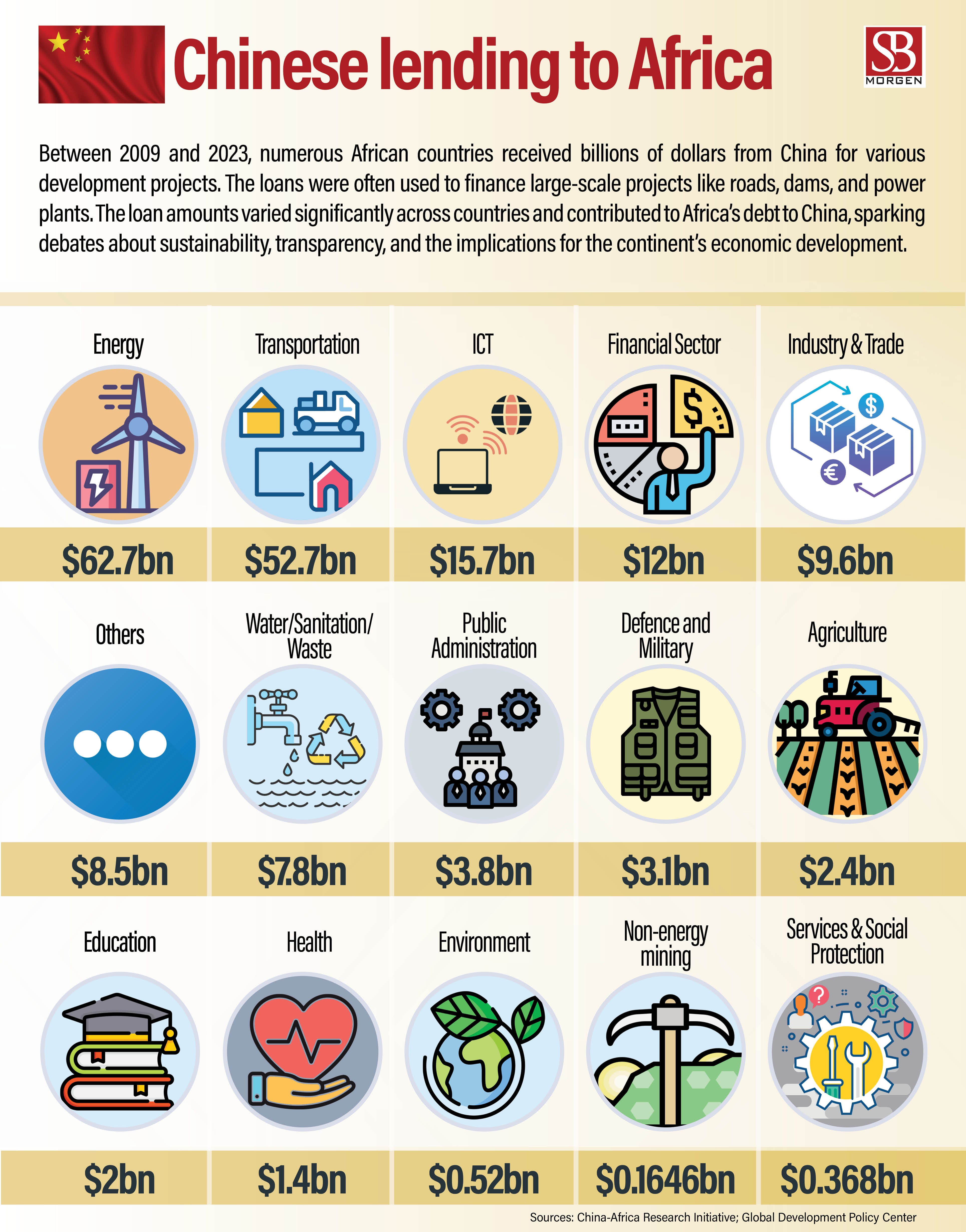
Nigeria’s pivot toward an equity-based partnership for its refineries marks a significant departure from the failed “turnaround maintenance” contracts of the past, favouring a model of operational accountability and shared risk.
By inviting a major Chinese petrochemical firm to take an equity stake rather than merely collect management fees, NNPC Limited is attempting to correct a structural flaw that has haunted Nigeria’s refining sector for decades. The old model paid contractors to repair facilities without embedding long-term performance incentives. The new approach ties returns to operational output, throughput efficiency and commercial viability. In theory, this shifts the risk of mismanagement away from the Nigerian state and onto a partner with both technical depth and capital exposure.
This is also an implicit admission of internal capacity constraints. The Port Harcourt, Warri, and Kaduna refineries have absorbed billions of dollars in rehabilitation spending, with little sustained output to show for it. Moving toward equity participation suggests that NNPC recognises that technical rehabilitation alone is insufficient without governance discipline, modern process control and commercially aligned management structures. The idea is not just to restart refineries but to run them as viable industrial assets within a deregulated or partially deregulated downstream market.
The structure under discussion, which retains Nigerian ownership while granting operational control and equity participation to the foreign partner, signals caution rather than surrender. NNPC appears determined to avoid outright asset sales that could provoke political backlash. Instead, the strategy is to preserve sovereign ownership while leveraging foreign technical competence. If properly designed, this could create a transitional incubation phase during which Nigerian engineers rebuild operational expertise under the discipline of performance-driven management.
However, the credibility gap is real. Years of aborted rehabilitation attempts have eroded public confidence. Observers will question whether equity participation automatically guarantees accountability or simply repackages old inefficiencies under a new label. The decisive variables will be contract transparency, pricing alignment in a market still adjusting to subsidy removal, and measurable improvements in utilisation rates. Without hard performance benchmarks, the risk of repeating past cycles remains.
The economic stakes are significant. Nigeria’s reliance on imported refined products has strained foreign exchange reserves and exposed the economy to external price shocks. A functioning domestic refining system would reduce import bills, ease pressure on the current account and stabilise fuel supply. At a macro level, refinery efficiency is not merely an industrial issue but also a balance-of-payments strategy.
At the same time, South Africa is recalibrating its relationship with China from a different angle. Pretoria’s pursuit of an Early Harvest trade arrangement reflects defensive pragmatism in a tightening Western trade environment. The imposition of 30 percent tariffs by the United States has increased vulnerability in key export sectors such as automobiles, agriculture and mining. Securing expanded or preferential access to the Chinese market is less about ideological realignment and more about preserving export competitiveness.
China already accounts for a substantial share of South Africa’s trade flows. Expanding duty-free access would deepen that relationship and provide insulation against Western policy volatility. In practical terms, it allows South Africa to anchor portions of its export-led growth strategy in Asia’s largest consumer market, rather than remaining exposed to political shifts in Washington.
Yet diversification cuts both ways. Greater reliance on Chinese demand exposes South Africa to commodity price swings and fluctuations in Chinese industrial cycles. Trade resilience requires balance, not replacement. The challenge for Pretoria will be to leverage Chinese access without locking itself into a dependency that mirrors the vulnerability it seeks to escape.
Taken together, Nigeria and South Africa illustrate two distinct but related adjustments within Africa’s largest economies. Nigeria is leveraging Chinese capital and expertise to address domestic weaknesses in its energy infrastructure. South Africa is using Chinese market access to hedge against external tariff shocks and sustain export flows. Both are responses to fiscal pressure and global fragmentation.
The broader signal is clear. African economic heavyweights are not choosing sides in a binary geopolitical contest. They are selectively engaging China as a stabilising partner where Western markets or institutions present constraints. For Nigeria, the metric of success will be refinery utilisation rates, import reduction and fiscal savings. For South Africa, this will mean export growth, sectoral resilience, and a stronger trade balance.
In both cases, execution will determine whether these recalibrations strengthen economic sovereignty or deepen structural dependencies. Equity stakes and trade agreements create opportunity. Performance discipline, transparency and strategic balance will determine whether that opportunity translates into durable gain.