
Mining for the people
Ghana reforms mining laws to boost community benefits, enforce accountability, and attract new bauxite partners, targeting two million tonnes in 2025.

Ghana has overhauled its mining laws to ensure greater community benefits and accountability. Key changes include abolishing indefinite prospecting licences, reducing lease terms, and tying licence renewals to compliance with environmental, social and production standards. Development agreements are being replaced with a mandatory fixed percentage of gross mineral revenue, which will be allocated directly to local development. In 2024, Ghana earned US$7.1 billion in mineral revenue. The government also cancelled a $1.2 billion bauxite deal with Rocksure International, seeking new partners like Emirates Global Aluminium and Chinese firms to develop the Nyinahin Hills deposit, aiming for two million tonnes of output in 2025.
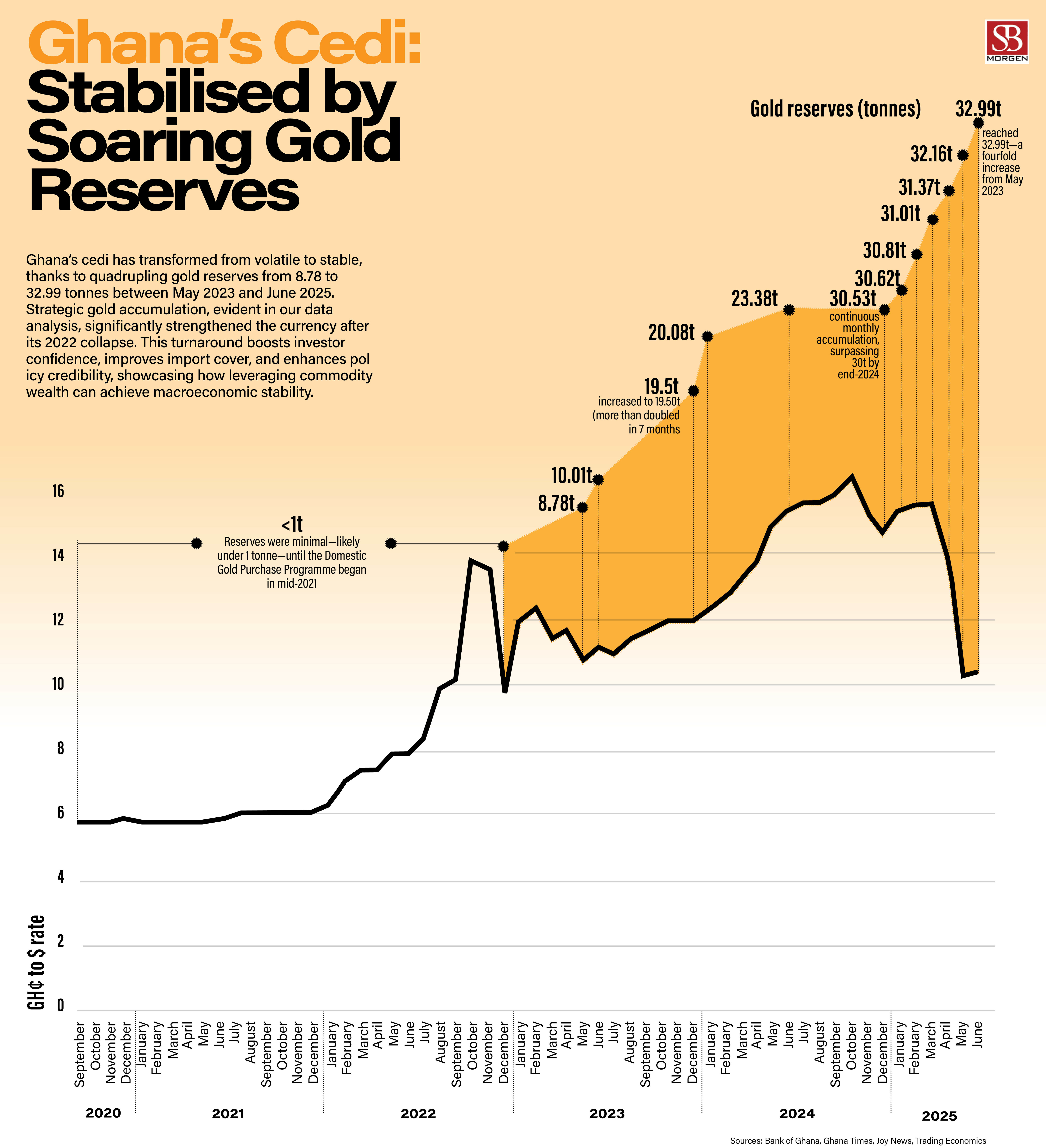
Ghana is implementing a new strategy to increase the revenue it retains from its mineral wealth. As Africa's top gold producer, the new Mahama administration has established a state-owned company called GoldBoard. This entity will buy gold from small-scale miners using Ghanaian cedis and then export the gold to earn foreign currency.
This initiative, modelled on the country's successful cocoa export system, is projected to generate roughly $1 billion in export revenue each month. The significant inflow of foreign exchange has already credited it with the local currency's more than 40% appreciation against the dollar. Ghana aims to reduce its dependence on Eurobonds and syndicated cocoa loans by relying on these steady gold export revenues.
At the same time, the government is also pushing for local ownership of its large-scale mineral projects. One high-profile example is the controversial Black Volta Gold Project acquisition in the Upper West Region. This project, formerly run by the foreign company Azumah Resources and valued at $100 million, was taken over by Engineers and Planners, a company owned by President Mahama's brother, Ibrahim Mahama. While it was set to be Ghana's first entirely indigenous large-scale gold mine, the takeover is now mired in controversy.
Beyond gold, Ghana is also making strides in bauxite production. Last year, the country achieved a historic milestone, mining 1.8 million metric tons—the highest in its 80-year history. This represents a significant increase from the previous record of 1.2 million metric tons, with 1.7 million metric tons exported primarily to China and other Asian nations.
However, recent bauxite contracts have faced public scrutiny. The Ministry of Lands and Natural Resources (MLNR) has denied reports that a $1.2 billion bauxite lease awarded to Rocksure International was cancelled in favour of foreign partnerships. The Ministry stated that no valid lease was ever issued to Rocksure, as the 8th Parliament did not ratify the supposed agreement before its dissolution on 6th January 2025. It also dismissed the $1.2 billion valuation as "unsubstantiated and grossly misleading," explaining that no official valuation had been performed to justify that figure.