
Monday misery finally ends
IPOB cancels Monday sit-at-home permanently in southeast Nigeria, urging markets to reopen and children to attend school.

The Indigenous People of Biafra (IPOB) has announced the immediate and permanent cancellation of the Monday sit-at-home across Nigeria’s Southeast. In a statement issued on Sunday, IPOB spokesperson Emma Powerful said the directive came from the group’s detained leader, Nnamdi Kanu, urging residents to resume normal activities, reopen markets and send children to school without fear. Powerful said there was “no longer any justification” for the weekly shutdown and warned that anyone attempting to enforce sit-at-home orders would be acting against Kanu’s instructions. The sit-at-home began in 2021 to protest Kanu’s arrest and detention on terrorism-related charges and later became a weekly event, often enforced violently, causing economic disruption and school closures. IPOB said the order had now been fully lifted and called on residents to go about their lawful businesses, declaring that “the era of Monday sit-at-home is over.”
The more than four-year sit-at-home exercise will go down in history as a significant own goal. Nnamdi Kanu endured a forced removal from Kenya in June 2021 after Kenyan authorities handed him over to Nigerian agents without proper extradition. Agents held him in secret for days, with family and lawyers reporting rough treatment before his arrival in Abuja. Courts in Kenya later ruled the whole process illegal because it bypassed due procedure. Back in Nigeria, the government charged him with running Radio Biafra broadcasts that called for armed resistance and separation, labelling them treason and terrorism.
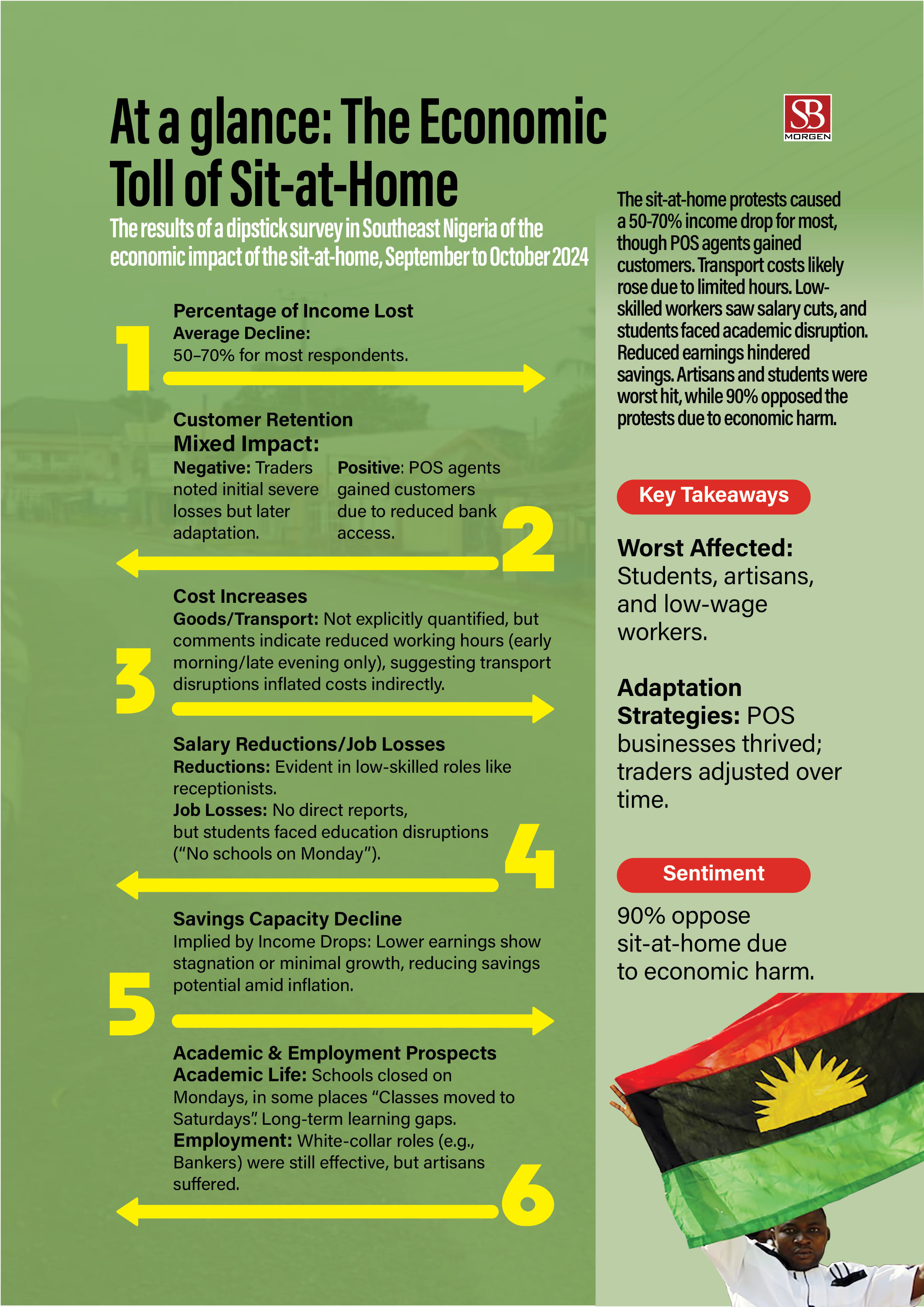
The trial lasted for years, with multiple court hearings, appeals, and venue changes, until judges handed down a life sentence in November 2025. This closed off many earlier hopes for release. The Monday sit-at-home orders began immediately after the August 2021 arrest to press for Kanu’s freedom. People stayed indoors every Monday, shutting down markets, schools, and roads across the five Southeastern states. Traders and transporters bore the heaviest burden, with whole days lost to empty streets. SBM Intel laid out the full cost in our May 2025 report, which calculated losses above ₦7.6 trillion ($4.6 billion) from 2021 to early 2025.
That figure remains the clearest and most quoted measure of how the weekly closures drained the region year after year. Leaders in the Southeast tried different ways to break the pattern. Governors issued statements urging people to ignore the orders, sent police to patrol markets, and threatened fines or seals on any business that stayed shut.
In Anambra, Governor Chukwuma Soludo took the strongest step by imposing a lockdown on the Onitsha Main Market in January 2026. This came after traders refused to open on Monday, sparking protests from those who feared both the enforcers and the loss of income. Many sought a political settlement in which President Bola Tinubu would grant Kanu a pardon or conditional release. Southeast politicians pressed for this in meetings with federal officials. That idea fell apart after the life sentence. There were security concerns that freeing Kanu would fire up separatist groups again and give them a win.
Kanu’s fresh instruction from detention reached IPOB leaders in early February 2026. He ordered a full and permanent end to the Monday closures starting 9 February. The group’s spokesperson, Emma Powerful, released a statement saying Kanu wanted normal life to return. He wanted markets open, children in school, and roads busy again. Trader frustration tipped the balance, especially in Onitsha. Market unions had begun pushing back openly against forced shutdowns that cut their earnings week after week. Protests there in late January and early February demonstrated people’s readiness to defy the order. Kanu responded by withdrawing it entirely to avoid placing more blame on ordinary residents.
The end of the sit-at-home offers a fragile opportunity for the Southeast to rebuild its shattered economy. The region must now pivot from crisis management to competitive reinvention. State governments should prioritise “re-entry” grants for small businesses crippled by years of Monday closures. They must also invest in security infrastructure that does not rely solely on federal police, such as empowered local vigilantes with strict oversight. Furthermore, a regional economic integration plan is overdue. This should focus on connecting the commercial hubs of Aba, Onitsha, and Nnewi with rail and reliable power to lower costs and attract the investment that fled during the years of fear. The hard work starts now.