
Morocco busts ISIS-linked cell
Morocco arrests 10 suspects linked to Islamic State's Sahel affiliate, foiling planned attacks across several cities.

Morocco’s counterterrorism agency has foiled planned attacks by a militant cell linked to the Islamic State’s Sahel affiliate, arresting 10 suspects in coordinated operations across several cities. Authorities said the group had pledged allegiance to Islamic State and received instructions to target sensitive sites. Security forces recovered weapons, bomb-making materials, military-style clothing and a modified vehicle suspected to have been intended for an attack. The operation underscores growing security concerns over extremist activity spreading from the Sahel into North Africa.
Morocco’s latest disruption of an Islamic State-linked terrorist cell is significant not simply because another attack was prevented, but because it confirms a fundamental shift in North Africa’s security landscape. For years, Morocco’s principal counterterrorism challenge was preventing radicalised citizens from travelling to conflict zones in Syria, Iraq and Libya. Today, the threat has evolved. The Islamic State’s Sahel affiliate is increasingly directing operatives to remain inside Morocco and conduct attacks domestically, transforming the country from a recruitment hub into an operational target.
The arrests of ten suspects across multiple cities underscore the sophistication of the evolving threat. The group’s alleged access to bomb-making materials, military-style equipment and coordinated instructions from the Islamic State’s Sahel command illustrates that extremist networks are becoming more decentralised, relying on local cells directed remotely rather than cross-border infiltration. This mirrors a broader trend across global jihadist movements, where digital communication has reduced the need for physical movement while increasing the ability to coordinate attacks across multiple jurisdictions.
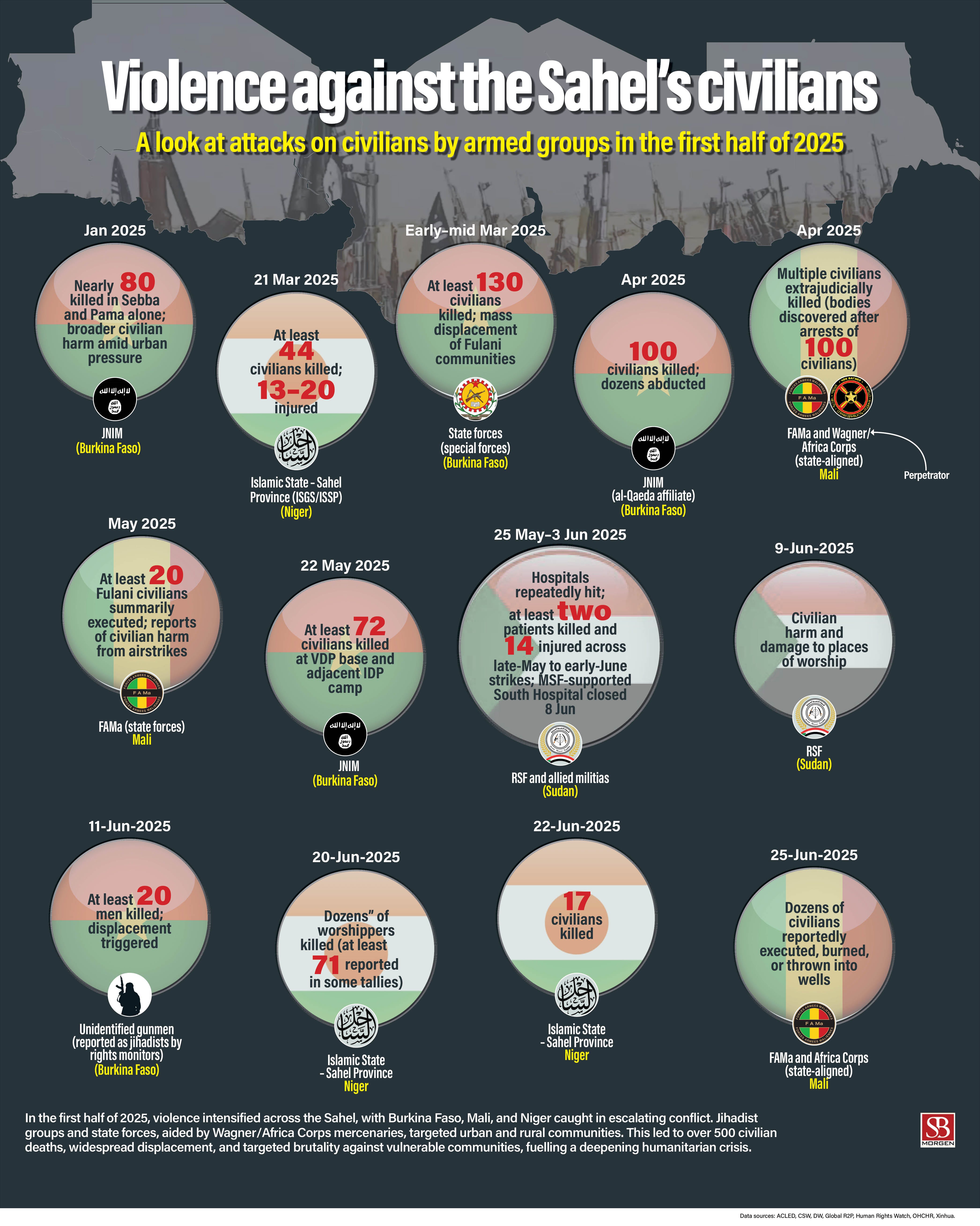
The operation also highlights the changing geography of terrorism in Africa. As military juntas in Mali, Burkina Faso and Niger continue to struggle against expanding insurgencies, and as regional security cooperation remains fragmented following successive coups, the Sahel has become the continent’s principal incubator of extremist violence. Morocco is not a frontline state in this conflict, but its proximity to the region places it on the outer edge of an expanding security frontier. Consequently, Rabat increasingly serves as a buffer between the deteriorating security environment in the Sahel and Southern Europe. Intelligence cooperation with Spain, the United States and other European partners therefore serves not only Morocco’s national security interests but also Europe’s broader counterterrorism architecture.
This security role has become intertwined with Morocco’s foreign policy objectives, particularly its campaign to consolidate international support for its sovereignty claim over Western Sahara. Rabat has consistently argued that unresolved governance gaps around the territory create opportunities for terrorist networks and organised criminal groups to exploit the wider Sahel corridor. While some of Morocco’s claims regarding extremist recruitment in areas linked to the Western Sahara dispute remain contested, the broader argument that political uncertainty and weak border governance create fertile conditions for transnational militant networks is consistent with wider regional security assessments. Increasing diplomatic recognition of Morocco’s autonomy proposal has therefore strengthened not only its geopolitical position but also its narrative that stability in Western Sahara is inseparable from stability across the western Sahel.
Perhaps the most important takeaway, however, is institutional rather than geopolitical. Morocco has not experienced a successful mass-casualty terrorist attack since Marrakech in 2011, despite repeated attempts by extremist organisations to establish operational footholds. Much of that resilience stems from sustained investment in intelligence capabilities rather than reactive military operations. The Central Bureau for Judicial Investigations has dismantled dozens of terrorist cells since its establishment in 2015, demonstrating that modern counterterrorism is increasingly intelligence-driven rather than battlefield-driven.
Nevertheless, Morocco’s security model is entering a more demanding phase. Remote radicalisation, encrypted communications and digitally coordinated attacks are significantly more difficult to detect than traditional cross-border infiltration. At the same time, instability across the Sahel shows little sign of abating, ensuring a continued supply of extremist networks seeking to project influence northwards. Morocco’s greatest challenge is therefore not simply preventing the next attack, but sustaining an intelligence advantage against an adversary whose operational methods are becoming increasingly dispersed, technologically enabled and geographically closer. Its success will have implications that extend well beyond its borders, shaping the security outlook for both North Africa and the Mediterranean.