
Negotiating payday
Ghana requested on Tuesday to restructure its debt with official bilateral creditors under the common framework platform supported by the…

Ghana requested on Tuesday to restructure its debt with official bilateral creditors under the common framework platform supported by the Group of 20 major economies, two sources told Reuters. The West African country will ask bilateral creditors to form a committee as soon as possible, aiming for an “expedited treatment” on over $5 billion of debt, said one of the sources, who asked not to be named because the talks are private. The request comes as part of a virtual presentation by Ghana’s finance ministry hosted under the auspices of the group of creditor nations known as the Paris Club, the source added. Ghana’s debt restructuring under the common framework aims to include non-Paris club members, such as China, in debt relief talks. China is Ghana’s biggest bilateral creditor, with $1.7 billion of debt, according to International Institute of Finance (IIF) data.
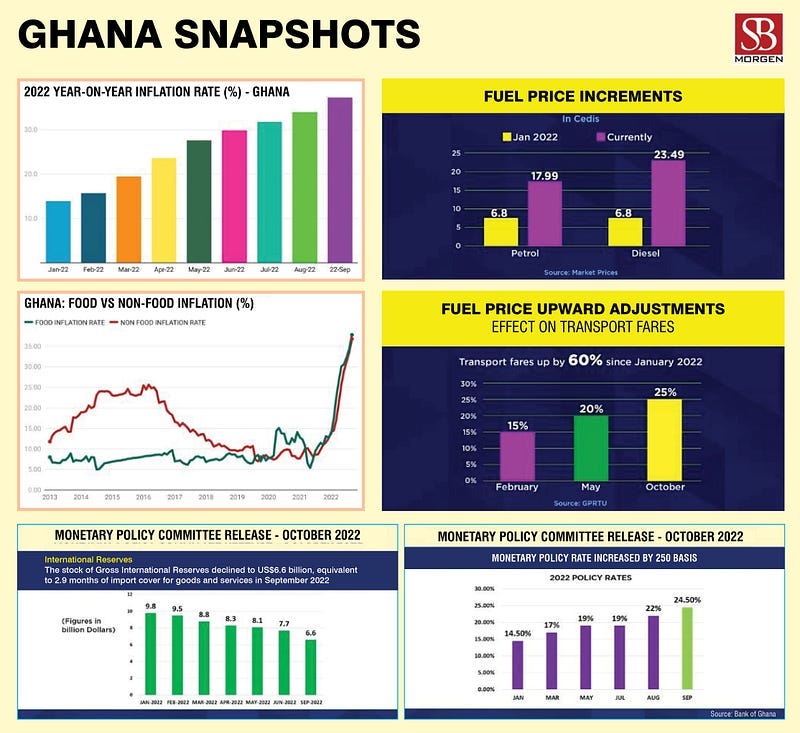
Ghana became the fourth country to apply to a G20 initiative launched in 2020 that is designed to streamline debt restructuring efforts in the wake of lower-income countries buckling under the fallout from the COVID-19 pandemic. Chad secured a deal with creditors in November 2022, while Zambia is still locked in talks, and Ethiopia’s progress has been held up by civil war. Ghana is currently struggling with its worst economic crisis in decades. Inflation hit a record 54.1% in December 2022 due to surges in food, housing and transport prices. The cedi lost more than half its value last year, pushing up the country’s external debt cost. The country has been locked out of international markets as the premium demanded by investors to hold its debt over safe-haven U.S. Treasuries has been above the 1,000-basis points mark for most of the past 12 months. Ghana’s relatively small economy, at $78 billion, is a mere 18% of Nigeria’s economy. Yet, it currently has about $13 billion in Eurobonds alone, with holders including major global asset managers such as BlackRock, Vontobel, AllianceBernstein, Neuberger Berman and PIMCO. For an economy of its size, the numbers are astonishing. The total debt portfolio disclosed by the central bank was $48.9 billion as of September 2022. Annual external debt servicing cost Accra $2.4 billion on average from 2018 to 2021. This year, interest payments on Ghana’s external loans could cost the state GHS21.25 billion ($2.4 billion) or about 80% of the $3 billion bailout package the country expects from the IMF. These external creditors have formed a committee to secure an outcome that is equitable to creditors and responsive to the country’s socioeconomic challenges. Ghana’s precarious debt situation, which has come largely from how it went to town borrowing in anticipation of revenues that had not crystallised, means that everyone in the creditor value chain is prepared to take a hit. What is likely unacceptable is Ghana’s attempts to decide the hits the creditors will take unilaterally. However, it has taken the correct steps by engaging its creditors. A deal will likely be made that will at least help Ghana navigate the worst aspects of this crisis. Ghana’s challenges should be a lesson to other African commodity producers who are seeing worsening debt sustainability indicators.