
New sheriff
Nigerian President Bola Tinubu has approved the nomination of Olayemi Cardoso to serve as the new Central Bank of Nigeria (CBN) governor…

Nigerian President Bola Tinubu has approved the nomination of Olayemi Cardoso to serve as the new Central Bank of Nigeria (CBN) governor, alongside four new deputy governors. Tinubu’s special adviser on media, Ajuri Ngelale, said the new appointees were nominated for a term of five (5) years at the first instance, pending their confirmation by the Nigerian Senate. The newly appointed deputy governors are Emem Nnana Usoro, Muhammad Sani Abdullahi Dattijo, Philip Ikeazor and Bala Bello. Earlier in June, Mr Tinubu had suspended Godwin Emefiele as CBN governor as a sequel to an investigation of his office and the planned reforms in the economy’s financial sector.
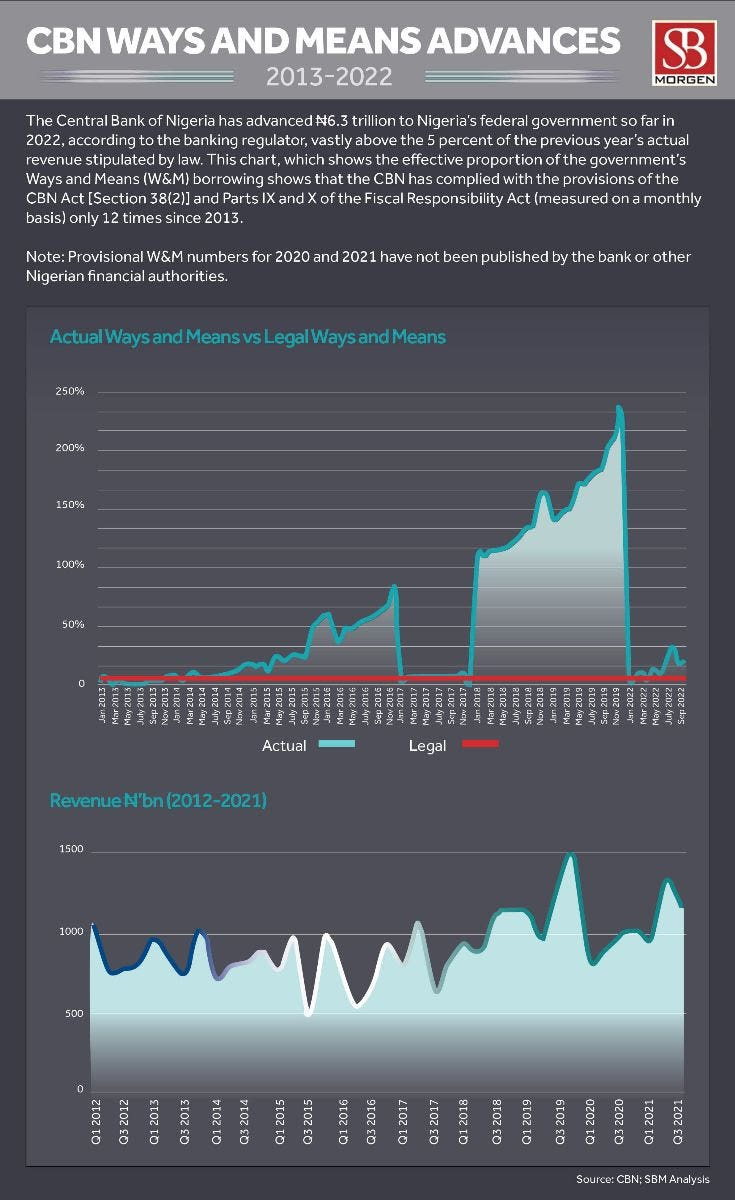
A little historical excursion is important in understanding how the CBN’s independence has been on a near-constant erosion. Back in February 2014, President Goodluck Jonathan suspended the then-CBN Governor Sanusi Lamido Sanusi after he (Mr Sanusi) had accused government and NNPC officials of corruption. A deputy governor stepped in as acting governor until Mr Sanusi’s tenure ran out and Godwin Emefiele was then appointed substantive governor. A similar event is playing out with a deputy governor currently acting in Mr Emefiele’s stead, following his suspension, amid investigations. However, the nomination of Mr Cardoso and four others as the management team to run the CBN before the expiration of the current management’s tenure is unprecedented in recent history. The Senate will have to be convinced to confirm both the dismissal of the old guard and the appointment of the new team. The risk is that this sets a precedent for the future, and in Nigeria, it is easy to abuse such precedence. Cardoso, a seasoned banker with over three decades of experience in the private sector, has held prestigious roles at renowned banks like Citibank, Guaranty Trust Bank and Access Bank. He has also served as a Commissioner for Budget and Planning in Lagos State. Nevertheless, his transition to the role of CBN governor may present some challenges due to his private sector background. Commercial banks often prioritise short-term profit maximisation for shareholders, which can sometimes undermine long-term economic stability and growth. In contrast, central banks have a broader mission, encompassing economic health, price stability, growth promotion and financial system regulation. Balancing these diverse demands will be Cardoso’s paramount task. Nonetheless, his private sector expertise may offer valuable advantages. His adeptness in managing complex organisations and implementing reforms could be instrumental in guiding the CBN through forthcoming challenges. One significant challenge ahead is reforming a financial sector plagued by inefficiency, high non-performing loans and limited small business credit access. Cardoso’s private sector insights can help him craft and execute reforms to foster a more supportive financial system for economic growth. Cardoso’s experience equips him to utilise monetary policy tools to curb inflation and stabilise the naira. Furthermore, Cardoso can enhance CBN’s efficiency with his organisational management expertise, develop more effective monetary policies with his risk management and capital-raising skills and create growth-oriented policies through his private sector comprehension. A pivotal focus for the new CBN governor should be establishing a robust credit purchase system to boost spending, investment and employment. Nigeria’s current system is restrictive and inefficient, hindering economic growth. Leveraging his private sector background, he can reform this system to reduce credit costs, facilitate small business loans and streamline the credit application process using technology. A sound credit purchase system is vital for economic growth. By making credit more accessible and affordable, he can invigorate Nigeria’s economy, fostering development and job creation. All of this is the theory; the reality remains the big unknown.