
Non-Nato Ally
US President Joe Biden named Kenya a Major Non-Nato Ally (MNNA), making it the first sub-Saharan African country to receive that…

US President Joe Biden named Kenya a Major Non-Nato Ally (MNNA), making it the first sub-Saharan African country to receive that designation. Mr Biden announced the move during a three-day state visit by Kenyan President William Ruto. It is the first such visit to Washington by an African leader in more than 15 years. Several governments in the Sahel region and western Africa have fallen to military coups in that time, leading to the removal of cooperation missions with western nations.
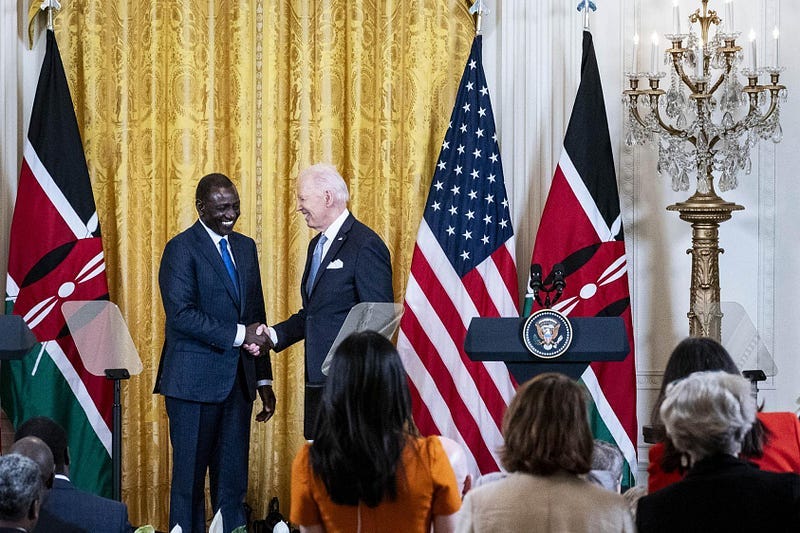
In the face of resurgent challenges to Western interests in Africa, the United States continues to seek out pathways behind a lot of minefields in its Africa relations. Kenya, being a powerhouse among East African power centres, looks like a prime candidate for American presence in a region beset by wars in Ethiopia and Sudan, tensions between Ethiopia and Somalia, the Al Shabaab threat in Somalia as well as the threat to shipping in the Horn of Africa. However, Mr Ruto’s reception in Washington, despite being a little too on the nose, is not without responsibilities. A major non-North Atlantic Treaty Organisation (non-NATO) ally is not a mutual defence pact, as it relieves the parties from the responsibilities that come with defence treaties. However, Major Non-NATO Allies (MNNAs) are eligible for loans of materials and equipment for research, development or testing; US-owned War Reserve Stockpiles can be placed on MNNA territories; MNNAs can be considered for the purchase of depleted uranium ammunition. The allies can formally agree with the US Department of Defence to conduct research and development projects. Additionally, MNNA firms can bid on contracts to repair and maintain US Defence Department equipment outside the US. With this designation, the US hopes Kenya will be its anchor, first in Africa, where the latter currently oversees a peace deal in Ethiopia aimed at ending that country’s over three-year-old civil war; in the Great Lakes, where it has been mediating between the Democratic Republic of Congo and rebels; and internationally, where America’s delay at intervening in the Haiti chaos has made Kenya step in. This initiative has had Washington pledge $200 million to back the effort despite Kenya’s history of mixed results in such enterprises. Having said all this, Mr Ruto’s unpopularity at home due to his tax-raising initiatives amid the rising cost of food might raise concerns domestically. This is especially pertinent in a continent where anti-Western sentiment is rising. Additionally, national outrage over alleged crimes committed by the British Army Training Unit in Kenya — an issue that has just begun to be formally investigated this week — could strain the relationship between Nairobi and Washington, making the possibility of further tensions not too far off the horizon.