
Not-for-profit?
Nigeria’s nonprofit sector has grown by over 1,000% in just four years amid concerns about the motivations and questionable activities of…

Nigeria’s nonprofit sector has grown by over 1,000% in just four years amid concerns about the motivations and questionable activities of nonprofit firms being used by politically exposed individuals to undermine the rule of law. The Guardian surveyed the figures between 2019 and 2023 and found an increase of 174,101 NGOs. As of May 2019, there were 17,177 NGOs, rising to 191,278 by November 2023. With the frequency of daily registrations in Nigeria, especially with the Companies and Allied Matters Act (CAMA) 2020 allowing individuals to register companies, the number is expected to surge in the coming years.
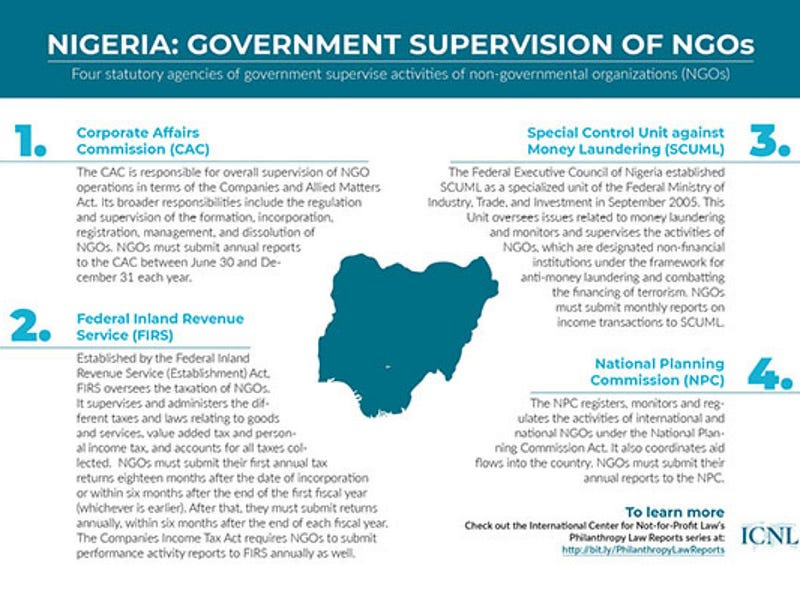
The rapid growth of Nigeria’s nonprofit sector, fuelled by the proliferation of NGOs across diverse sectors, clearly reflects the challenges plaguing public governance, which impact various facets of Nigerian life. As these organisations step in to address critical needs, they inadvertently highlight the areas where traditional governance structures have fallen short. Therefore, the narrative that NGOs are just seeking foreign grants is secondary. Case in point: there are few NGOs in Europe because social care systems handle most of the work NGOs do elsewhere. Several factors drive the NGO registration boom, the key among them being the ease with which these entities can be established, thanks to less stringent CAC requirements. Most of the journey toward approval is handled by a solicitor, who manages documents such as the composition of trustees, minutes of meetings and a certificate of incorporation. The latter is necessary for raising money from the public after a bank account has been set up. During the registration process, applicants are not required to undergo security checks by relevant agencies, such as the Economic and Financial Crimes Commission or the Nigerian Financial Intelligence Unit. These agencies are only involved when NGOs are suspected of money laundering. Given Nigeria’s reputation as a hub for illicit finance, more needs to be done to address the issue. In its 2022 global ranking, the Basel Institute of Governance placed Nigeria 17th out of 128 countries for money laundering and terror financing risks, marking it as a country with “high risks of ML/TF.” The Basel AML Index scored Nigeria 6.77 out of 10, indicating it is “not doing enough” to combat these issues. Recently, Nigeria has fluctuated on the Financial Action Taskforce’s grey list, reappearing in February 2023 due to rising capital inflows and ongoing deficiencies in addressing money laundering and terrorism. This negligence has led to international embarrassment, exemplified by the UAE’s conviction of six Nigerians for terrorism financing and money laundering. While Nigerian security services focus on political actors using NGOs to launder money, many of these organisations are established by internet fraudsters known as “Yahoo Boys.” This reality, especially evident in cities like Benin and Warri, highlights the EFCC’s ineffective focus on internet fraud, which has not produced results matching its stated goals. To harness the NGO sector’s potential while addressing these challenges, Nigeria needs to strengthen public institutions, foster collaboration between NGOs and government bodies, create enabling environments for NGOs, and address the root causes of governance failures.