
Not so minimum
Nigeria's private sector warns that forcing a ₦100,000 minimum wage could cost jobs and close small firms.

Nigeria’s organised private sector has cautioned against making the ₦100,000 minimum wage mandatory nationwide, arguing that many businesses cannot sustain such pay levels. While large firms in banking, oil and gas, and tech may afford higher wages, industry groups say most SMEs are under pressure from inflation, high energy costs, weak demand, and poor infrastructure. Associations, including LCCI and NECA, insist wage decisions should come through tripartite negotiations involving government, employers, and labour unions. They also warn that forcing higher wages could lead to job losses and business closures, adding that improving the ease of doing business and curbing inflation would better support workers’ welfare.
The push to mandate a nationwide minimum wage of ₦100,000 presents a difficult balancing act between protecting workers’ welfare and preserving business sustainability. On one hand, labour unions are justified in demanding higher wages as soaring inflation and rising food prices continue to erode workers’ purchasing power. The latest SBM Jollof Index highlights the growing cost of basic meals, underscoring the reality that many Nigerian households are struggling to meet their essential needs.
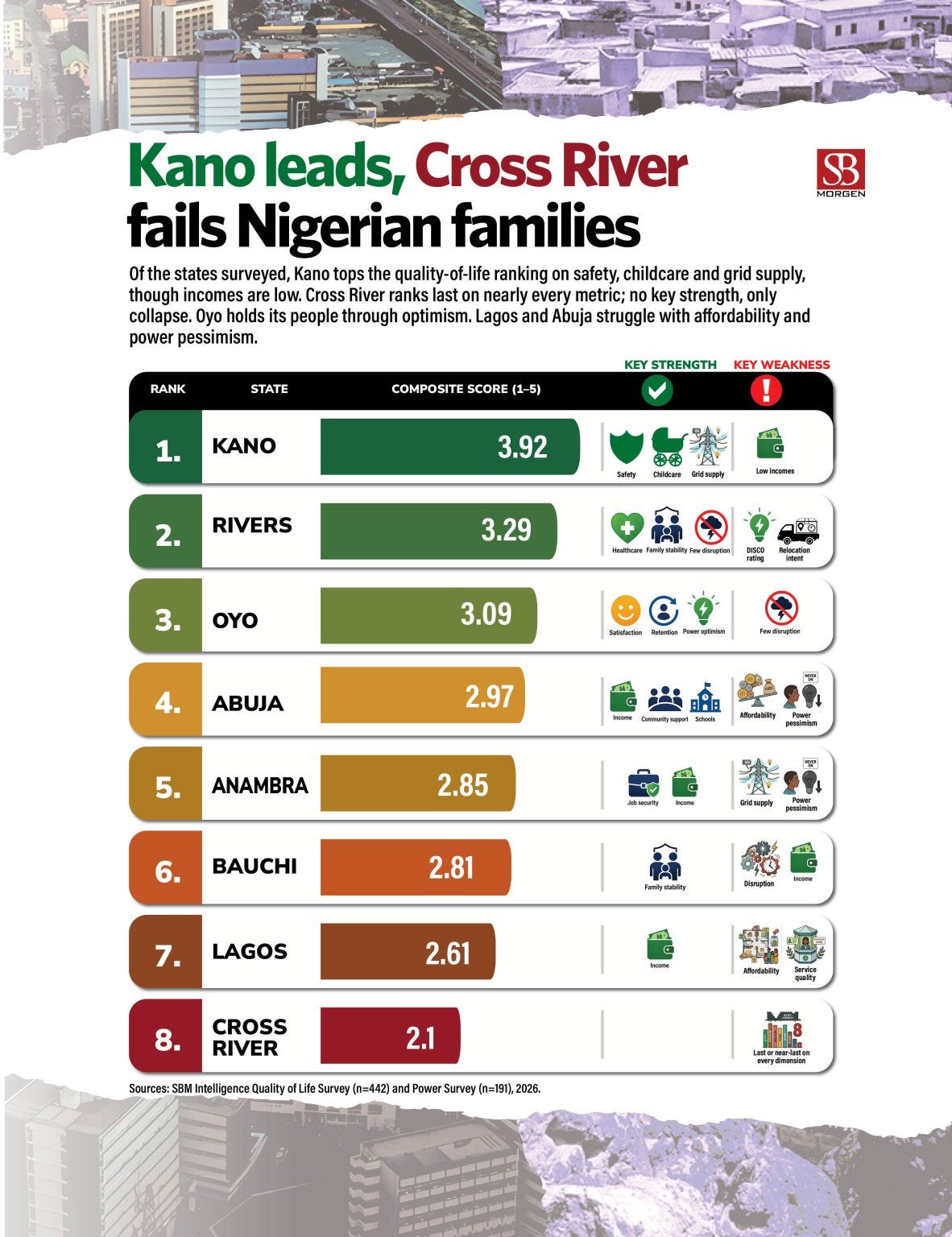
However, the organised private sector warns that a blanket ₦100,000 minimum wage could impose severe financial strain on businesses, particularly small and medium-sized enterprises (SMEs). Evidence from SBM’s Quality of Life Report suggests that in several major cities, including Kano, a significant portion of workers currently earn below this threshold. Consequently, an abrupt increase would substantially raise operating costs for employers already grappling with high energy expenses, weak consumer demand, currency volatility, and inadequate infrastructure.
The concern extends beyond the private sector. Many state governments are still struggling to implement the existing ₦70,000 minimum wage while meeting other fiscal obligations. A further increase without corresponding improvements in productivity and economic growth could exacerbate budgetary pressures, potentially leading to higher borrowing, job losses, business closures, or reduced hiring.
Given these realities, wage adjustments should emerge from realistic negotiations among government, employers, and labour representatives. More importantly, policymakers must complement wage reforms with broader structural interventions aimed at reducing the cost of doing business, improving infrastructure, boosting productivity, and stimulating economic growth. Sustainable improvements in workers’ living standards will ultimately depend not only on higher nominal wages but also on an economy capable of supporting those wages without undermining employment and business competitiveness.