
Oil on the fire
The Nigerian National Petroleum Corporation (NNPC) said it intercepted a vessel carrying 800,000 litres of stolen crude oil on its way to…

The Nigerian National Petroleum Corporation (NNPC) said it intercepted a vessel carrying 800,000 litres of stolen crude oil on its way to Cameroon, and it will be destroyed as a deterrent to oil theft. The vessel, MT Tura II, is owned by Holab Marine Services, NNPC said, adding that the vessel has been operating in stealth mode for the last 12 years. In a related development, the Acting Comptroller-General of the Nigeria Customs Service, Adewale Adeniyi, who said petrol smuggling persisted despite subsidy removal, has vowed a heavy clampdown on oil thieves.
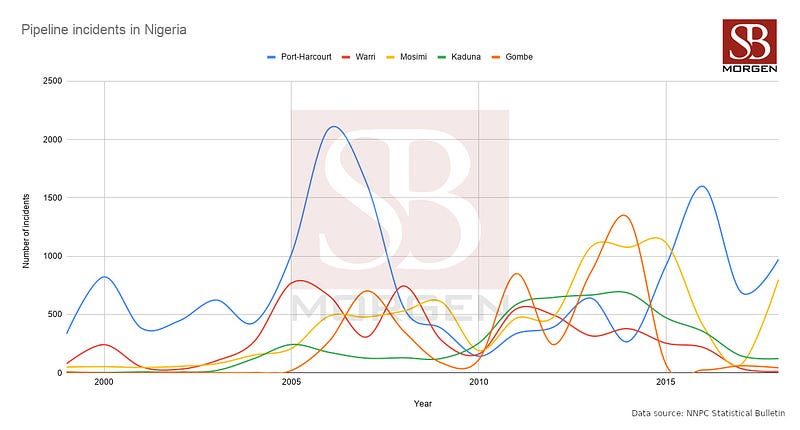
It is becoming an annual tradition for Nigeria’s security agencies to discover large vessels operating in the country’s waters to steal crude. During the buildup to the last elections, the rampant theft of crude oil in the Niger Delta became prominent, causing the security agencies and the NNPC to discover illegal pipelines, refineries and badges suddenly. In August, Equatorial Guinea detained an oil tanker capable of carrying two million barrels after it attempted to load in Nigeria without proper paperwork. The Nigerian Navy said the Heroic Idun, a Very Large Crude Carrier (VLCC), was attempting to load oil at the Akpo Single Buoy Mooring (SBM) on 8 August without due clearance from state oil company NNPC, and it “resisted arrest” when ordered to stop. The difference between that incident and the one reported this week is that the latest tanker was destroyed. Based on the going rate for Bonny Light on 11 July 2023, the Nigerian government burnt ₦50.62 billion ($62.88 million). That is 8.26% of the country’s wage bill, including the pay of the unthinking officers who considered burning the vessel. The navy and the joint tax force in the Delta, supposed to be on a mission to combat oil theft, have helped to pollute the environment by burning drums that could have been confiscated, purified and sold in the mainstream market. On a closer look, both tankers have local registration and were headed to neighbouring coastal countries, spotlighting that the existing oil-theft syndicates get their legitimacy domestically. Furthermore, the number of years they operated “stealthily” in Nigeria’s waters before being outed can hardly be possible without state complicity. According to a literature of media reports, statements and research, they participate in and benefit from the bunkering they should be curbing. Based on that deduction, it may not be unsurprising that Nigeria’s security forces have a vendetta against the air, ground and waters of the Delta. They probably burn these refined products to cover their tracks in case anyone ever summons the courage to investigate properly. However, while destroying seized tankers without the due process of the law might look to many as destroying evidence, for some others, it probably is because there is no way an oil-thieving vessel of that size could be operating for that long in stealth mode. The rate at which oil theft grew in recent years shows it is an organised crime with backing from the state. Against all odds, we sincerely hope that the Tinubu Administration will follow through with its campaign promise to clamp down on oil theft, as the revenues from crude oil directly correlate with the economic well-being of Nigeria.