
Oil on water
Nigeria lost about ₦335 million to oil spills between January and August 2023, the National Oil Spill Detection and Response Agency…

Nigeria lost about ₦335 million to oil spills between January and August 2023, the National Oil Spill Detection and Response Agency (NOSDRA) has said. NOSDRA reported 168 incidents, resulting in the loss of 5,520 barrels of crude oil. These spills occurred across facilities belonging to 23 oil companies, with Shell Petroleum Development Company recording 78.62% of the total spilt oil. The Nigeria Extractive Industries Transparency Initiative (NEITI) also said that Nigeria had lost ₦16.25 trillion between 2009 and 2020 to crude oil theft and asset sabotage, involving the disappearance of over 619.7 million barrels of crude oil.
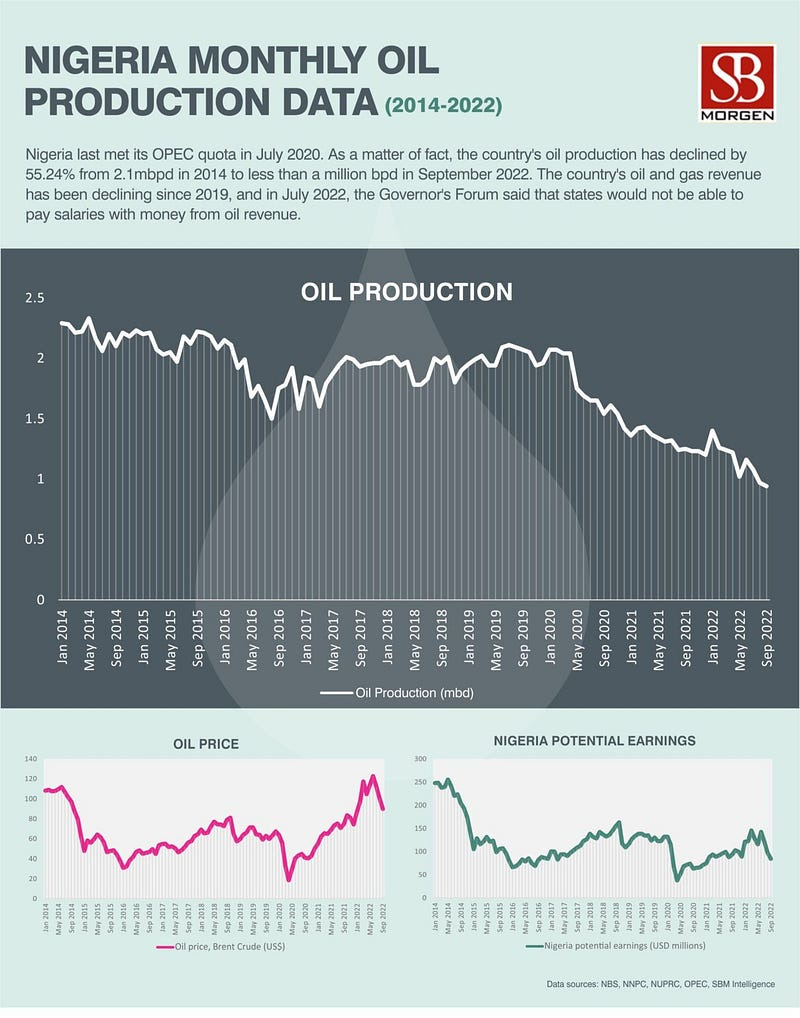
For NOSDRA, this is your usual oil spill in a region of oil spills. For the companies indicted, they would be looking to quickly pass the buck to the likely culprit: oil thieves. However, it is not politically correct to say so because it would question the government’s commitment to infrastructure safety in the oil sector and spotlight its pipeline protection deals struck with non-state actors to improve the country’s oil-producing capacity. The announcement indicts Shell more than most but does not explicitly state how much Shell and other defaulters have paid as fines. Preventive measures such as payment of ex-militants to guard pipelines have not lived up to the hype. The oil-producing regions have shifted from cooperation between consultants and oil thieves to outright conflict between Tantita Security Services and the navy. This conflict extends beyond territory disputes and encompasses their operations, particularly due to increasing scrutiny on active and retired navy personnel allegedly involved in sabotage. This means that there is an opening for bad actors to exploit. The loss numbers presented by NEITI are staggering. It amounts roughly to nearly 10% of all production over this period. Oil theft on that scale is not the act of random players but an organised crime syndicate that must have backers within the government to thrive. Aside from the monetary loss, it is also important to note that oil spills are a major negative consequence of oil theft, which has a devastating effect on the environment and livelihood of indigenes of oil-producing communities. That is the paradox of Nigeria’s crude oil wealth — a resource-rich country that is poor in almost every other aspect. Oil spills in Nigeria are a major environmental and social problem. The Niger Delta is the worst affected region, home to many oil pipelines and wells. Oil spills in the Niger Delta have led to land and water contamination, posing severe health hazards to the local people. They have also disrupted fishing, farming, and business operations. The oil-bunkering industry is an entrenched one that will be difficult to stop and require political will from the federal government, security agencies and local communities to tackle the problem. Across the oil industry, the Nigerian state has not developed any real capacity to supervise oil operations, and as crude oil is being discovered in new places globally, Nigeria’s share of global crude markets is bound to drop. Therefore, robust preventive actions and comprehensive cleanup efforts are essential to address the scale of the problem.