
Oil’s not well
The Organisation of Petroleum Exporting Countries (OPEC) says Nigeria’s average daily crude oil production dropped to 1.32 million barrels…

The Organisation of Petroleum Exporting Countries (OPEC) says Nigeria’s average daily crude oil production dropped to 1.32 million barrels per day in September 2024, representing a 2.2% decrease from August’s 1.35 million barrels per day. OPEC reported that the production data was based on direct communication with Nigerian authorities. Consequently, the country retained its position as the biggest oil producer in Africa, followed by Algeria and Congo, which produced 908,000 and 270,000 barrels per day, respectively, in the review month. OPEC’s secondary sources put Nigeria’s crude production at 1.40 million, down from August’s 1.43 million barrels per day.
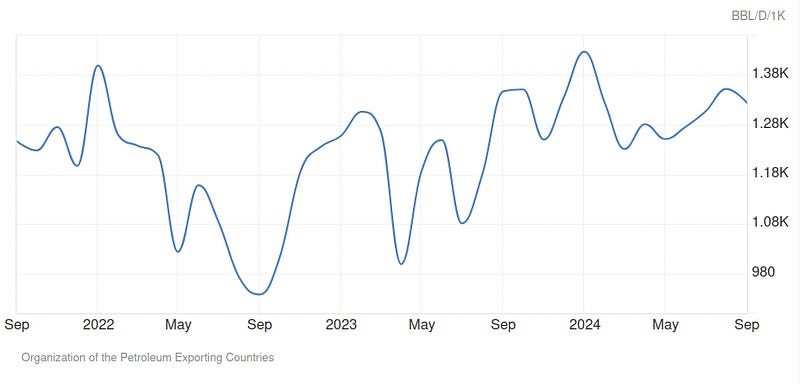
Nigeria’s decline in crude oil production underscores a troubling trend exacerbated by the divestment of international oil companies (IOCs) and a series of persistent operational challenges. This decline not only emphasises the fragility of Nigeria’s oil sector but also signals the urgent need for remedial measures, highlighting deeper systemic issues plaguing the industry. Security concerns persist. The Niger Delta region remains troubled by oil theft and illegal bunkering activities, which significantly impact production levels. There is also the dimension of onerous regulatory requirements and an unstable policy environment, which have led to investor apprehension. The lack of clarity in the Petroleum Industry Act (PIA) and the delayed implementation of critical reforms, such as the Domestic Crude Supply Obligation and the subsidy removal, contributed to uncertainty among potential investors. Infrastructure deficiencies still exist. Ageing infrastructure and insufficient maintenance of oil facilities have resulted in operational inefficiencies, evidenced by the recent NNPC’s decision to shut down its petrol purchasing portal, further stalling the supply chain. More importantly, the exit of major IOCs from Nigeria’s oil sector has left a vacuum in investment and expertise. Many of these companies have cited the challenging operating environment and the push for greener energy as primary reasons for their divestment. This exodus further complicates Nigeria’s ability to sustain or increase oil production. The broader economic landscape also comes into play. Fluctuating global oil prices and inflationary pressures impact operational costs and profitability, and Nigeria’s reliance on oil revenues makes it particularly vulnerable to external economic shocks. In light of these challenges, Nigeria’s position as the top oil producer in Africa may be threatened unless substantial efforts are made to address the root causes of production declines. Strengthening security, enhancing regulatory frameworks, investing in infrastructure, and fostering a conducive environment for domestic and foreign investment are crucial for revitalising the oil sector. Without these measures, Nigeria risks losing its production leadership and compromising its economic stability, given the heavy reliance on oil revenues.