
On a tight leash
Niger’s junta said it had thwarted an escape attempt by ousted President Mohamed Bazoum, who the military has imprisoned since the 26 July…

Niger’s junta said it had thwarted an escape attempt by ousted President Mohamed Bazoum, who the military has imprisoned since the 26 July coup despite international calls for release. The interim authorities said that Mr Bazoum and his family, with the help of accomplices in the security forces, planned to drive a vehicle to the outskirts of the capital, Niamey and catch a helicopter to neighbouring Nigeria. Reuters reported his lawyers saying the junta held him in a secret location, denying accusations the president tried to escape.
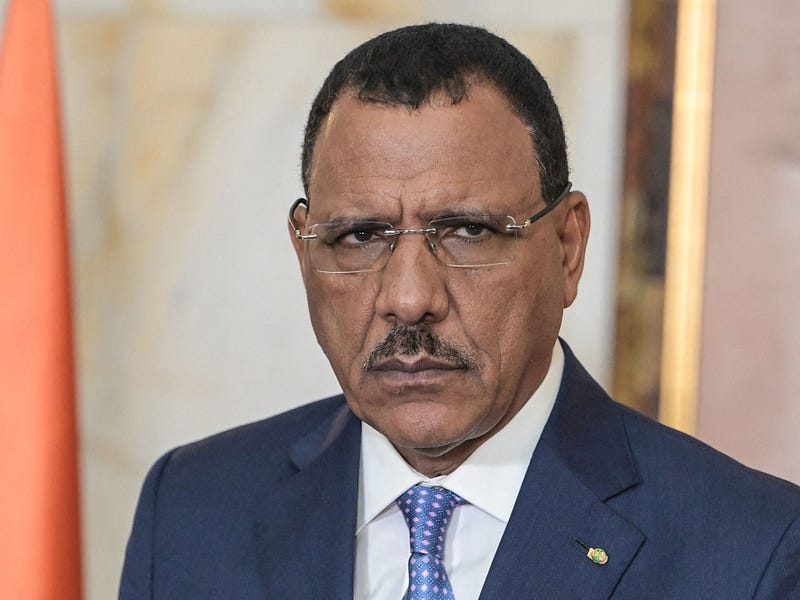
We cannot verify if the junta’s claims are true or whether this is another attempt to distract Nigeriens from biting hardships due to a poor economy made worse by sanctions. As the junta solidifies its rule, these kinds of media operations are expected. If true, a successful escape by Bazoum could have far-reaching consequences for the region. His return to political activity, especially if he seeks refuge in a neighbouring country like Nigeria, could energise opposition forces and potentially lead to increased instability in Niger. There have been a few instances of detained African presidents escaping from imprisonment or capture: Laurent Kabila, the former president of the Democratic Republic of the Congo, was imprisoned by the government of Mobutu Sese Seko in 1984. He escaped from prison and fled to Tanzania, from where he launched a guerrilla war against Mobutu. Kabila eventually succeeded in overthrowing Mobutu and became president of the DRC. While Kabila made his way back to power after his escape, the Central African Republic’s Jean-Bédel Bokassa, ousted in 1979, and Somalia’s Mohamed Siad Barre did not. However, there is a genuine concern about rumours of an escape being used as a pretext for further violence or repression by the military junta. The sanctions ECOWAS placed on Niger when the coup happened in late July are biting hard. The food and air restrictions are still in place, but they are less bothersome because of an unofficial embargo relaxation along the Nigerian border. The junta’s only strategic victory came in early October when the US recognised that Bazoum’s ouster was a coup but did not call for a reversal, rather choosing to work with the regime on humanitarian issues. Importantly, the junta has not tried Bazoum for any crime, and they might keep him in detention as a bargaining chip in future ECOWAS negotiations. But that is not likely to happen soon as the world’s attention has shifted to Gaza. This situation in Niger underscores the need for international diplomatic efforts to ensure Bazoum’s safety, possibly through calls for his release and protection and the imposition of more sanctions on the junta, where justified and impactful.