
On hold
The Bank of Ghana has suspended the Foreign Exchange Trading Licences of Guaranty Trust Bank Ghana Limited (GTB) and FBNBank Ghana Limited…

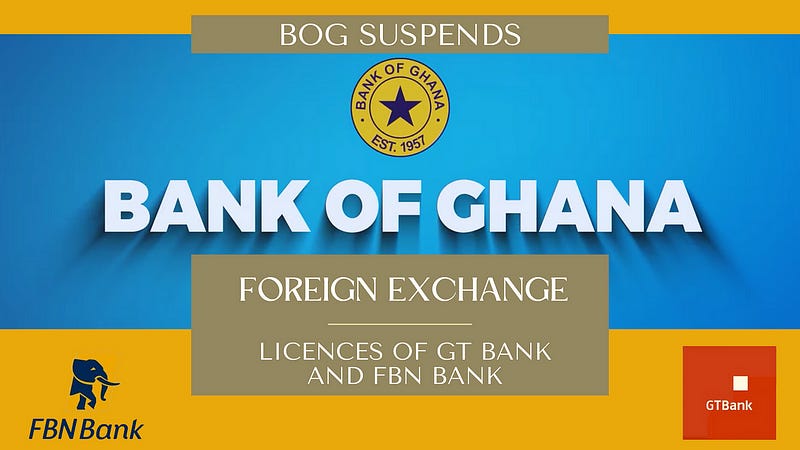
The Bank of Ghana has suspended the Foreign Exchange Trading Licences of Guaranty Trust Bank Ghana Limited (GTB) and FBNBank Ghana Limited (FBN) for one month starting from 18 March 2024, citing various breaches of foreign exchange market regulations, including fraudulent documentation. The suspension, in accordance with the Foreign Exchange Act 2006, aims to address these issues. The licenses will be restored after the suspension period, pending the implementation of effective controls to ensure compliance with foreign exchange market regulations. The bank added it uses the statement to ensure adherence to applicable FX regulations and guidelines.
Ghana is currently facing significant economic hurdles largely due to forex inadequacy, leading to a substantial balance of payment gap. This situation has resulted in considerable pressure on the local currency, the cedi, causing it to lose value against major trading currencies like the US dollar. To address this crisis, Ghana has sought funding assistance under an IMF-supported programme, with additional inflows expected from institutions like the World Bank and the Africa Development Bank. Despite receiving assistance, Ghana’s central bank is grappling with significant losses due to illegal activities in the forex exchange market. Discrepancies between reported inward remittance receipts by the Bank of Ghana and those recorded by the World Bank indicate a gap of approximately $2 billion, highlighting the prevalence of illegal forex transactions. In response to the continuous depreciation of the cedi, the Bank of Ghana is taking measures to crack down on illegal forex operations, emphasising regulatory enforcement and compliance. The expansion of the forex exchange market in Ghana, facilitated by regulatory initiatives such as the Payment Systems and Services Act (2019) and the National Payment Systems Strategic Plan (2019–2024), has led to increased complexity in detecting illegal exchange schemes. The Bank of Ghana’s licensing of Money Transfer Companies (MTCs) and Fintech companies aims to complement the operations of licensed dealer banks and forex bureaus, but it has also created challenges in monitoring and regulating the market effectively. The recent crackdown on illegal operators and licensed institutions by the Bank of Ghana is not an isolated incident, as the central bank has a history of taking stringent measures. Five months ago, Zeepay Ghana Limited faced fines for non-compliance, specifically for not utilising the average interbank exchange rate set by the Ghana Association of Banks and the Bank of Ghana when converting settlement funds into the local currency. Despite the Bank of Ghana emphasising that the sanctions were meant to serve as a robust warning to all participants in the forex market, including banks, forex bureaus, forex brokers, Dedicated Electronic Money Issuers (DEMIs), Enhanced Payment Service Providers (EPSPs), and Money Transfer Operators (MTOs), the current situation indicates persistent challenges within the dealer banks’ space. The recent suspension of Foreign Exchange Trading Licences for GT Bank Ghana and FBNBank Ghana reveals the seriousness of regulatory non-compliance in the forex market. Both institutions have pledged to address the issues raised by the central bank, emphasising their commitment to regulatory compliance and anti-money laundering measures. However, the situation highlights broader challenges within the dealer bank space, indicating the need for continued vigilance and enforcement by regulatory authorities to maintain stability in Ghana’s forex market.