
On the upswing
Nigeria’s inflation rate increased to 33.2% in March 2024, a 1.5% point increase from the 31.7% recorded in February, driven by increased…

Nigeria’s inflation rate increased to 33.2% in March 2024, a 1.5% point increase from the 31.7% recorded in February, driven by increased food, beverages, energy and housing costs. On a year-on-year basis, the headline inflation rate increased by 11.16% from 22.04% in March 2023. The food inflation rate reached 40.01% year-on-year, marking an increase of 15.56% points from 24.45% in March 2023. On a month-on-month basis, the food inflation rate in March 2024 stood at 3.62%, showing a decline of 0.17% from February 2024, when it was 3.79%. Urban inflation reached 35.18% year-on-year, a rise of 12.11% from the 23.07% recorded in March 2023. The rural inflation rate was 31.45% on a year-on-year basis. Core inflation was 25.90% in March 2024 on a year-on-year basis, an increase of 6.26% from 19.63% in March 2023.
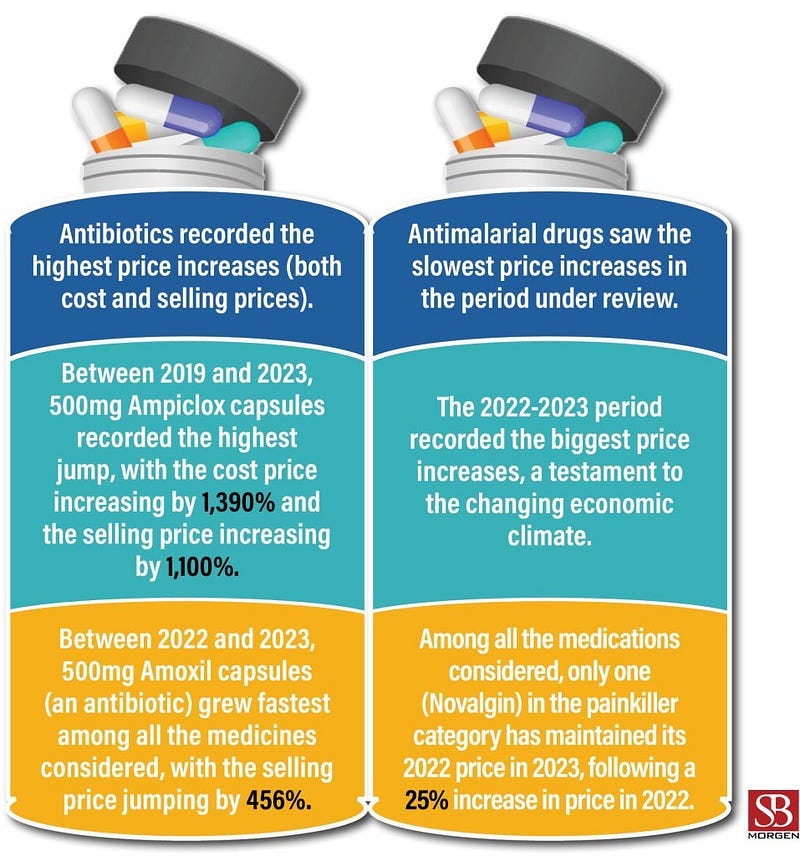
Since 2019, when the previous administration closed Nigeria’s borders with the Benin Republic to the importation of goods in a bid to stop smuggling, Nigeria’s inflation rate has been rising sharply. It is incredible that within a year, the already record-high food inflation levels of 2023 have nearly doubled. When this is placed in the context of the extreme circumstances that led to the 2023 inflation levels — the Naira scarcity due to the ill-advised Naira redesign policy implemented by former CBN governor Godwin Emefiele — it underscores the mismanagement of inflation as it continues to escalate even in the absence of such circumstances. Interestingly, on a month-on-month basis, food, urban and rural inflation experienced a decline — albeit marginal. Conversely, core inflation, which excludes food and energy prices, increased. According to the National Bureau of Statistics, the biggest increases were witnessed in the prices of Bus Journey within the city (under Passenger Transport by Road class), Actual and Imputed Rentals for Housing, Consultation Fee of a medical doctor (under Medical Services class) and pharmaceutical products. This clearly shows the effect of the exit of pharmaceutical companies from the country and the increased prices of services. Put simply, many problems within Nigeria’s economy need to be addressed. While the CBN governor seems laser-focused on reducing the FX rate, he has refused to face inflation headlong. Inflation affects a broader spectrum of Nigerians than any other economic factor. Sustainability is questionable in a country where food prices double every two years. It is akin to a keg of gunpowder, awaiting ignition at the slightest spark. We expect the inflation rate to continue its upward trend for the next few quarters until these structural issues are addressed. Hence, no branch of government should outpace the others in efficiency; instead, they must collaborate seamlessly. Otherwise, one’s successes will be sabotaged by the inadequacies of the other.