
Out of work
More than 2.1 million persons aged 15 to 35 were not in education, employment, or training in 2022, according to the Ghana Statistics…

More than 2.1 million persons aged 15 to 35 were not in education, employment, or training in 2022, according to the Ghana Statistics Service (GSS)’s Labour Statistics Report. “The unemployment rate in the fourth quarter was 11.5 percent, the lowest recorded across all quarters in 2022,” the report said. All 16 regions recorded double-digit figures for youth, not in education, employment or training. Also, more than half a million persons in the labour force were unemployed and multidimensionally poor in the year, ranging from an estimated 550,000 in the fourth quarter to 780,000 in the first quarter.
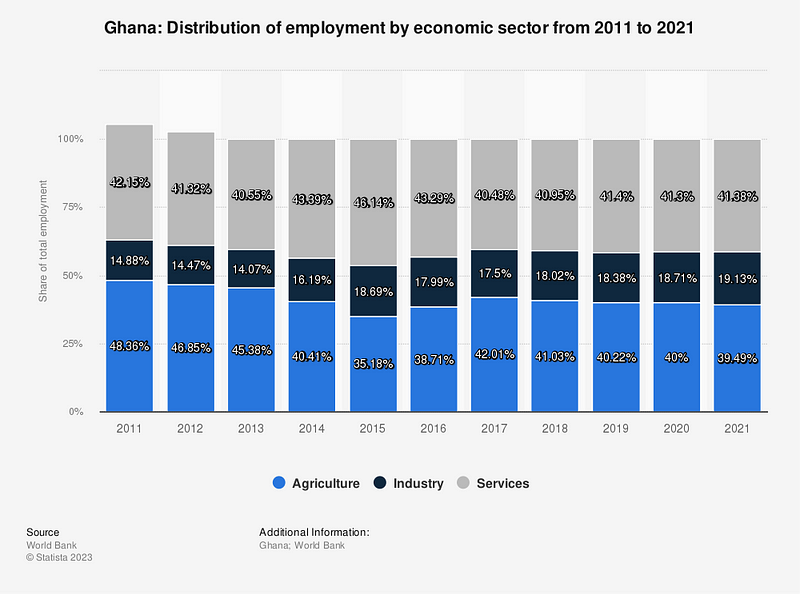
The soaring youth unemployment rates in Ghana are poised to significantly influence the upcoming 2024 presidential and parliamentary elections which are just a year away. The country’s high inflation, coupled with soaring production costs, has crippled numerous businesses, resulting in alarming levels of unemployment, especially among the youth. This has forced many Ghanaians to strategise ways to stretch their diminishing disposable income to maintain their purchasing power. Consequently, Ghana has climbed into the top 25 countries globally with the highest number of students pursuing education in the United States. A record-breaking 6,468 Ghanaian youths studied in the US in 2022–2023, marking a 31.6 percent increase. However, this trend is not solely driven by educational pursuits but also by the search for better opportunities abroad, considering the pervasive unemployment and vulnerability in Ghana. The recent World Bank’s 7th Ghana Economic Update, shockingly revealed that an unforeseen surge in prices in 2022 pushed nearly 850,000 Ghanaians back into poverty, reversing years of economic advancement. This phenomenon is not merely about falling into poverty; it is also about the substantial shift of Ghanaians toward vulnerable employment. A pictorial analysis of Ghana’s labour force in all 16 regions underscores a prevalence of vulnerability in the northern regions, where all five witnessed significant spikes. Information from the Ghana Statistical Service’s labour data for the fourth quarter of 2022 showcased that two out of every three employed individuals aged 15 and above were in vulnerable employment, predominantly as self-employed without employees or as contributing family workers. This marked the highest ratio recorded across all quarters. Additionally, all 16 regions, except for Greater Accra, had more than half of their employed individuals engaged in vulnerable employment. The Northeast (92.1%), Savannah (90.6%), and Northern (84.2%) regions topped the list with the highest rates of vulnerable employment during this period. Political analysts and experts anticipate that the northern belt of Ghana will emerge as a pivotal battleground in the 2024 elections, given that both presidential candidates from the leading political parties hail from this region — an unprecedented occurrence in Ghana’s political history. However, a closer examination of unemployment statistics across the country paints a grim picture, revealing that not a single region in the northern belt boasts favourable employment figures. All five regions are eagerly seeking development opportunities and avenues to tackle unemployment, each eyeing the forthcoming elections where two candidates from the north will vie for the Jubilee House. The contest for the presidential seat is heating up, with escalating poverty levels and soaring youth unemployment emerging as pivotal factors in this race.